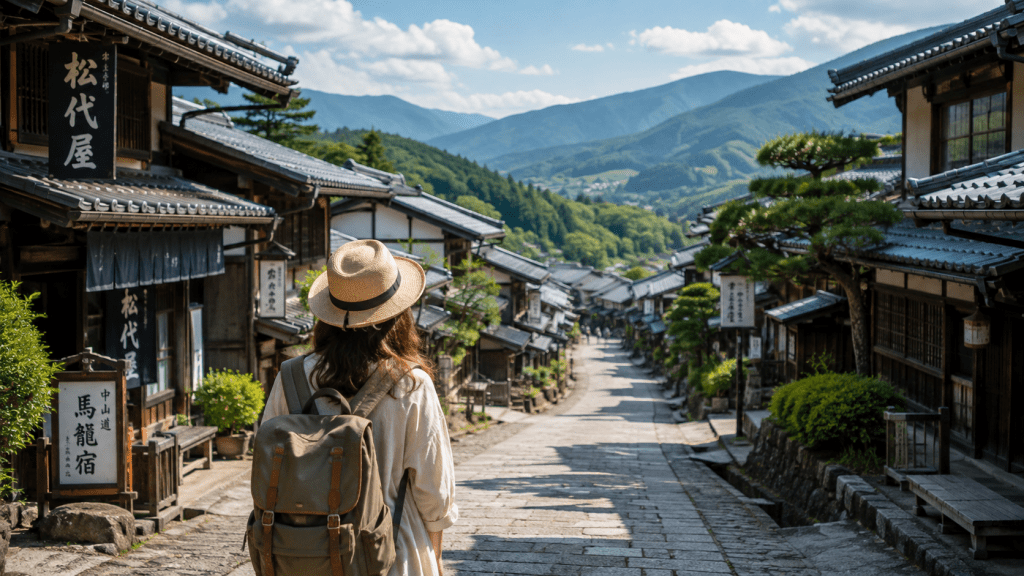
Tokyo and Kyoto are unforgettable — but they are only the beginning.
Travel a little farther and Japan begins to feel very different. Fishing villages sit quietly beside the sea, old post towns preserve streets from another era, mountain communities invite you to slow down in an onsen, and remote islands reveal stories that many visitors never encounter.
This guide introduces 10 places for travelers who want to see more than Japan’s most famous sights.
Some are easy additions to a classic itinerary. Others take more time and effort to reach. But that journey is often part of what makes them memorable.
You don’t need to visit all ten. Choose the place that makes you curious — and let it take you somewhere beyond the usual.
10 Places to Discover Beyond Tokyo and Kyoto
| # | Destination | Prefecture | Best For |
|---|---|---|---|
| 1 | Ine | Kyoto | Coastal village |
| 2 | Kurokawa Onsen | Kumamoto | Onsen |
| 3 | Ibusuki | Kagoshima | Unique hot springs |
| 4 | Takachiho | Miyazaki | Nature & mythology |
| 5 | Kurashiki | Okayama | Historic streets |
| 6 | Narai-juku | Nagano | Old Japan |
| 7 | Shimanto River | Kochi | Nature & slow travel |
| 8 | Hagi | Yamaguchi | Samurai history |
| 9 | Ouchi-juku | Fukushima | Traditional village |
| 10 | Goto Islands | Nagasaki | Islands & culture |
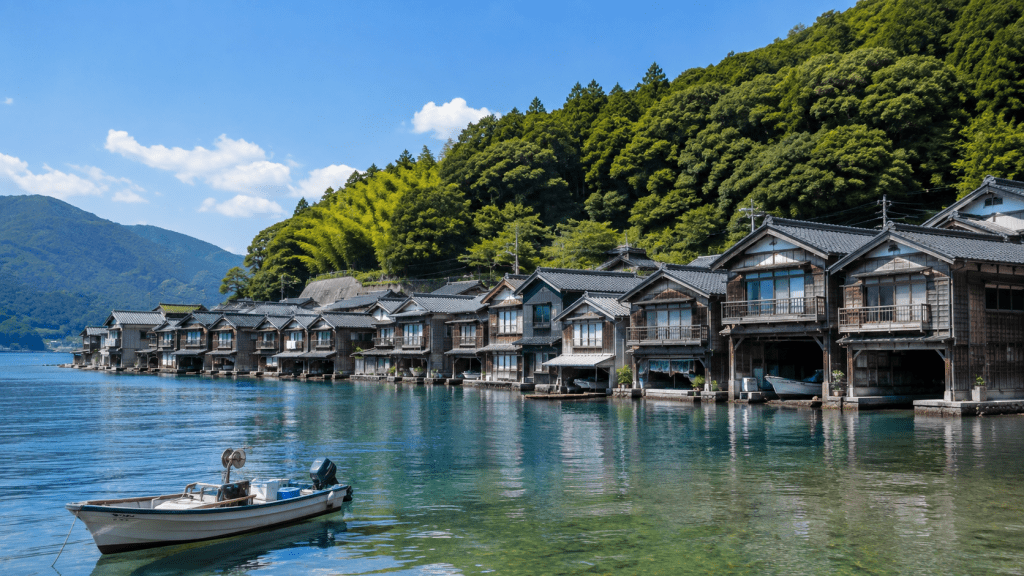
1. Ine, Kyoto — A Village Built Along the Sea
Far from the temple crowds of central Kyoto, Ine offers a completely different image of the prefecture.
The small fishing village wraps around Ine Bay, where traditional wooden funaya stand directly beside the water. Historically, the lower level of these distinctive buildings was used to shelter boats, while the living space was above.
Walk slowly around the bay, see the village from the water, or stay overnight and experience the quiet after many day visitors have left.
If your image of Kyoto is temples, bamboo and busy historic streets, Ine is a reminder that Kyoto also has a coastline.
2. Kurokawa Onsen, Kumamoto — Slow Down in the Mountains
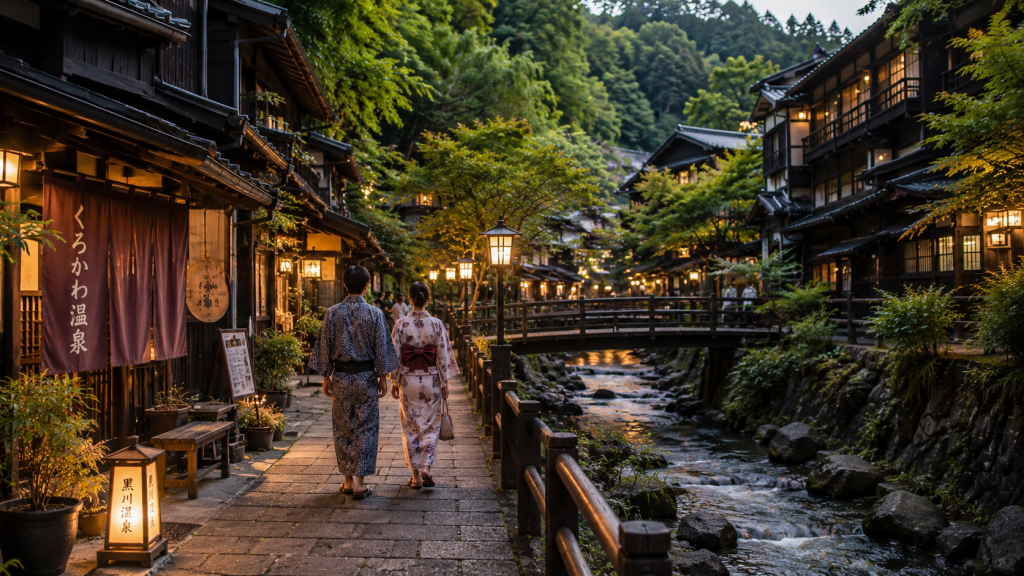
Hidden among the mountains of Kumamoto, Kurokawa Onsen feels less like a single attraction and more like an entire town built around slowing down.
Traditional ryokan, small shops, riverside paths and hot spring baths are scattered through the valley.
Stay overnight if you can. Put on a yukata, walk through town, soak in an outdoor bath and let the evening unfold without a long sightseeing checklist.
This is the kind of place where doing less becomes the experience.
3. Ibusuki, Kagoshima — Get Buried in Hot Sand
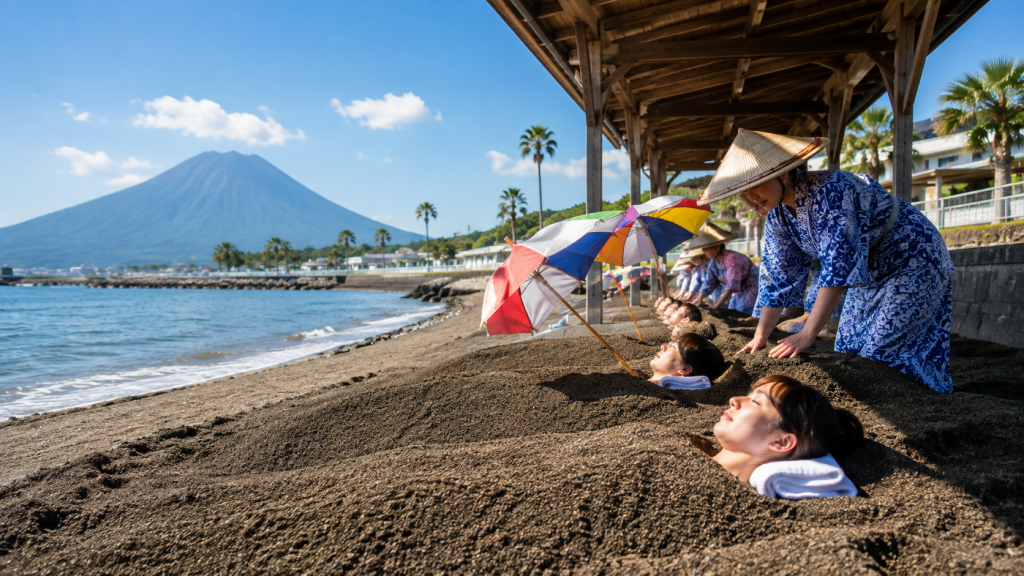
Ibusuki doesn’t ask you simply to step into a hot spring.
It asks you to lie on the beach while attendants cover you up to your neck in naturally heated sand.
Known as sunamushi, Ibusuki’s hot sand bathing tradition uses sand warmed by geothermal hot spring water beneath the coast. Afterward, travelers typically wash off the sand and relax in a regular onsen bath.
Add views of the beautifully shaped Mt. Kaimon / Kaimondake and the subtropical atmosphere of southern Kagoshima, and Ibusuki feels very different from Japan’s better-known hot spring destinations.
4. Takachiho, Miyazaki — Waterfalls, Gorges and Japanese Mythology
Takachiho combines dramatic nature with some of Japan’s oldest mythological stories.
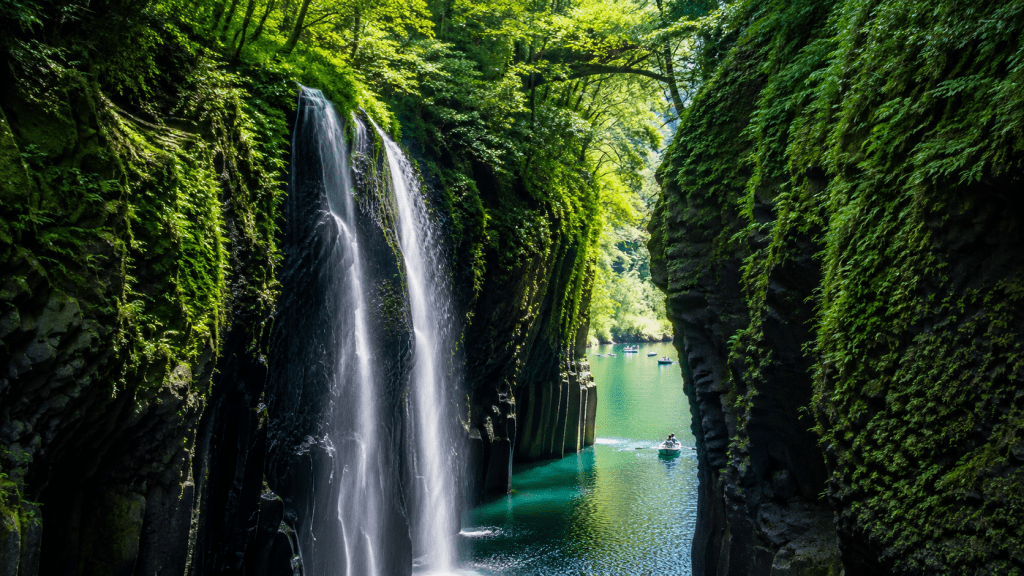
At Takachiho Gorge, steep volcanic cliffs rise above the Gokase River, while Manai Falls drops into the gorge below. One of the most memorable ways to experience it is from a small rental boat on the water.
But don’t leave immediately after seeing the gorge. Takachiho is also closely connected with Japanese mythology, with shrines and traditional kagura performances adding another layer to the journey.
It’s a destination where landscape and culture are difficult to separate.
5. Kurashiki, Okayama — Canals and Merchant Houses
Kurashiki is proof that you don’t always need to travel somewhere remote to find a slower side of Japan.
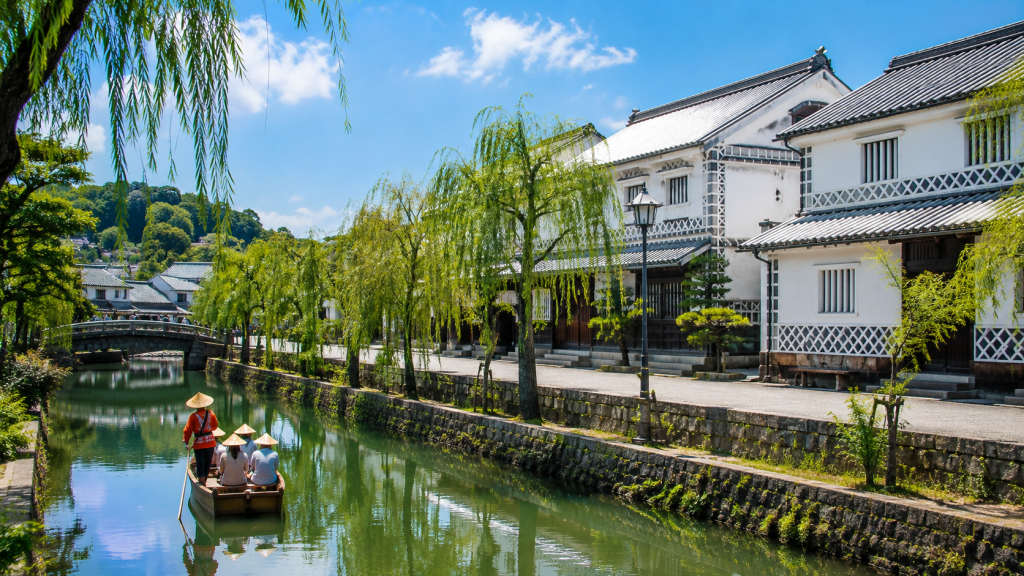
The Bikan Historical Quarter is filled with white-walled former merchant buildings, stone streets and a willow-lined canal. Old storehouses now contain cafés, shops and museums, allowing the district to feel historic without becoming frozen in time.
Walk beside the canal in the morning, explore the smaller streets, and stay into the evening when the atmosphere changes again.
Kurashiki also works particularly well for travelers moving between Kansai and Hiroshima.
6. Narai-juku, Nagano — Walk Through the Japan of Old
Long before bullet trains connected Japan’s cities, travelers crossed the country on routes such as the Nakasendo.
Narai-juku was one of the post towns that served those travelers.
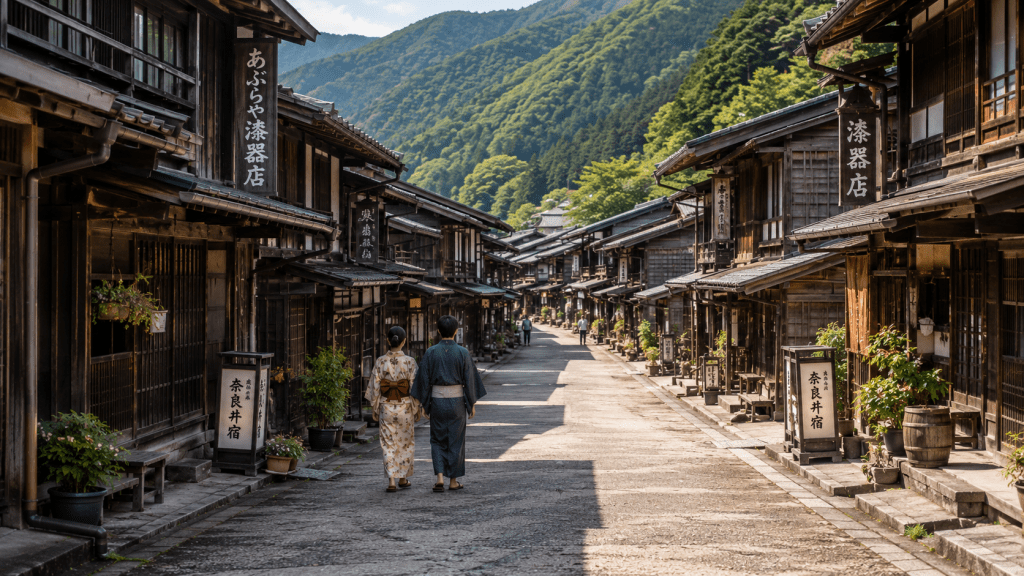
Today, its long main street remains lined with traditional wooden buildings, small shops, soba restaurants and old residences. Mountains rise around the town, reinforcing the feeling that you’ve stepped away from modern urban Japan.
Rather than rushing through for photographs, give yourself time to walk the streets, stop for lunch and imagine what traveling this route once felt like.
7. Shimanto River, Kochi — Japan at River Speed
Not every memorable destination needs a famous temple or landmark.
Sometimes the destination is simply a river.
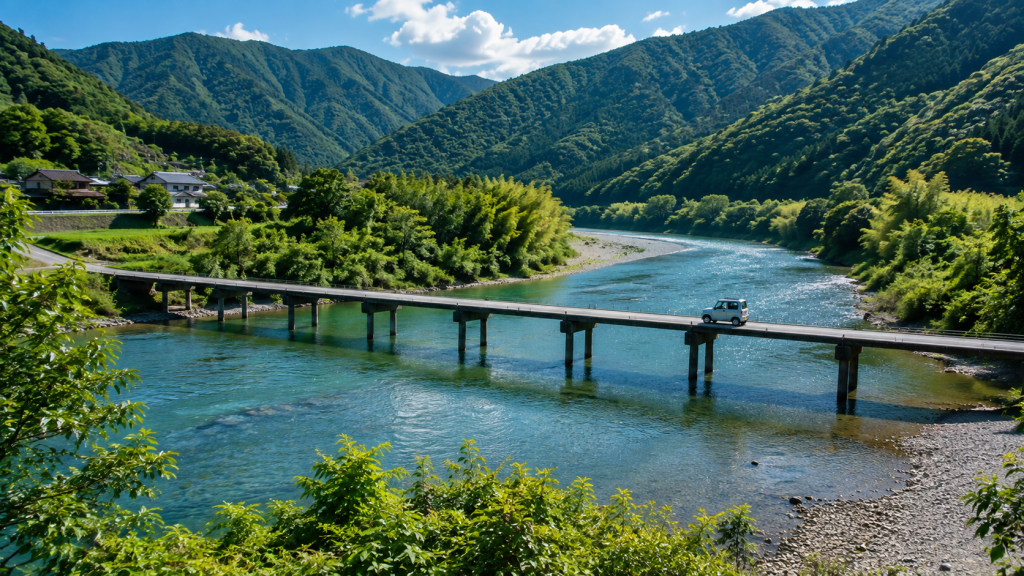
Flowing through rural Kochi, the Shimanto River passes forests, villages and distinctive low bridges known as chinkabashi. Instead of racing between attractions, travelers can cycle beside the river, paddle on the water, take a boat ride or simply stop and enjoy the countryside.
Shimanto is a good place to remember that travel doesn’t always need an itinerary every hour.
8. Hagi, Yamaguchi — Walk Through Samurai History
Hagi doesn’t reveal itself through one giant landmark.
Its appeal is in the streets.
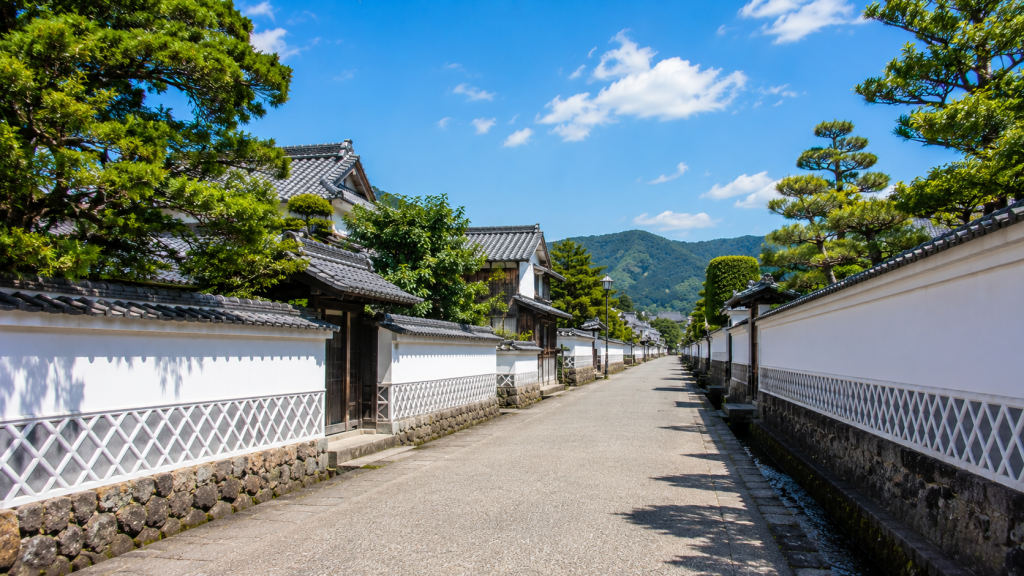
White walls, former samurai residences, narrow lanes and traditional pottery workshops preserve the atmosphere of a castle town that played an important role in Japan’s transition into the modern era.
Rent a bicycle or explore on foot. The slower you move, the more details you’ll notice.
9. Ouchi-juku, Fukushima — A Thatched-Roof Post Town
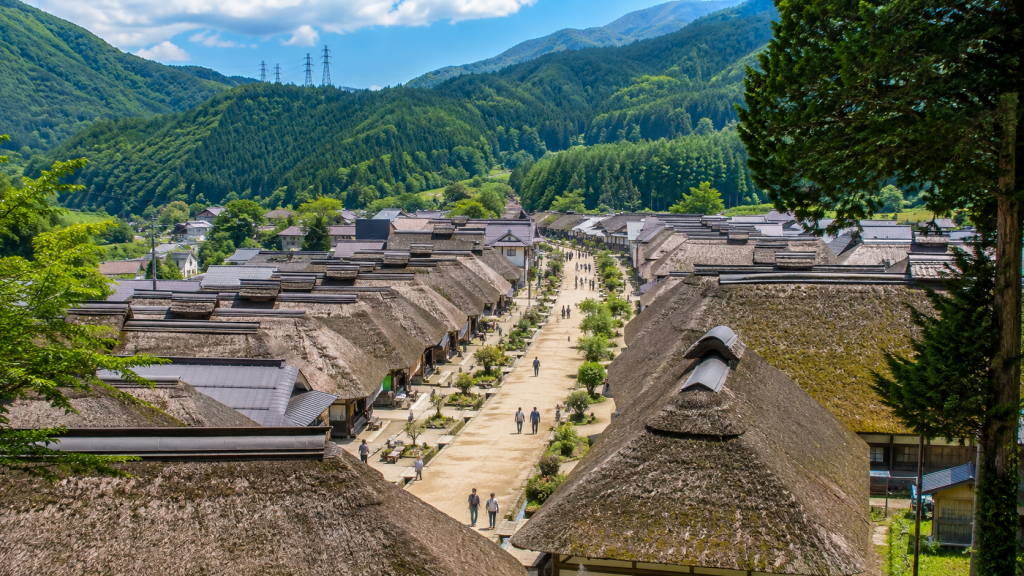
In the mountains of Fukushima, Ouchi-juku preserves a scene that feels far removed from modern Japan.
Traditional thatched-roof buildings line the old road through this former Edo-period post town. Many now operate as restaurants, shops or small accommodations.
The village is beautiful throughout the year, but winter transforms it completely as snow covers the roofs and surrounding mountains.
While you’re there, try the local negi soba — noodles traditionally eaten using a long leek.
10. Goto Islands, Nagasaki — Go Further
If the other destinations on this list feel like going beyond the usual route, the Goto Islands take that idea one step further.
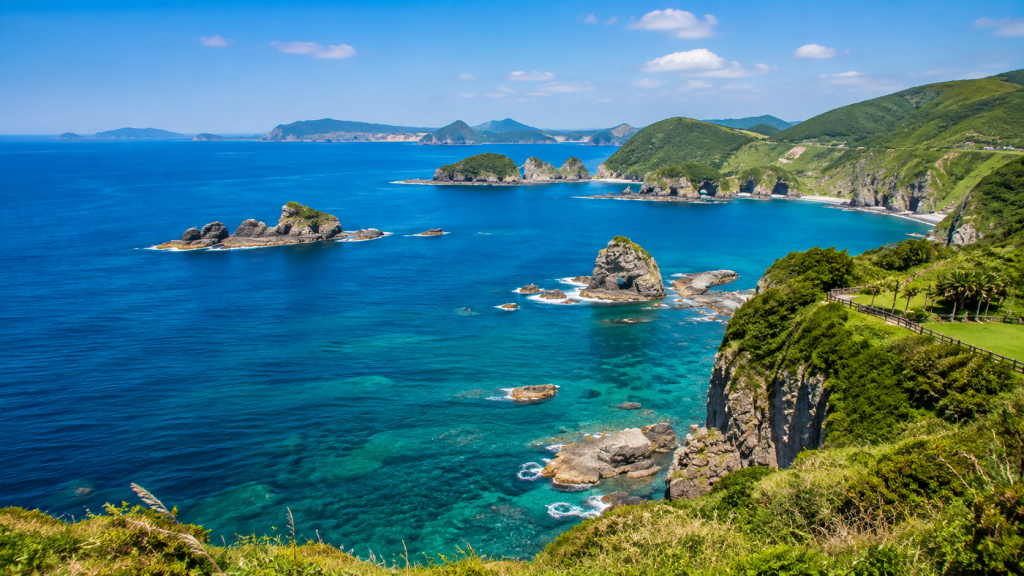
Scattered west of Nagasaki in the East China Sea, the islands combine clear water, dramatic coastlines, beaches, seafood and a distinctive history of Christianity in Japan.
Churches across the islands tell the story of communities that preserved their faith through periods of persecution, while places such as Fukue Island offer beaches, volcanic landscapes and wide-open coastal scenery.
Getting here requires more planning than a day trip from Tokyo or Kyoto.
That’s precisely why the Goto Islands belong on this list.
Which Side of Japan Will You Discover?
Going beyond Tokyo and Kyoto doesn’t mean avoiding Japan’s famous destinations.
It means making room for something else.
Maybe that’s waking beside the sea in Ine, walking through Kurokawa Onsen in a yukata, cycling beside the Shimanto River, or watching the sun disappear beyond the Goto Islands.
Choose one place that genuinely interests you and build part of your journey around it.
You may return home remembering that unexpected detour more clearly than the place you originally traveled to Japan to see.
Planning your first trip? Start with our First Time in Japan guide, or explore our 7-Day Japan Itinerary for an easy introduction to Tokyo, Kyoto and Osaka.
Exploring regional Japan is also a chance to discover local food. From regional noodles to street food and traditional favorites, explore our guide to 15 Japanese Foods You Must Try in Japan.
 Beyond Japan Guide
Leave a comment