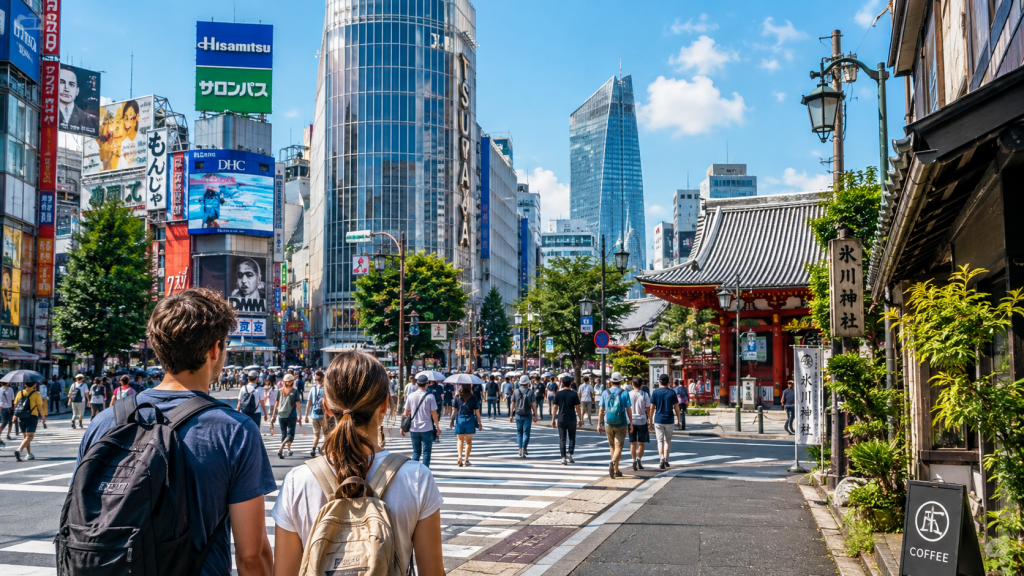
Tokyo is often the first place travelers experience in Japan — and it can feel like several cities packed into one.
One moment you are surrounded by giant screens, busy crossings and modern skyscrapers. A short train ride later, you may be walking through a quiet shrine forest, exploring an old shopping street or eating at a tiny neighborhood restaurant.
That contrast is one of the best things about Tokyo.
But Tokyo’s size can also make a first visit confusing. There are dozens of neighborhoods worth exploring, an enormous train network and more things to see than you could fit into a single trip.
The key is not trying to see everything.
Instead, choose a few areas that show you different sides of the city and give yourself enough time to actually experience them.
This guide will help you decide where to go, what to do, how to get around and how to make your first Tokyo trip feel exciting rather than exhausting.
New to Japan? Start with our First Time in Japan guide for essential things to know before your trip.
1. Asakusa — Start with Traditional Tokyo
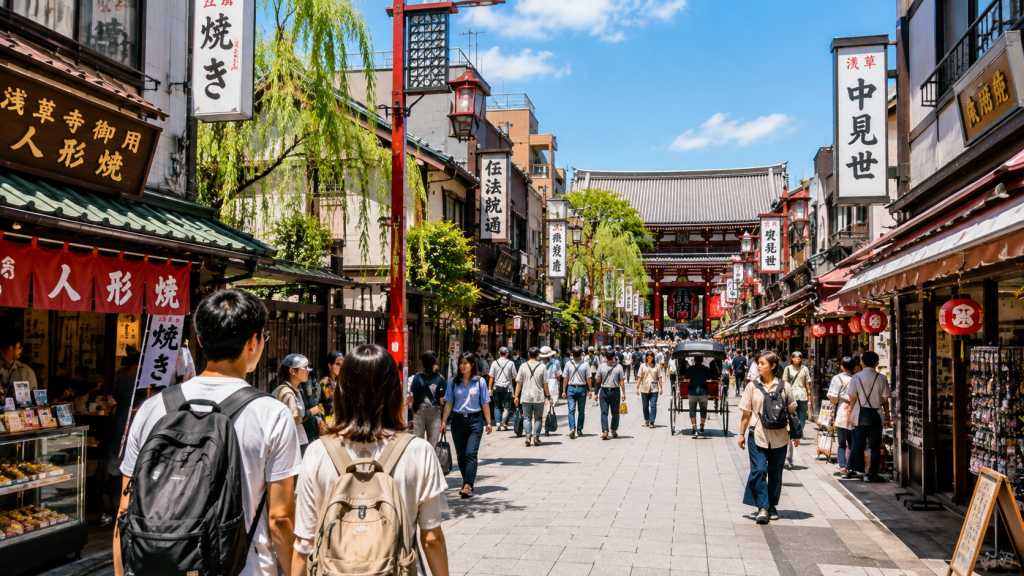
Asakusa is one of the best places to begin your first Tokyo adventure.
The neighborhood is centered around Senso-ji, Tokyo’s oldest Buddhist temple. Most visitors enter through the famous Kaminarimon Gate before walking along Nakamise, where small shops sell traditional snacks, souvenirs and crafts.
It is one of Tokyo’s most popular sightseeing areas, so expect crowds during the middle of the day.
But Asakusa becomes much more interesting when you move away from the main route.
Walk through the surrounding streets and you will find small restaurants, traditional shops, cafés and quieter corners that feel very different from modern Tokyo.
Rather than visiting only Senso-ji and leaving, give yourself time to explore the neighborhood on foot.
2. Ueno — Parks, Museums and Local Streets
Ueno combines culture, green space and everyday city life.
Ueno Park contains several of Japan’s major museums and cultural institutions, making it a particularly good area if you are interested in art, history or Japanese culture.
During spring, the park is also one of Tokyo’s most famous cherry blossom spots.
But do not spend your entire visit inside the park.
Nearby Ameya-Yokocho, usually called Ameyoko, offers a completely different atmosphere.
The busy shopping streets are packed with food stalls, seafood shops, clothing stores, restaurants and local businesses.
Moving from the calm of Ueno Park into the energy of Ameyoko is another good example of how quickly Tokyo can change.
3. Shibuya — Experience Modern Tokyo
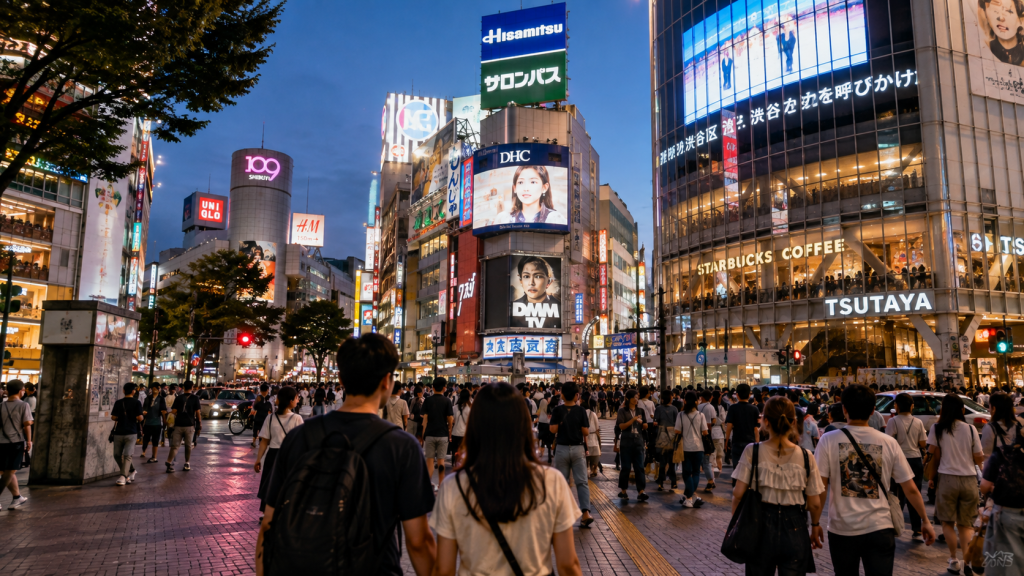
Shibuya is one of the most recognizable parts of Tokyo.
Yes, you should see the famous Shibuya Crossing.
But do not make the mistake of crossing it, taking a photograph and immediately leaving.
Shibuya is a neighborhood worth exploring.
Walk beyond the main intersection and you will find shopping streets, restaurants, cafés, music, fashion and countless smaller streets filled with activity.
The area becomes particularly atmospheric around sunset, when daylight begins to disappear and the signs and buildings start to illuminate the streets.
Give yourself time to walk without a strict destination.
Tokyo often becomes more interesting when you stop following the sightseeing checklist for a while.
4. Meiji Shrine & Harajuku — Two Very Different Sides of Tokyo
Few places demonstrate Tokyo’s contrasts better than Meiji Shrine and Harajuku.
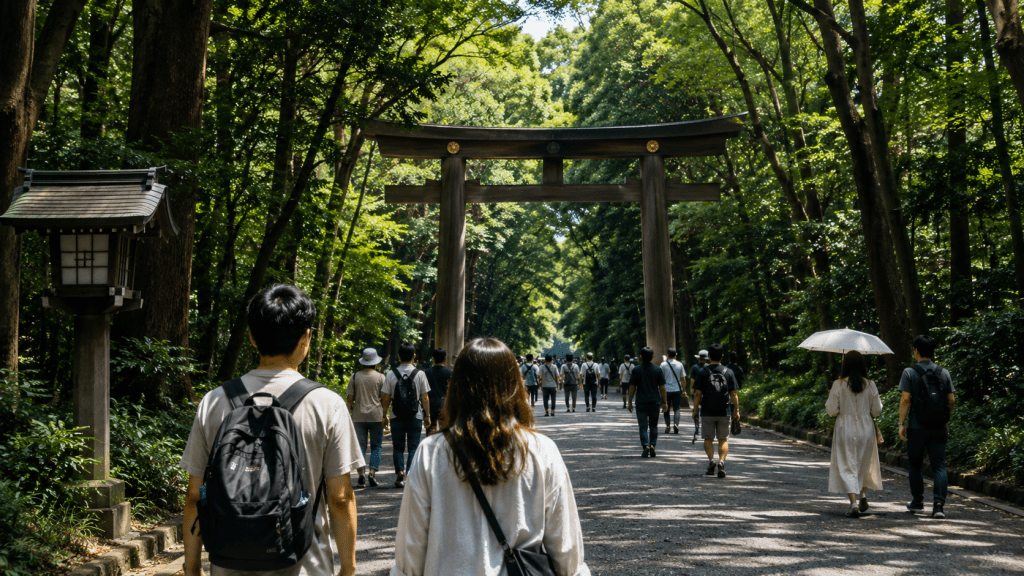
Meiji Shrine is surrounded by a large forest near one of the busiest parts of the city.
After the noise of Tokyo’s streets, walking beneath the trees toward the shrine can feel surprisingly peaceful.
Do not rush through the approach.
The forest walk itself is part of the experience.
After visiting the shrine, continue toward Harajuku.
Within a short distance, the atmosphere changes completely.
You will find fashion, cafés, shops and busy streets filled with young people and visitors.
For a first-time traveler, experiencing these two areas together is an excellent introduction to how different sides of Tokyo can exist almost next to each other.
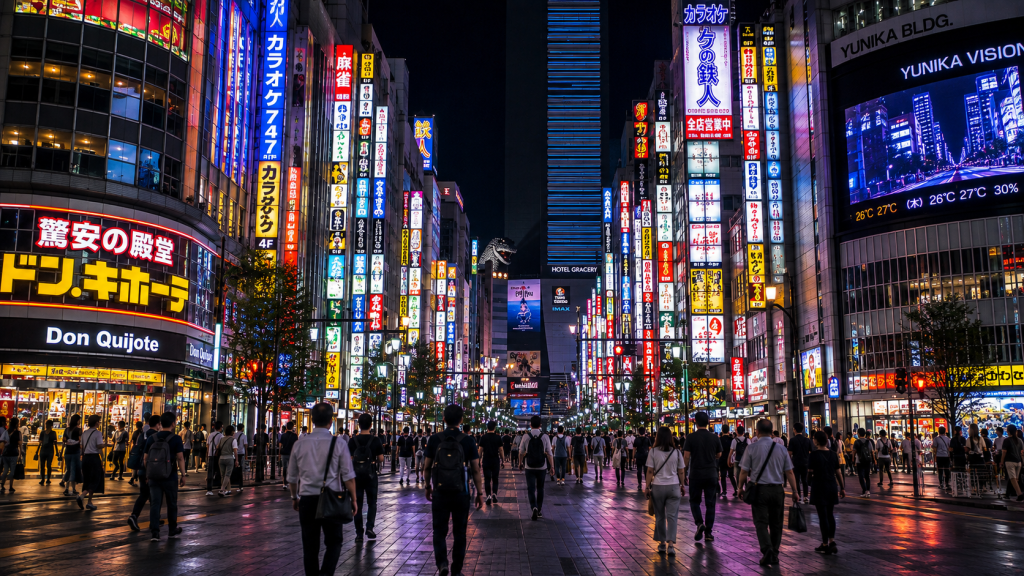
5. Shinjuku — See Tokyo After Dark
Shinjuku is another Tokyo neighborhood that changes dramatically throughout the day.
It is one of the city’s biggest transportation and business centers, but after dark, parts of Shinjuku become filled with illuminated signs, restaurants and nightlife.
Kabukicho is the most famous entertainment district, but you do not need to spend your entire evening there.
Walk around the surrounding streets and you will find everything from large restaurants to tiny places hidden inside narrow buildings.
Shinjuku is also a good place to simply experience Tokyo’s nighttime energy.
You do not need a complicated itinerary.
Sometimes walking through the city after dinner is enough.
6. Tokyo Station & Marunouchi — A Different Kind of Tokyo
Tokyo Station is more than a transportation hub.
The restored red-brick Marunouchi Station building provides a striking contrast to the modern office towers surrounding it.
Walk through Marunouchi and you will find wide streets, restaurants, shops and a noticeably different atmosphere from Shibuya or Shinjuku.
The Imperial Palace grounds are also nearby.
You do not necessarily need to spend half a day here.
For many travelers, a relaxed walk around Tokyo Station and Marunouchi is enough to experience this part of the city.
It is also worth becoming familiar with Tokyo Station if you plan to take the Shinkansen later in your trip.
Traveling beyond Tokyo? Our Getting Around Japan guide explains trains, IC cards and the Shinkansen.
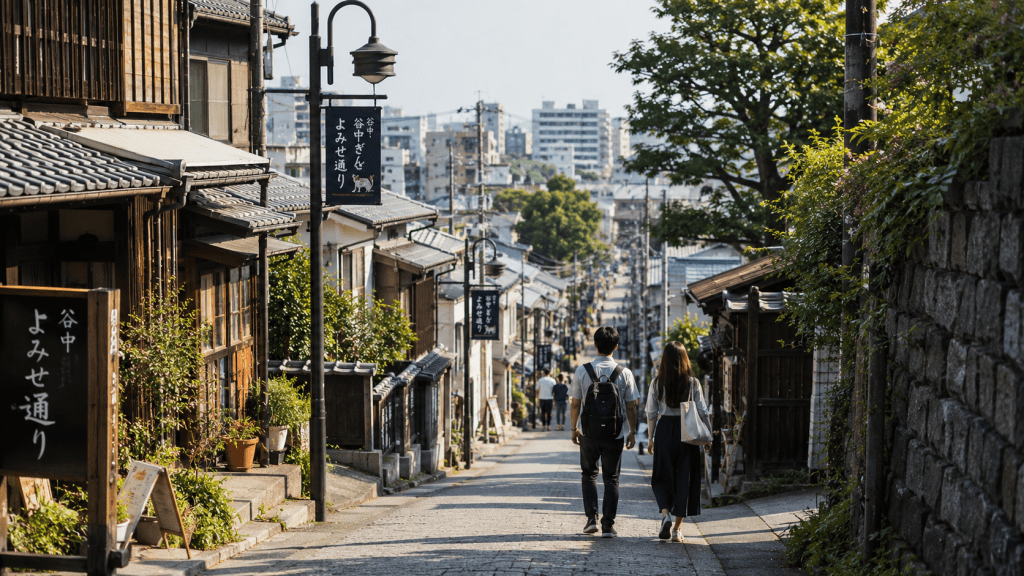
7. Don’t Ignore Tokyo’s Local Neighborhoods
Tokyo is not only Shibuya, Shinjuku and Asakusa.
Some of the most enjoyable parts of the city are neighborhoods where ordinary daily life is much more visible.
You might explore an old shopping street, discover a small bakery, visit a neighborhood shrine or simply walk through quiet residential streets.
Areas such as Yanaka can show you a slower side of Tokyo that feels very different from the major sightseeing districts.
You do not need to visit five local neighborhoods.
Choose one.
Spend a few hours walking without trying to complete a list of attractions.
These slower moments often become some of the strongest memories of a Tokyo trip.
8. What Should You Eat in Tokyo?
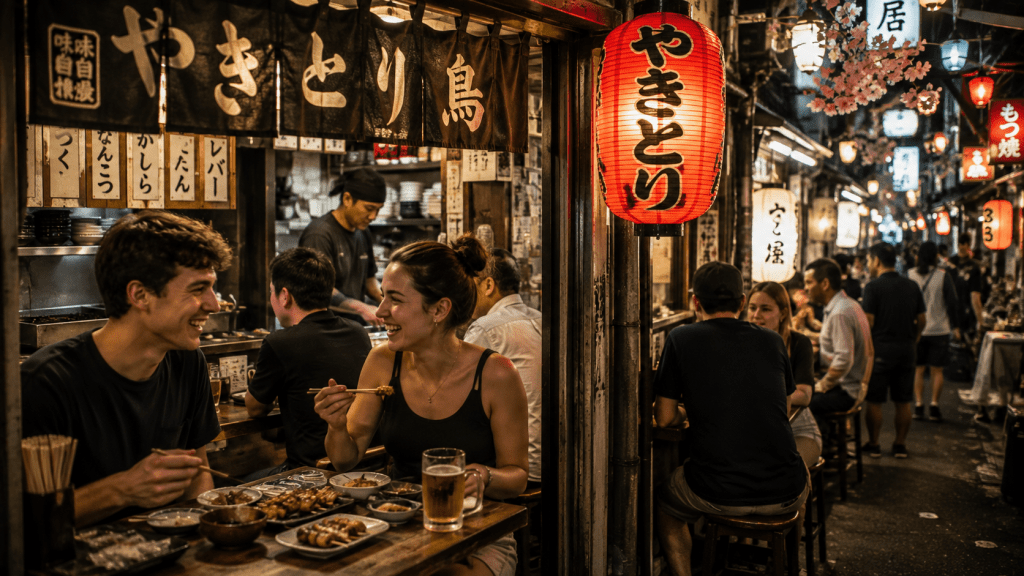
Tokyo can be one of the most exciting cities in the world for food.
And you do not need a huge budget to eat well.
Try sushi, ramen, soba, tempura, yakitori, tonkatsu, Japanese curry and other dishes that interest you.
But avoid focusing only on famous restaurants.
A small ramen counter near your hotel, a neighborhood soba shop or a casual izakaya can easily become one of your favorite meals.
Part of the fun is discovering places while exploring the city.
Not sure what to try? Our Japanese Food Guide introduces Japanese dishes and dining experiences worth discovering during your trip.
9. How to Get Around Tokyo
Tokyo’s train and subway system may look intimidating at first.
In reality, you only need to understand the journey you are making right now.
Use a navigation app to check the train line, platform, transfers and destination.
An IC card also makes everyday travel much easier because you can tap through many train and subway gates instead of purchasing an individual ticket for every journey.
Most importantly, remember that Tokyo is enormous.
Do not plan your days by choosing attractions randomly from a list.
Group nearby neighborhoods together.
For example:
Asakusa + Ueno
Meiji Shrine + Harajuku + Shibuya
Tokyo Station + Marunouchi
This reduces unnecessary travel and gives you more time to enjoy each area.
For more detail, read our Getting Around Japan guide.
10. How Many Days Do You Need in Tokyo?
For most first-time visitors, three to five full days is a good starting point.
With three days, you can experience several major neighborhoods without trying to cover the entire city.
Four or five days gives you more flexibility to explore local areas, visit museums, shop or simply slow down.
If Tokyo is part of a larger Japan trip, you do not necessarily need to spend your entire vacation here.
Tokyo is only the beginning.
Our 7-Day Japan Itinerary shows one way to combine Tokyo with Kyoto and Osaka on a first trip.
11. Where Should First-Time Visitors Stay?
There is no single “best” neighborhood for everyone.
Instead, prioritize transportation and the places you plan to visit.
Shinjuku works well if you want excellent transportation connections and easy access to restaurants and nightlife.
Shibuya is convenient for travelers interested in shopping, food and modern Tokyo.
Ueno can be practical for Asakusa, museums and northeastern Tokyo.
Tokyo Station / Marunouchi can be convenient if your trip involves the Shinkansen.
The most important thing is not choosing the trendiest neighborhood.
It is choosing a location that makes your own itinerary easier.
Not sure which type of accommodation to choose? Our Where to Stay in Japan guide explains hotels, business hotels, ryokan and other accommodation options for first-time visitors.
12. A Simple 3-Day Tokyo Plan
If you only have three full days, you could organize your first Tokyo visit like this.
Day 1 — Traditional Tokyo
Asakusa → Ueno → Tokyo Station / Marunouchi
Start with Senso-ji and the surrounding streets before moving toward Ueno.
Finish your day around Tokyo Station or Marunouchi.
Day 2 — Modern Tokyo
Meiji Shrine → Harajuku → Shibuya
Begin with the quiet forest around Meiji Shrine.
Walk toward Harajuku and gradually move into the energy of Shibuya.
Stay until evening to see the neighborhood after dark.
Day 3 — Your Tokyo
Choose somewhere that matches your interests.
That might mean a local neighborhood, museum, shopping district or simply returning to an area you enjoyed.
Finish your final evening in Shinjuku or at a local restaurant.
The important thing is not filling every hour.
Leave space for discoveries.
13. When Is the Best Time to Visit Tokyo?
Tokyo is a year-round destination, but every season feels different.
Spring brings cherry blossoms and comfortable weather, along with larger crowds during popular periods.
Summer is hot and humid, but festivals and long evenings create a different kind of energy.
Autumn often brings comfortable temperatures and seasonal colors.
Winter can be cold, but clear days and smaller crowds can make city sightseeing enjoyable.
There is no universally perfect month.
The best season depends on what kind of Japan experience you want.
Compare the seasons in our Best Time to Visit Japan guide before choosing your travel dates.
14. Common Mistakes First-Time Tokyo Visitors Make
Trying to See Too Much
Tokyo is enormous.
Trying to visit Asakusa, Shibuya, Shinjuku and several other distant neighborhoods in one day can turn sightseeing into transportation.
Ignoring Travel Time
A destination may still be technically “in Tokyo” while being much farther away than you expect.
Always check actual travel time.
Visiting Only Famous Places
See the famous sights you genuinely want to see.
But leave room for ordinary streets, small restaurants and unexpected discoveries.
Planning Every Minute
Tokyo rewards curiosity.
If you find a neighborhood you enjoy, give yourself permission to stay longer.
Your itinerary is there to help you — not control you.
Your First Tokyo Trip Doesn’t Need to Be Perfect
Tokyo can feel overwhelming before you arrive.
After a few train journeys and a couple of days walking through its neighborhoods, the city usually begins to feel much easier.
Do not judge the success of your trip by how many attractions you manage to photograph.
Walk.
Eat.
Take the train.
Explore a street you did not plan to visit.
Sit somewhere and watch Tokyo move around you.
The goal is not to “complete” Tokyo.
It is to experience it.
Heading to Kyoto next? Our Kyoto for First-Time Visitors guide covers the best areas, temples, transportation and practical tips for planning your stay.
Heading to Osaka as well? Our Osaka for First-Time Visitors guide covers the best areas, food, transportation and practical tips for your first visit.
And when you are ready to discover a different side of Japan, explore our 10 Beautiful Places Beyond Tokyo and Kyoto.
 Beyond Japan Guide
Leave a comment