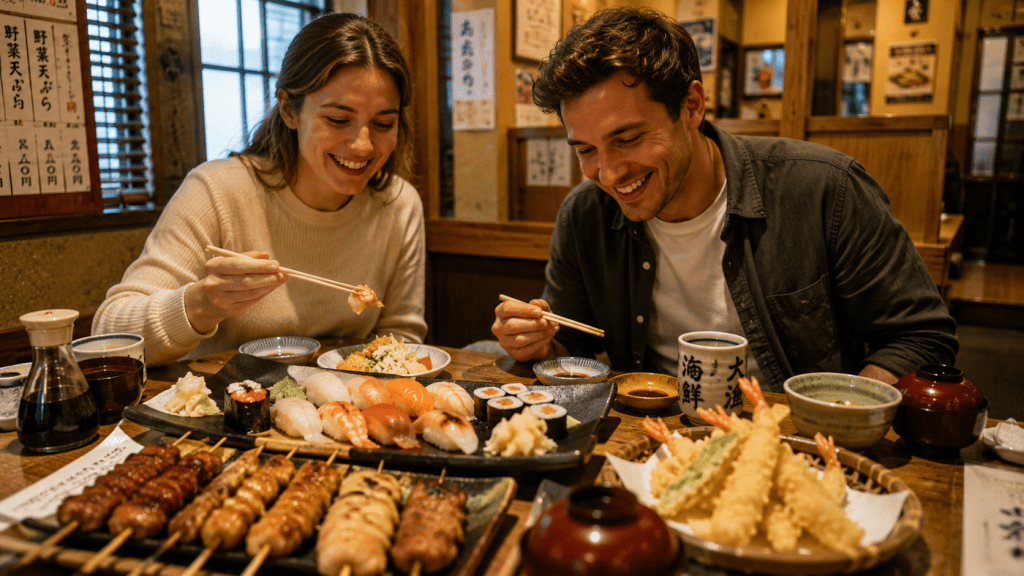
Food can become one of the most memorable parts of a trip to Japan.
Sushi and ramen may be the dishes you already know, but they are only the beginning. Travel across the country and you’ll encounter regional noodles, sizzling street food, carefully prepared set meals, tiny yakitori counters, seasonal sweets and dishes that rarely appear on menus outside Japan.
You don’t need to visit expensive restaurants to eat well, either. Some of the most enjoyable meals can come from a neighborhood restaurant, a station food hall, a market stall or a small shop you discovered while walking.
This guide introduces 15 foods worth trying on your first trip — not as a checklist you need to complete, but as a starting point for discovering Japan through what you eat.
Visiting Japan for the first time? Read our First Time in Japan guide for practical tips to help you prepare for your trip.
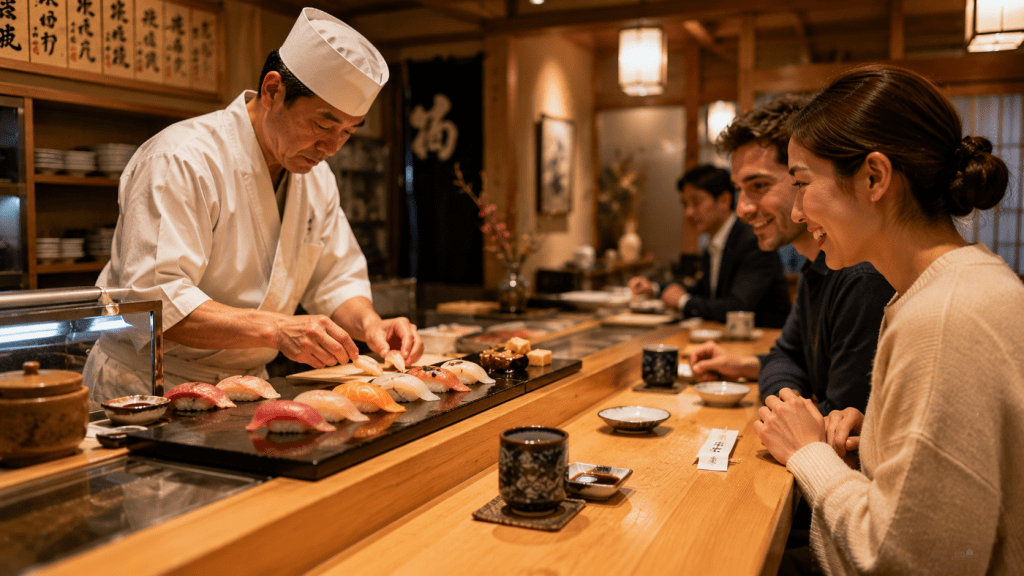
1. Sushi — Start With the Classic
Sushi may be Japan’s most internationally recognized food, but eating it in Japan can still feel like a completely new experience.
You can find everything from casual conveyor-belt sushi to small counters where each piece is prepared directly in front of you.
Don’t worry about ordering the most expensive fish. Try different textures and flavors, and pay attention to what is in season.
A simple piece of well-prepared sushi can be just as memorable as an elaborate meal.
Try: Nigiri / Maki / Sashimi
2. Ramen — One Dish, Countless Styles
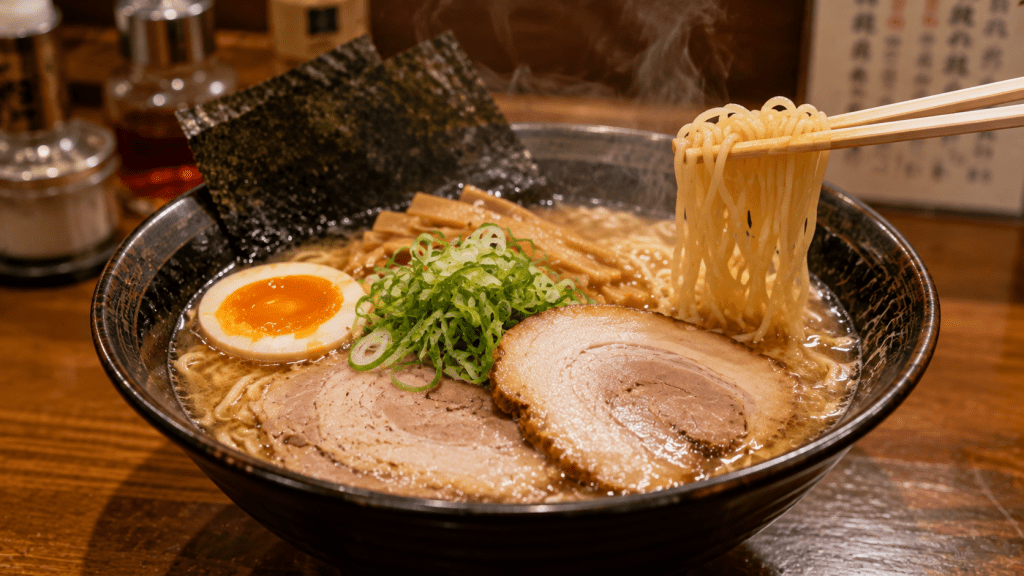
Ramen isn’t one single flavor.
Travel around Japan and you’ll find bowls built around different broths, noodles and regional traditions.
Tonkotsu ramen from Fukuoka is known for its rich pork-bone broth, while Sapporo is famous for miso ramen. Other styles use soy sauce, salt-based broths, seafood or combinations that vary from shop to shop.
Part of the fun is finding a small ramen shop, ordering from a ticket machine and discovering what that particular kitchen does differently.
3. Tempura — Light, Crisp and Surprisingly Delicate
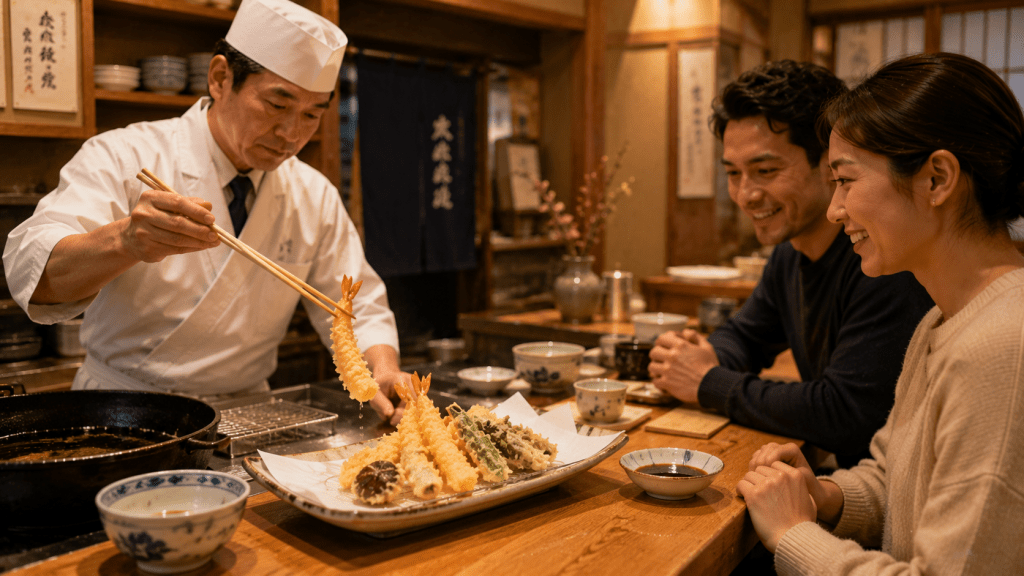
Tempura is often described simply as battered and fried seafood or vegetables, but good tempura is much lighter than that description suggests.
Shrimp, seasonal vegetables, fish and other ingredients are coated in a delicate batter and fried quickly to preserve their texture.
You might encounter tempura as part of a set meal, served over rice as tendon, or prepared piece by piece at a specialist restaurant.
It’s a good example of how Japanese cooking can turn a simple technique into something highly refined.
4. Yakitori — Japan’s Casual Evening Food
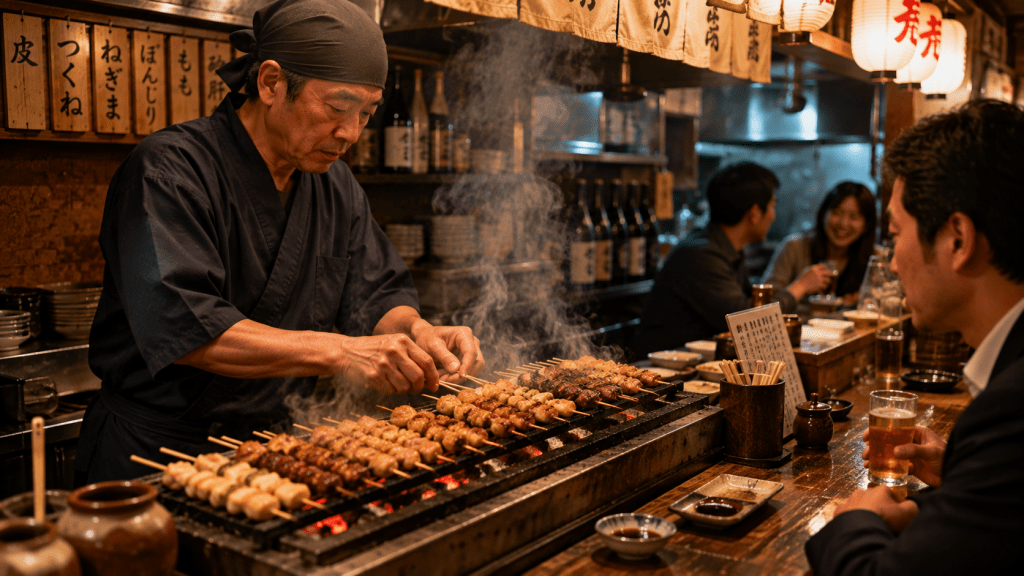
Yakitori is one of the easiest foods to enjoy on a relaxed evening in Japan.
Small pieces of chicken are skewered and grilled over charcoal, then seasoned with salt or a sweet-savory sauce known as tare.
Different skewers use different parts of the chicken, so ordering several varieties is part of the experience.
Look for small yakitori restaurants and izakaya around local train stations, where the atmosphere can be just as memorable as the food.
Try: Negima / Tsukune / Kawa
5. Okonomiyaki — Cooked on the Griddle
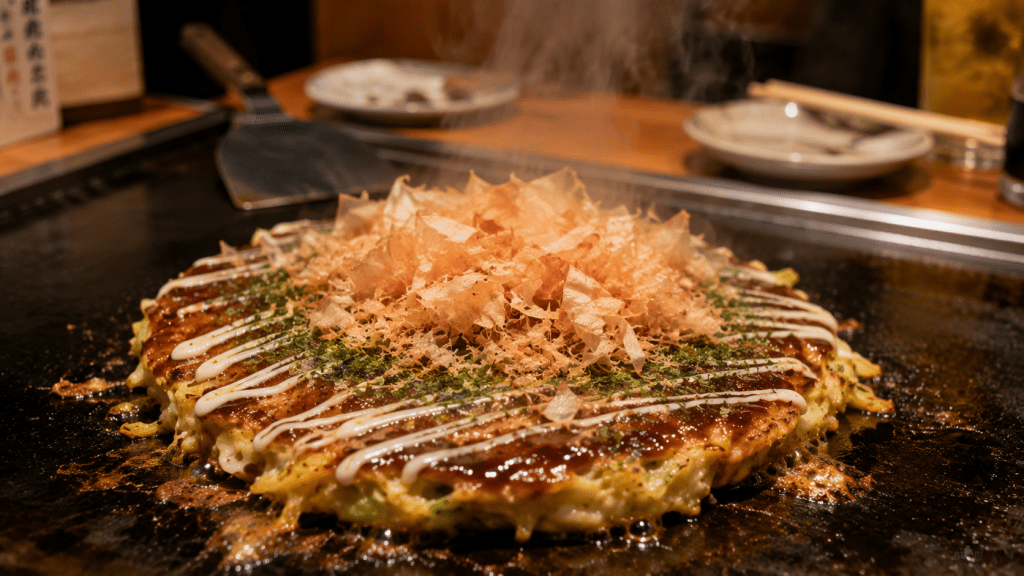
Okonomiyaki is sometimes described as a Japanese savory pancake, although that doesn’t quite capture what makes it special.
The dish combines batter with ingredients such as cabbage, meat or seafood before being cooked on a hot griddle and finished with sauce, mayonnaise and other toppings.
Osaka and Hiroshima are particularly famous for their own styles, and trying both is a good way to see how regional food traditions can transform the same basic idea.
If Osaka is part of your trip, see how to include the city in our 7-Day Japan Itinerary.
6. Takoyaki — Osaka’s Famous Street Snack
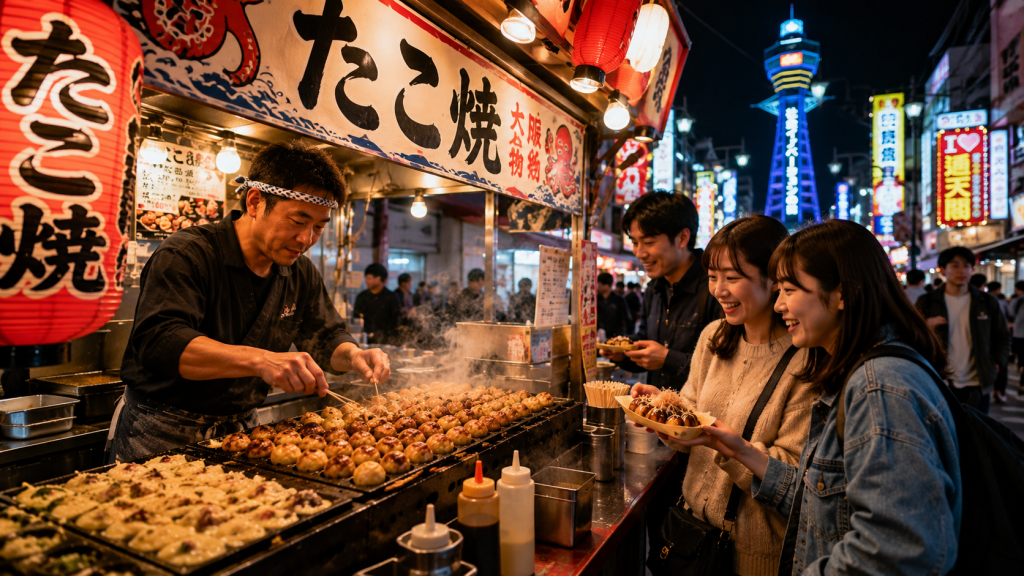
Takoyaki are small, round pieces of batter cooked in a special molded pan with octopus inside.
They’re typically served piping hot with sauce, mayonnaise and toppings such as bonito flakes.
Osaka is the classic place to try them, particularly when exploring busy food streets and entertainment districts in the evening.
One important piece of advice: give them a moment to cool down before taking the first bite.
7. Tonkatsu — Crispy Pork Cutlet
Tonkatsu is a breaded pork cutlet fried until crisp on the outside while remaining tender inside.
It is commonly served with shredded cabbage, rice, miso soup and a rich tonkatsu sauce.
You’ll also find it in sandwiches, curry and rice bowls.
It’s straightforward, comforting and a useful option when you want a satisfying meal without navigating an unfamiliar menu.
8. Soba — Simple Noodles With a Long Tradition
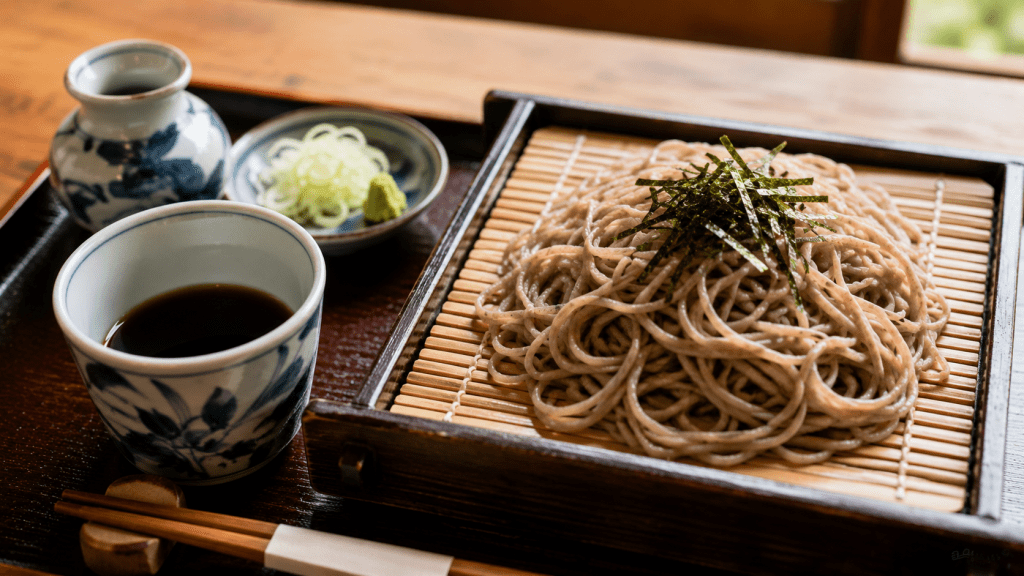
Made primarily from buckwheat, soba noodles can be eaten hot in broth or served cold with a dipping sauce.
They are found throughout Japan, but certain regions have particularly strong soba traditions.
Cold zaru soba can be refreshing during warmer months, while a steaming bowl of soba feels completely different on a winter journey.
This is one of those foods where simplicity allows the quality of the noodles and broth to stand out.
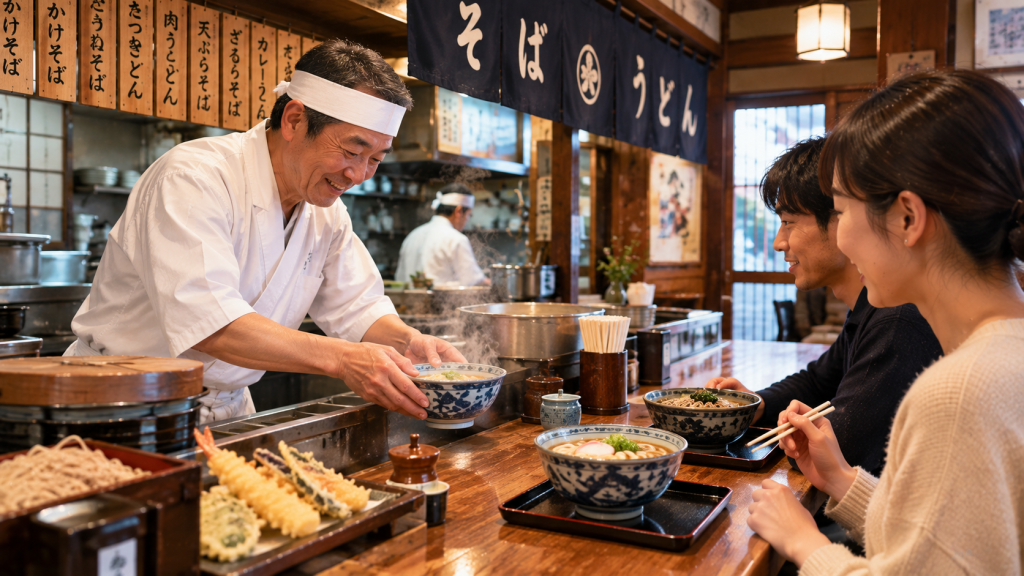
9. Udon — Thick, Comforting Noodles
Udon noodles are thicker and softer than soba and appear in an enormous range of dishes.
They may arrive in a warm broth, chilled with dipping sauce or topped with tempura and other ingredients.
Kagawa Prefecture is particularly famous for Sanuki udon, making it an excellent destination for travelers who enjoy exploring regional food culture.
Even a simple bowl at a small local shop can become one of those unexpectedly memorable meals.
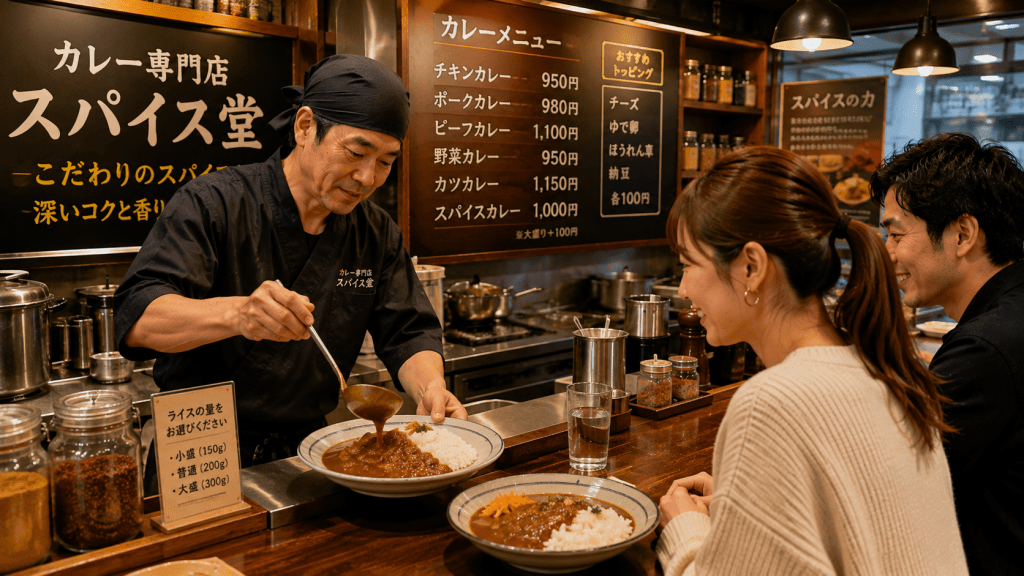
10. Japanese Curry — Everyday Comfort Food
Japanese curry is very different from the curries many travelers may know from South or Southeast Asia.
It is generally thicker, mildly spiced and commonly served over rice.
Add a crispy tonkatsu and you have katsu curry, one of Japan’s classic comfort-food combinations.
Curry shops are widespread, affordable and particularly useful when you want something quick and filling during a busy sightseeing day.
11. Donburi — A Meal in One Bowl
Donburi simply refers to a bowl of rice topped with other ingredients.
That simple idea produces countless variations.
Gyudon comes with thinly sliced beef, oyakodon combines chicken and egg, katsudon adds pork cutlet, while seafood versions can feature fresh sashimi over rice.
Donburi restaurants are often fast and reasonably priced, making them useful for travelers moving between attractions.
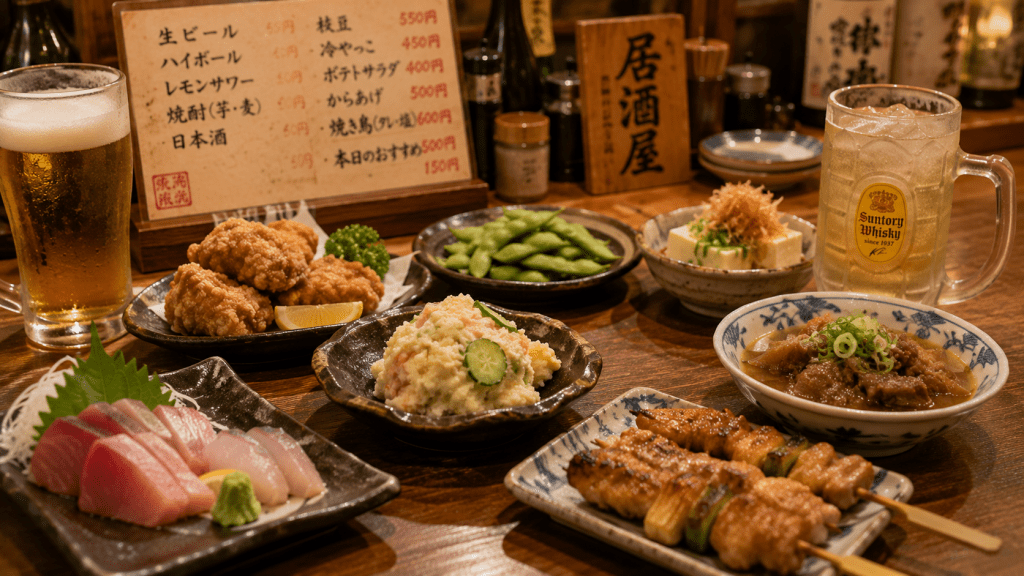
12. Izakaya Food — Order a Little of Everything
An izakaya isn’t defined by one particular dish.
Think of it as a casual place where people gather over drinks and share a variety of small plates.
Menus might include sashimi, grilled fish, fried chicken, tofu, vegetables, yakitori and dozens of other dishes.
For travelers, an izakaya can be one of the easiest ways to try several Japanese foods in a single evening.
13. Onigiri — The Simple Convenience Store Essential
Not every meal in Japan needs to be a restaurant experience.
Onigiri are rice balls filled or seasoned with ingredients such as salmon, tuna, pickled plum or kombu and often wrapped in seaweed.
You’ll find them in convenience stores, supermarkets and specialist shops.
They’re inexpensive, portable and particularly useful for an early train journey or a quick lunch between destinations.
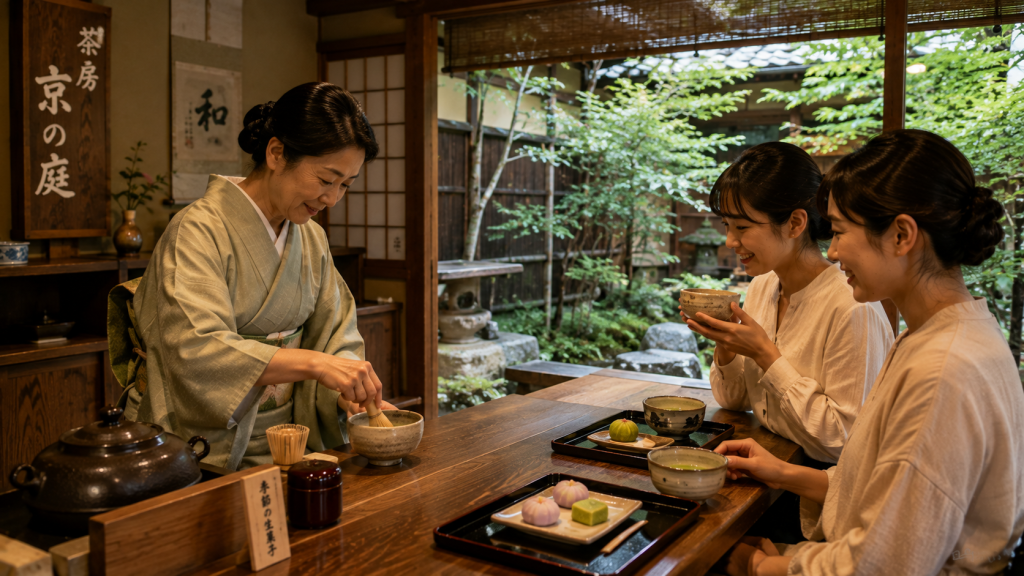
14. Wagashi and Matcha — Slow Down for Something Sweet
Japanese sweets can be very different from Western desserts.
Traditional wagashi often use ingredients such as sweet bean paste, mochi and seasonal motifs, and many are designed to be enjoyed alongside green tea.
Matcha adds its distinctive bitterness to everything from traditional tea to modern desserts, parfaits and ice cream.
Instead of treating matcha as just another flavor, try it somewhere you can slow down and experience the balance between tea and sweetness.
15. Regional Specialties — Eat Where You Travel
One of the best ways to experience Japanese food is to stop asking only, “What should I eat in Japan?” and start asking, “What should I eat here?”
Different regions take enormous pride in local ingredients and dishes.
Fukuoka has tonkotsu ramen.
Osaka is famous for takoyaki and okonomiyaki.
Visiting Osaka? Our Osaka for First-Time Visitors guide covers the best areas to explore, local food, transportation and practical travel tips.
Kagawa is synonymous with Sanuki udon. Hokkaido offers exceptional seafood and dairy products, while Kagoshima has its own distinctive pork, seafood and regional cuisine.
When you arrive somewhere new, look for what that place is known for.
Food becomes much more interesting when it becomes part of the destination.
Want to discover more of Japan through its regions? Explore our guide to 10 Beautiful Places Beyond Tokyo and Kyoto.
You Don’t Need a Food Checklist
Trying Japanese food shouldn’t feel like completing a list.
Order something you recognize, but leave room for something you don’t.
Walk into a small neighborhood restaurant. Try the local specialty. Visit a market. Eat something simple at a station. Ask what is seasonal.
Some meals will be carefully planned.
Others will happen because you were hungry and walked through the right door.
Those unexpected meals may be the ones you remember most.
Visiting Japan for the first time? Read our First Time in Japan guide for practical tips before you go.
Building your itinerary? Our 7-Day Japan Itinerary shows how to experience Tokyo, Kyoto and Osaka at a comfortable pace.
Looking beyond the classic route? Discover 10 Beautiful Places Beyond Tokyo and Kyoto.
Traveling between cities? Read our Getting Around Japan guide for trains, IC cards and Shinkansen tips.
What you eat in Japan can also change with the seasons. See our Best Time to Visit Japan guide to discover what each season offers beyond the food.
 Beyond Japan Guide
Leave a comment