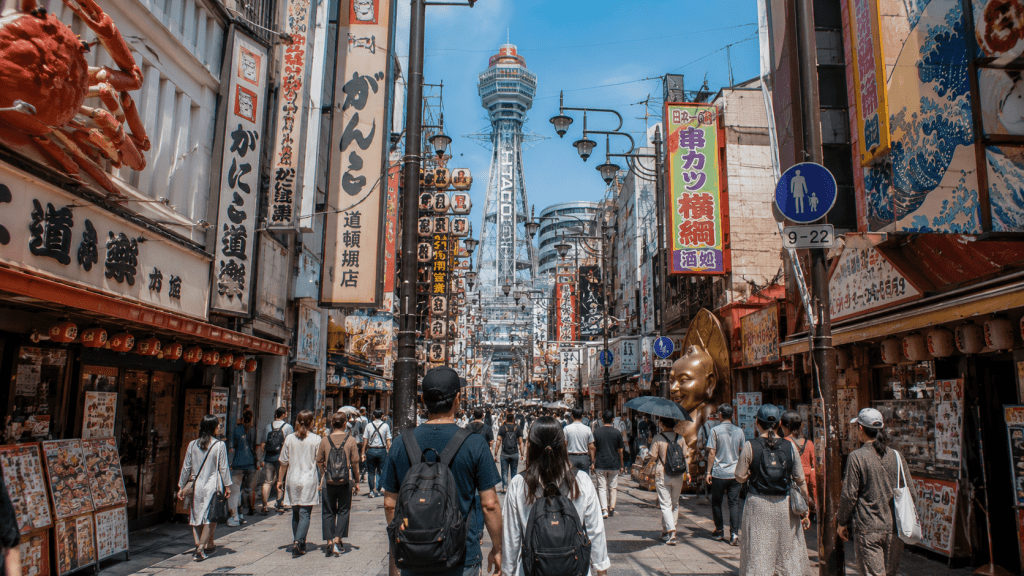
Osaka feels different from Tokyo and Kyoto almost immediately.
The city is energetic, casual and famous for food, nightlife and entertainment, but it also has historic landmarks, traditional neighborhoods and quieter areas that are easy to overlook.
For first-time visitors, Osaka is relatively easy to explore once you understand its main areas.
You do not need to rush across the entire city.
Spend time around Namba and Dotonbori, explore Osaka Castle, experience the atmosphere of Shinsekai and leave enough room in your itinerary to simply eat and wander.
This guide covers the essential areas, food, transportation and practical tips you need to enjoy your first trip to Osaka.
Visiting Japan for the first time? Start with our First Time in Japan guide for practical things to know before your trip.
1. Dotonbori — Experience Osaka’s Energy
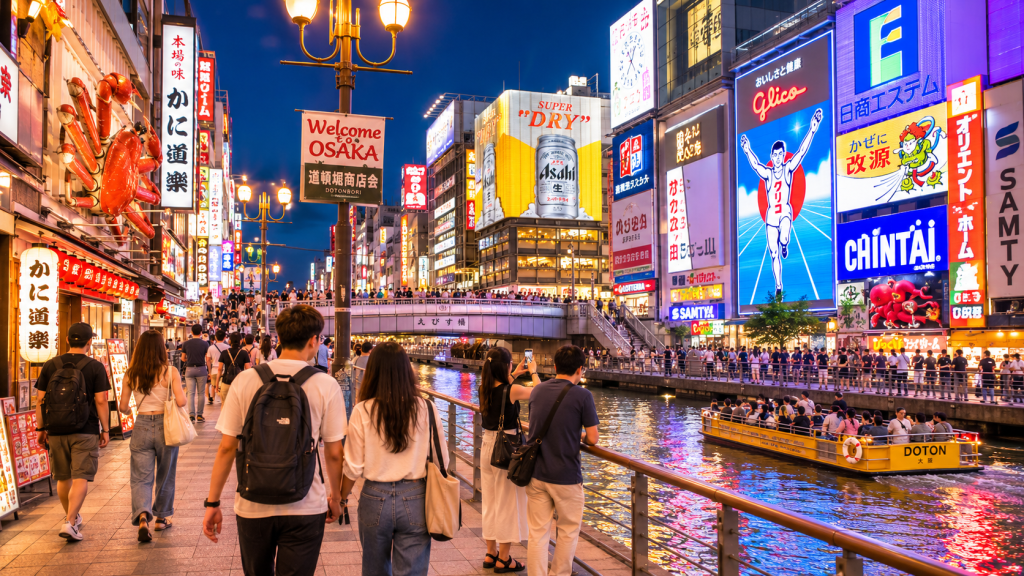
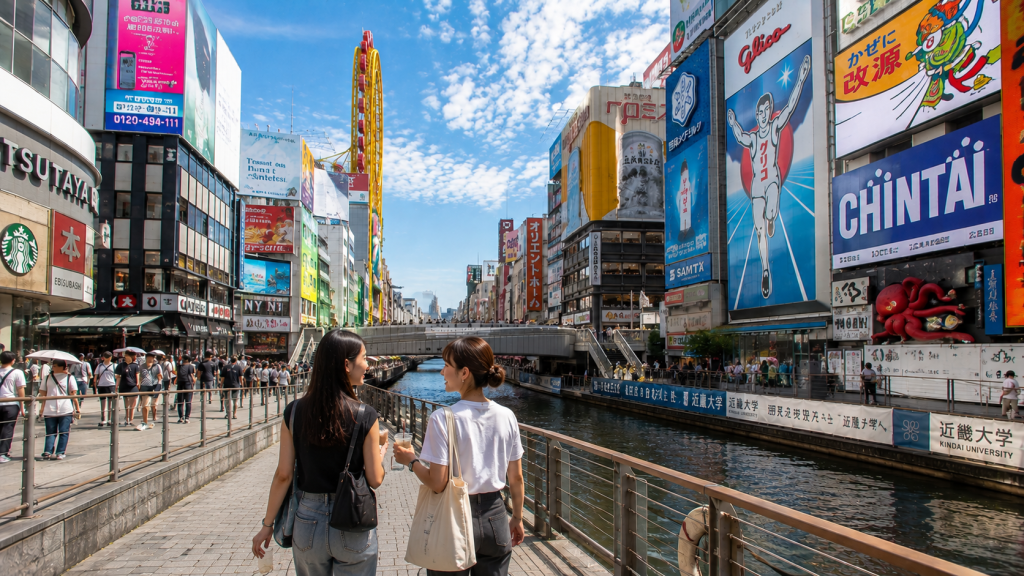
Dotonbori is one of the first places many travelers imagine when they think of Osaka.
Neon signs, giant restaurant displays, busy streets and the canal create an atmosphere that feels very different from Kyoto.
The area is particularly lively in the evening, when the lights reflect across the water and restaurants fill with visitors.
But do not arrive only to photograph the famous signs and immediately leave.
Walk along the canal, explore the surrounding streets and continue toward nearby Namba and Shinsaibashi.
This is one of the best areas to experience Osaka’s energetic personality.
2. Osaka Castle — Discover the City’s History
Osaka is famous for food and entertainment, but the city also has an important historical side.
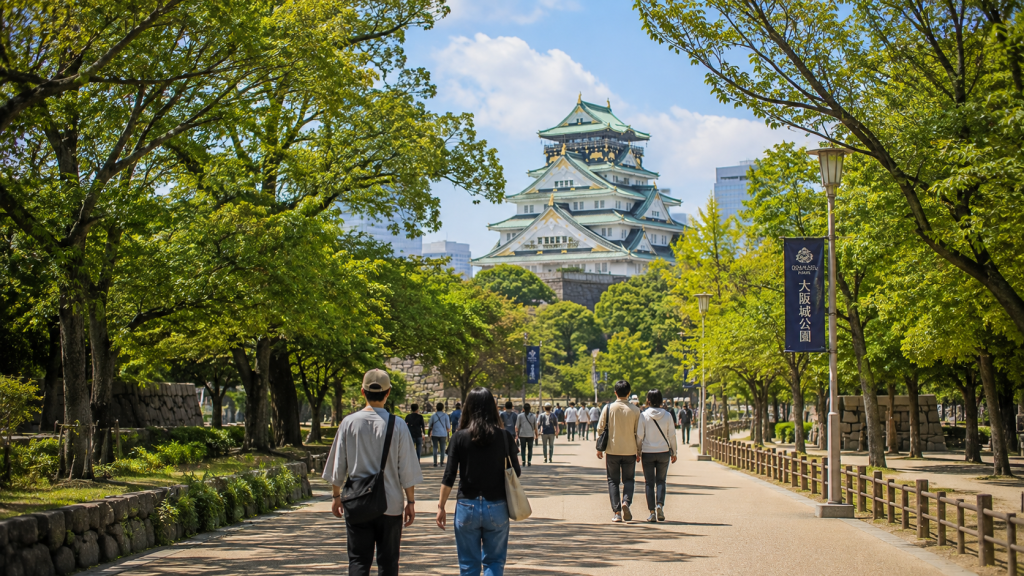
Osaka Castle is one of its most recognizable landmarks.
The castle grounds provide a very different experience from the busy streets around Namba and Dotonbori.
Give yourself time to walk through the park rather than treating the castle as a quick photo stop.
The surrounding green spaces can also provide a welcome break from the city’s dense urban neighborhoods.
Visiting Osaka Castle and Dotonbori on the same trip is a simple way to experience two very different sides of Osaka.
3. Shinsekai — Experience Retro Osaka
Shinsekai offers another side of the city.
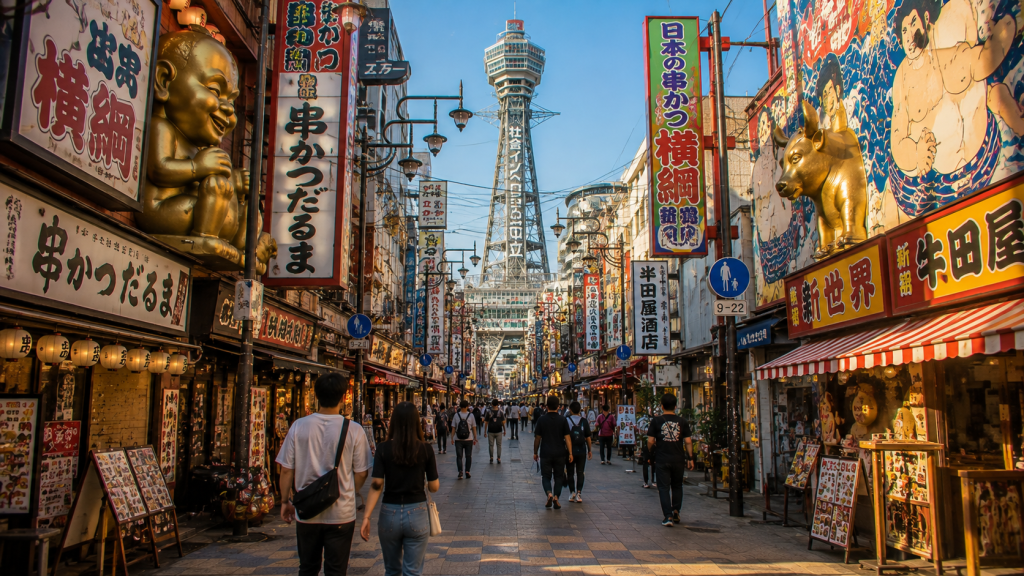
Colorful signs, casual restaurants and the distinctive Tsutenkaku Tower give the neighborhood a retro atmosphere.
It is also a popular area for trying kushikatsu — deep-fried skewers that are strongly associated with Osaka.
Rather than visiting only for Tsutenkaku, walk through the surrounding streets and take in the neighborhood itself.
Shinsekai can feel very different from both modern Umeda and the polished shopping streets around Shinsaibashi.
4. Namba & Shinsaibashi — Shopping, Food and City Life
Namba is one of the most convenient areas for first-time visitors to Osaka.
Restaurants, shopping streets and entertainment are concentrated within a relatively compact area.
Nearby Shinsaibashi offers another major shopping district, while smaller streets between the main attractions can reveal cafés, restaurants and local businesses.
You do not need a detailed sightseeing schedule here.
This is an area where simply walking, eating and exploring can be the experience.
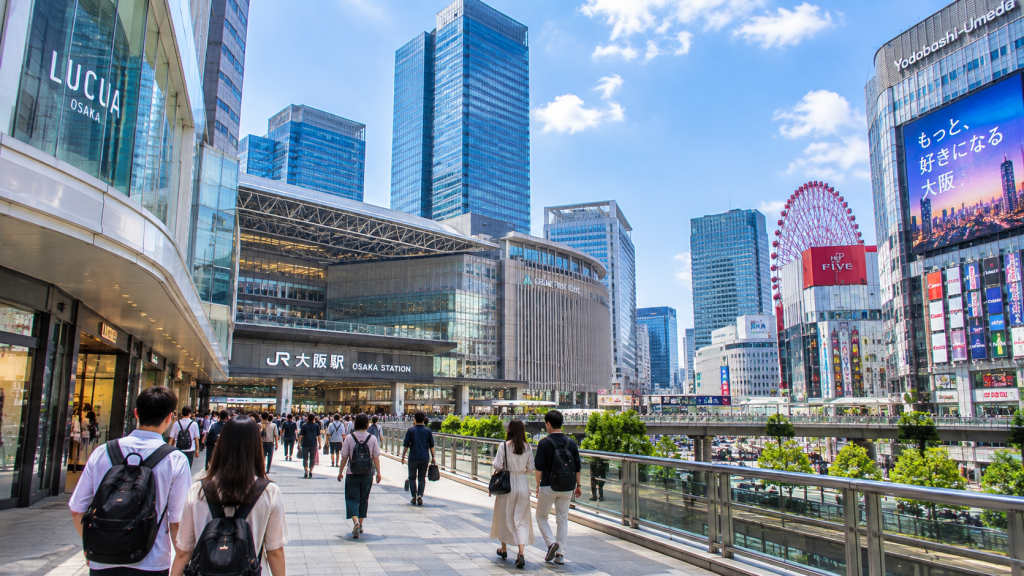
5. Umeda — See Modern Osaka
Umeda shows you a more modern side of Osaka.
The area around Osaka Station is filled with large shopping complexes, office towers, restaurants and transportation hubs.
It can feel confusing at first because several major stations and underground spaces connect across the district.
Rather than trying to understand everything immediately, use your navigation app and follow signs for the specific station or building you need.
Umeda is also a useful base if you plan to travel between Osaka and other parts of the Kansai region.
6. What Should You Eat in Osaka?
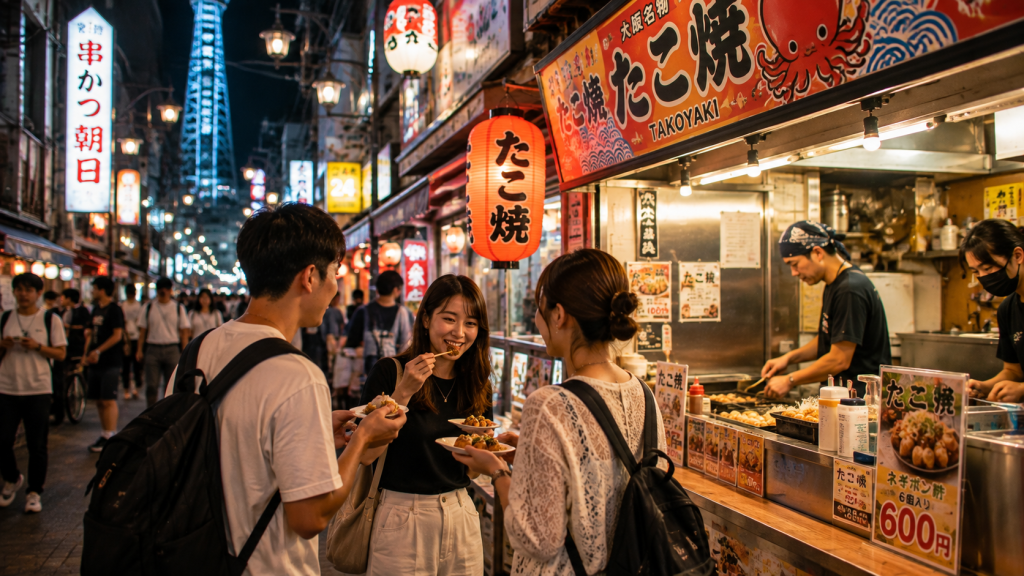
Food is one of the biggest reasons to spend time in Osaka.
Takoyaki and okonomiyaki are the obvious places to start, but they are only part of the city’s food culture.
Try kushikatsu in Shinsekai, explore small restaurants around Namba or simply follow a busy local street and see what looks interesting.
Osaka is a city where casual food can be just as memorable as a carefully planned restaurant meal.
Do not feel that every meal needs to come from a famous place.
Sometimes the best part of eating in Osaka is discovering something while walking through the city.
For more local specialties, explore the Osaka Official Tourism Guide to local food.
For more dishes to try across Japan, read our Japanese Food Guide.
7. Explore Local Osaka Beyond the Famous Sights
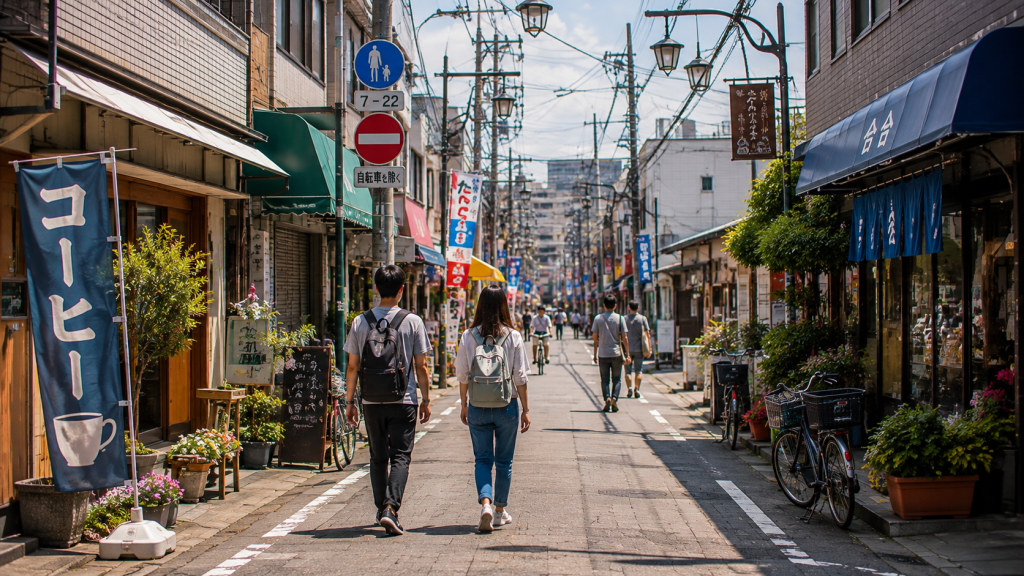
Dotonbori, Osaka Castle and Shinsekai are excellent places to start, but Osaka becomes even more interesting when you leave the major sightseeing routes.
Walk through a local shopping street, stop at a neighborhood café or explore smaller streets away from the busiest stations.
Areas outside the main tourist centers can show you a more everyday side of the city.
You do not need to search for hidden attractions.
Simply leave some unscheduled time and walk.
Osaka’s casual atmosphere makes it a particularly enjoyable city for this kind of exploration.
8. How to Get Around Osaka
Osaka’s train and subway network makes it relatively easy to explore the city.
JR lines are useful for some journeys, while the Osaka Metro connects many of the areas first-time visitors are likely to explore.
An IC card can make everyday transportation more convenient because you can tap in and out without buying an individual ticket for every journey.
One important detail is that Shin-Osaka Station and Osaka Station are different stations.
The Shinkansen stops at Shin-Osaka, while Osaka Station is the major transportation hub in the Umeda area.
If you arrive by Shinkansen, check your route before assuming you have arrived in central Umeda.
For a broader explanation of trains, IC cards and the Shinkansen, read our Getting Around Japan guide.
9. How Many Days Do You Need in Osaka?
For most first-time visitors, two full days is a good starting point.
One day is possible if Osaka is only one stop on a larger Japan itinerary, but you will need to be selective.
Two days gives you enough time to explore areas such as Dotonbori, Namba, Osaka Castle, Shinsekai and Umeda without turning the entire visit into a race.
Three days gives you more time for local neighborhoods, slower meals or additional attractions.
Osaka can also work well as a base for exploring other destinations in the Kansai region.
If you are combining Osaka with Tokyo and Kyoto, see our 7-Day Japan Itinerary.
10. Where Should First-Time Visitors Stay in Osaka?
There is no single best area for every traveler.
Namba is an excellent choice if food, nightlife and easy access to Dotonbori are priorities.
Umeda is convenient for transportation and can be especially useful if you plan to make day trips or travel to other cities.
Shinsaibashi provides convenient access to shopping, restaurants and the wider Minami area.
The best location depends on what you want to do.
For a short first visit, staying near a major station can save more time than choosing a hotel simply because it looks close to one attraction on a map.
Need help choosing the right type of accommodation? Read our Where to Stay in Japan guide for hotels, business hotels, ryokan and other options.
11. A Simple 2-Day Osaka Itinerary
Day 1 — Namba, Dotonbori & Shinsekai
Namba → Shinsaibashi → Dotonbori → Shinsekai
Start around Namba and Shinsaibashi, explore the surrounding shopping streets and gradually make your way toward Dotonbori.
Enjoy the area in the afternoon and evening, when the signs and streets become more atmospheric.
Later, make your way to Shinsekai for a different side of Osaka and another opportunity to try local food.
Day 2 — Osaka Castle & Umeda
Osaka Castle → Osaka Castle Park → Umeda
Spend the morning around Osaka Castle and its surrounding park.
Later, move toward Umeda and explore the modern city around Osaka Station.
Leave some free time for shopping, food or simply walking through the city.
A good Osaka itinerary should give you enough structure to see the highlights without scheduling every hour.
12. Osaka as a Base for Exploring Kansai
One advantage of staying in Osaka is its location.
Kyoto is an obvious next destination, but Osaka can also be a useful base for exploring other parts of the Kansai region.
Depending on your itinerary, you may consider day trips or onward journeys to places such as Nara, Kobe or Himeji.
Do not automatically add every destination to your schedule.
If this is your first trip to Japan, spending enough time in Osaka and Kyoto may be more rewarding than trying to visit a different city every day.
Planning the Kyoto part of your journey? Read our Kyoto for First-Time Visitors guide.
13. When Is the Best Time to Visit Osaka?
Osaka can be visited throughout the year, but each season creates a different experience.
Spring brings mild weather and cherry blossoms, while autumn is comfortable for walking and exploring the city.
Summer is hot and humid, so plan breaks and avoid underestimating the heat when spending long periods outdoors.
Winter is colder but can be a comfortable time for city sightseeing if you are prepared for the weather.
There is no single perfect season for every traveler.
For a complete comparison of Japan’s seasons, weather and major travel periods, read our Best Time to Visit Japan guide.
14. Common Mistakes First-Time Osaka Visitors Make
Spending All Your Time in Dotonbori
Dotonbori is fun, but it is only one part of Osaka. Explore other areas to understand the city better.
Confusing Osaka Station with Shin-Osaka Station
They are different stations. Check carefully when using the Shinkansen or transferring between transportation networks.
Trying to Eat Only at Famous Restaurants
Osaka has countless casual restaurants and small food businesses. A long line does not automatically mean you need to wait there.
Planning Too Many Day Trips
Osaka is a convenient base, but filling every day with trips to other cities can mean barely experiencing Osaka itself.
Comparing Osaka Too Much with Tokyo
Osaka has its own atmosphere. Enjoy it for what it is rather than expecting a smaller version of Tokyo.
15. Tokyo, Kyoto or Osaka — How Are They Different?
Tokyo, Kyoto and Osaka are often included in the same first trip to Japan, but they offer very different experiences.
Tokyo is enormous, modern and filled with neighborhoods that can feel like separate cities.
Kyoto is known for temples, historic streets, gardens and traditional culture.
Osaka feels more casual and is particularly enjoyable for food, nightlife and energetic street life.
You do not need to decide which city is “best.”
Experiencing all three can help you understand how different Japanese cities can feel.
Starting your journey in the capital? Read our Tokyo for First-Time Visitors guide.
Continuing to Japan’s historic capital? Read our Kyoto for First-Time Visitors guide.
Eat, Walk and Enjoy Osaka at Your Own Pace
Osaka does not need to be complicated.
Walk through Dotonbori after dark. Explore Osaka Castle and its surrounding park. Try local food in Shinsekai. Experience modern Osaka around Umeda.
But also leave time for the moments you did not plan.
Enter a small restaurant. Walk through a local shopping street. Stop when something looks interesting.
Osaka is a city that rewards curiosity more than a perfectly organized sightseeing schedule.
And once you have experienced Tokyo, Kyoto and Osaka, there is much more of Japan waiting beyond the major cities.
Continue your journey with our 10 Beautiful Places Beyond Tokyo and Kyoto.
 Beyond Japan Guide
Leave a comment