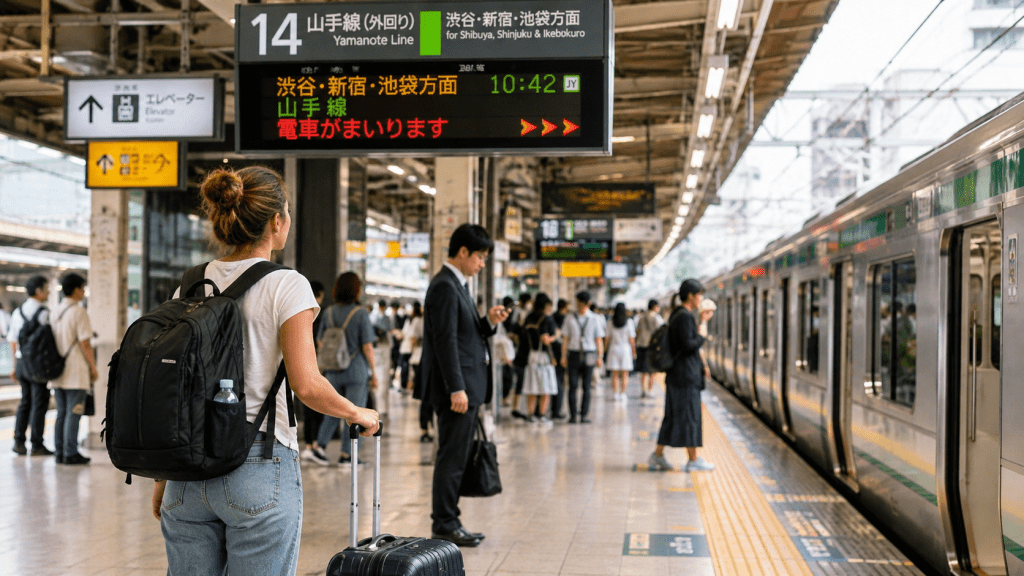
Japan’s transportation system has a reputation for being efficient, clean and incredibly convenient.
It can also look overwhelming when you first arrive.
Different railway companies share the same cities, stations can have dozens of exits, and even a simple journey may involve local trains, subways and the Shinkansen.
The good news is that you don’t need to understand the entire system.
Once you know a few basic ideas — how to plan a route, how IC cards work, when to buy a separate ticket and how to navigate a station — getting around Japan becomes much easier.
This guide covers the essentials you need for your first trip, without turning Japanese transportation into something more complicated than it needs to be.
1. Start With a Route-Planning App
The easiest way to navigate Japan is not to memorize the railway system. Let your phone do most of the work.
Enter your destination into a reliable route-planning or map app and check the departure time, train line, platform, transfers and estimated fare.
In large stations, also pay attention to the exit number. Choosing the right exit can save a surprisingly long walk once you reach your destination.
Give yourself a little extra time during your first few journeys. After a day or two, reading station signs and following transfer directions will start to feel much more natural.
2. Understand the Basic Types of Trains
You don’t need to learn every train category in Japan, but understanding a few basic differences will make travel easier.
Local trains generally stop at every station.
Rapid and express trains skip some stations, allowing you to travel farther more quickly.
Limited express trains are often used for longer journeys and may require an additional limited express ticket.
Shinkansen are Japan’s high-speed trains, connecting major cities across the country.
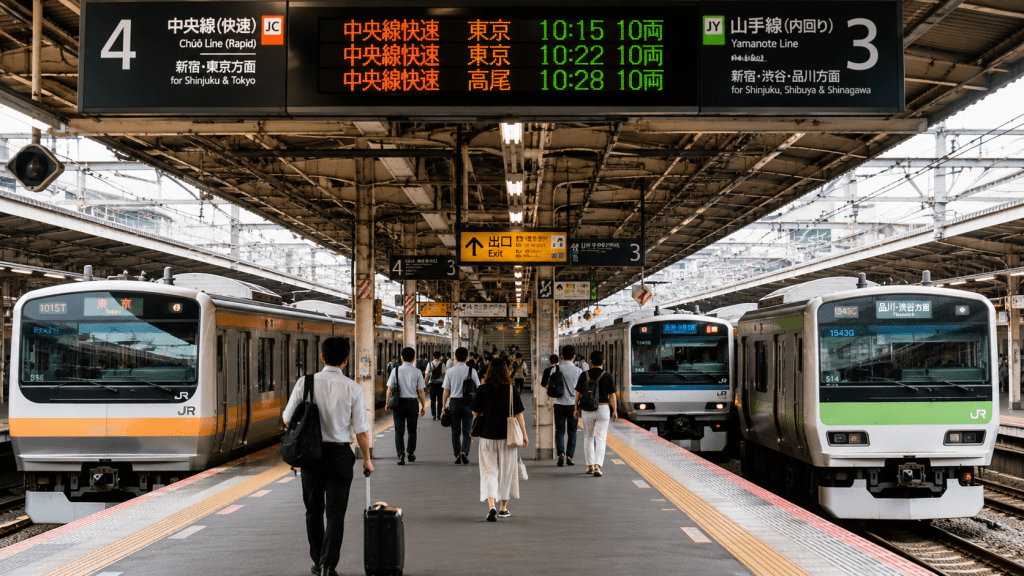
Before boarding, check that your train actually stops at your destination. Two trains may use the same platform while serving different sets of stations.
3. IC Cards Make Everyday Travel Much Easier
For most visitors, an IC card is one of the simplest ways to handle everyday transportation.
Instead of buying an individual ticket for every local train or subway journey, you can add money to the card and tap it at the ticket gate when entering and leaving.
IC cards can also be useful beyond transportation. Many convenience stores, vending machines, lockers and other businesses accept them for small purchases.
Different regions have their own cards, but major IC cards are widely interoperable across many transportation networks in Japan.
There are exceptions, however, especially when traveling between certain regions or using services that require separate tickets.
For short-term visitors, options such as Welcome Suica can make local transportation especially convenient. Availability, purchase locations and conditions can change, so check the official information before your trip.
Check Welcome Suica information →
4. How to Use a Train Station
Large Japanese stations can feel like small cities.
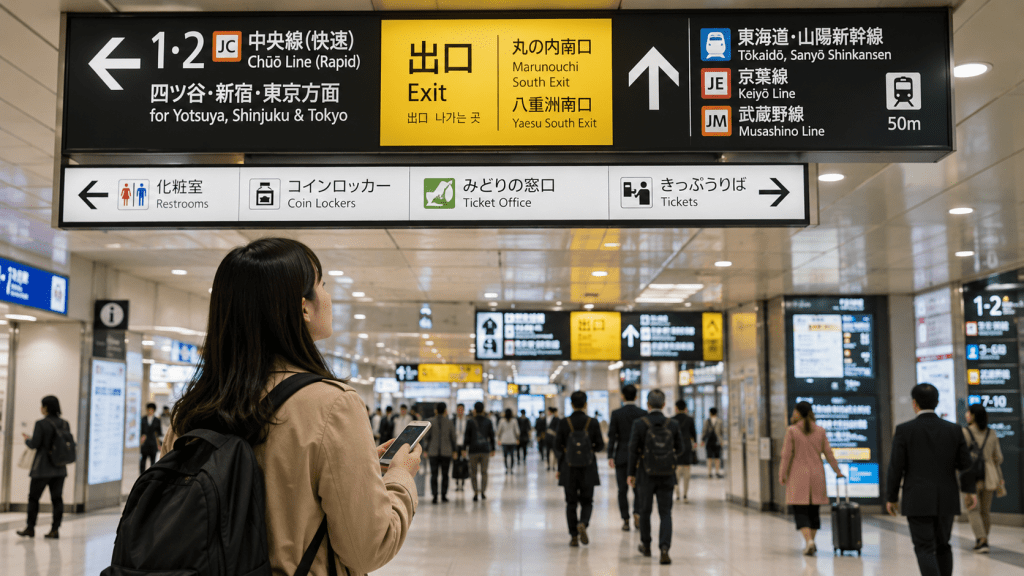
Instead of trying to understand the entire station at once, break your journey into a few simple steps:
First, find the railway company or train line you need.
Next, follow signs toward the correct platform.
At your destination, check which exit is closest to where you want to go.
Most major stations provide English signage, and platform numbers are usually clearly displayed.
If you’re unsure, show your destination to station staff. You don’t need perfect Japanese to ask for help.
5. The Shinkansen Is Easier Than It Looks
Taking the Shinkansen for the first time can feel like a major travel event, but the process is relatively straightforward once you understand the basics.
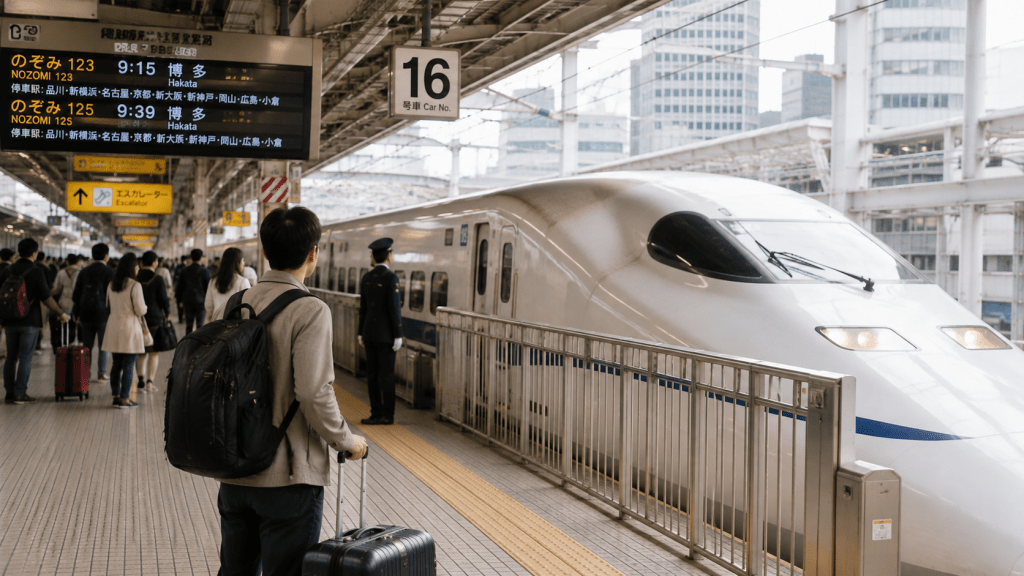
Find the Shinkansen area of the station, confirm your train and platform, pass through the appropriate ticket gate and arrive at the platform with enough time to find your car.
Trains usually stop for only a short time, so check your car number before the train arrives.
If you have a reserved seat, your ticket will indicate the train, departure time, car and seat number.
6. Reserved or Non-Reserved Seat?
Depending on the train and service, you may be able to choose between reserved and non-reserved seating.
A reserved seat gives you a specific seat on a specific train. This can be reassuring when traveling with luggage, during busy periods or when you want to sit together with your companions.
Non-reserved seating can provide more flexibility where available, but seats are not guaranteed.
During particularly busy travel periods, planning ahead becomes much more important.
7. What About the Japan Rail Pass?
The Japan Rail Pass is well known among international visitors, but it should not automatically be part of every Japan itinerary.
Whether it makes financial sense depends on where you’re traveling, how often you’ll take eligible trains and the type of journeys in your itinerary.
Before purchasing a pass, compare its price with the approximate cost of the individual journeys you actually plan to take.
For some itineraries, a rail pass may still be convenient. For others, individual tickets or regional passes may make more sense.
Prices and conditions can change, so always check the official Japan Rail Pass website before purchasing.
Check Japan Rail Pass prices and conditions →
Transportation can become a major part of your travel costs, especially when moving between cities. See our Japan Travel Budget guide for a broader look at how transportation fits into your overall trip budget.
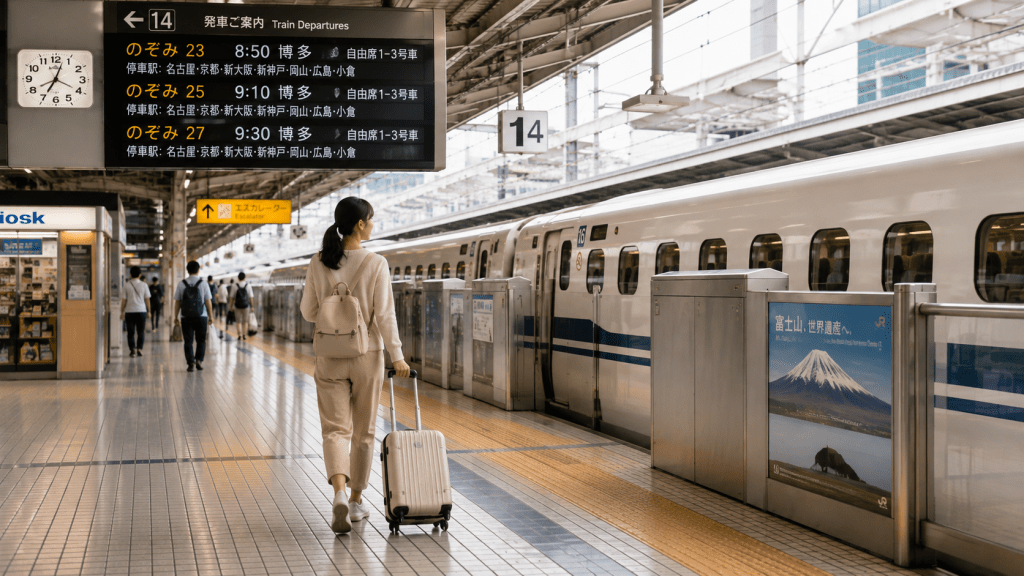
8. Traveling With Large Luggage
Japan’s trains are comfortable, but large suitcases can make a journey more complicated.
On the Tokaido, Sanyo and Kyushu Shinkansen, baggage with a total length, width and height of more than 160 cm and up to 250 cm is considered oversized baggage and requires a reservation for a seat with an oversized baggage area.
If your suitcase is smaller, you can generally use the overhead luggage rack, space around your seat or designated baggage areas where available.
Another option is luggage delivery. Sending a suitcase between hotels can make train travel significantly easier, particularly when your itinerary includes several cities.
Check Shinkansen oversized baggage rules →
9. Rush Hour Is Worth Avoiding
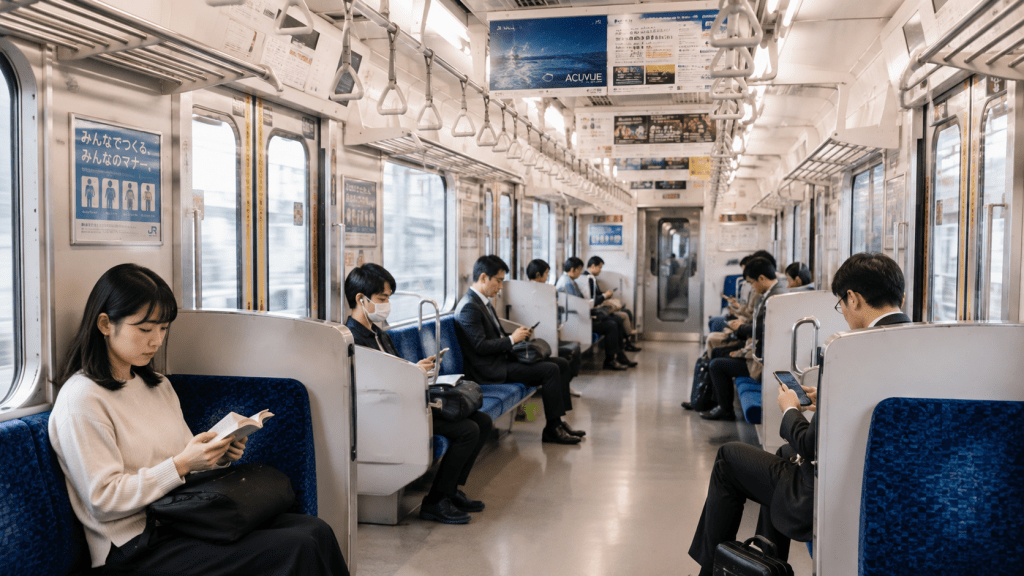
Japanese trains are famous for their efficiency, but major commuter routes can become extremely crowded during rush hour.
If your sightseeing schedule is flexible, avoid taking large suitcases onto busy city trains during peak commuting periods.
Traveling slightly later in the morning can make your journey considerably more comfortable.
The same applies in the evening around major business districts.
10. Train Etiquette Is Mostly Common Sense
You don’t need to memorize dozens of rules before boarding a train in Japan.
Keep conversations at a reasonable volume, avoid phone calls inside ordinary train cars, allow passengers to exit before boarding and be aware of how much space your luggage occupies.
Priority seating should be left available for passengers who need it.
When in doubt, simply observe what people around you are doing.
11. Don’t Let Transportation Take Over Your Trip
Japan’s transportation network makes it tempting to move constantly.
Just because you can travel from one side of the country to another quickly doesn’t mean you should.
Try to group sightseeing by area, avoid unnecessary backtracking and leave enough time to actually experience the places you visit.
The best transportation plan is often the one you barely notice while traveling.
Getting Around Japan Gets Easier Quickly
Your first Japanese railway station may feel confusing.
Your fifth probably won’t.
Use your phone to plan routes, keep an IC card ready for everyday journeys, give yourself extra time in large stations and book long-distance travel when necessary.
Most importantly, don’t worry about understanding everything before you arrive.
Japan’s transportation system becomes much easier once you start using it.
Visiting Japan for the first time? Read our First Time in Japan guide for more essential travel tips.
Planning your route? Our 7-Day Japan Itinerary shows how to combine Tokyo, Kyoto and Osaka without rushing.
 Beyond Japan Guide
Leave a comment