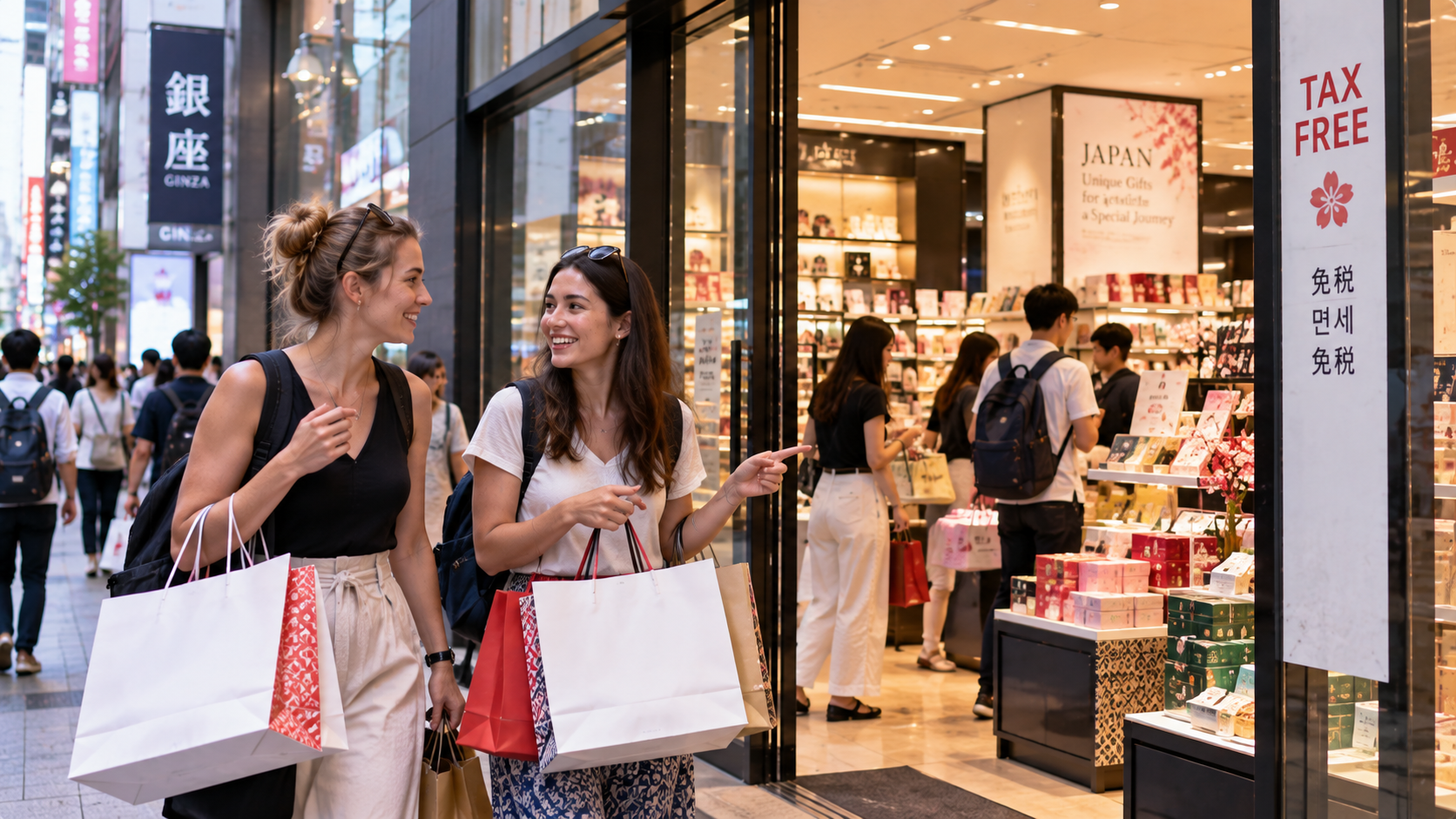
Shopping is a major part of many trips to Japan, whether you are looking for electronics, cosmetics, clothing, souvenirs or everyday Japanese products.
International visitors may be able to buy eligible items without ultimately bearing Japan’s consumption tax when shopping at participating tax-free stores.
However, tax-free shopping is not automatic. Eligibility rules apply, you need to follow the required procedures, and not every store offers tax-free purchases.
There is also an important change travelers need to know about in 2026.
Important: Japan’s tax-free shopping system changes on November 1, 2026.
The Japan National Tourism Organization also provides official information on Japan’s tax-free shopping system and the 2026 changes.
Until October 31, 2026, eligible travelers can generally receive the tax exemption when making qualifying purchases at participating stores.
For purchases made on or after November 1, 2026, Japan will introduce a new refund method. Travelers will pay the tax-inclusive price at the store and receive the amount equivalent to the consumption tax only after the required departure procedures confirm that the purchased goods are being taken out of Japan.
This guide explains who can use tax-free shopping, where to find participating stores, what you need when making a purchase and how the new refund system will affect travelers visiting Japan from November 2026.
1. What Is Tax-Free Shopping in Japan?
Japan has a consumption tax that is normally included when consumers purchase goods and services.
Under Japan’s tax-free shopping system, eligible international visitors can receive an exemption from consumption tax on qualifying goods purchased at authorized tax-free stores.
This does not mean that every purchase made by a tourist is automatically tax-free.
The store must participate in the tax-free system, the traveler must meet the eligibility requirements and the purchase must satisfy the applicable conditions.
You will often see tax-free signs at department stores, electronics retailers, drugstores, shopping malls and other stores popular with international visitors.
Procedures can vary depending on the store. Some retailers handle the tax-free procedure directly at the checkout, while larger shopping facilities may have a separate tax-free counter.
Before making a large purchase, check whether the store offers tax-free shopping and where the procedure is completed.
2. Who Is Eligible for Tax-Free Shopping?
Japan’s tax-free shopping system is available to eligible non-resident visitors who meet the applicable requirements. Being a foreign national does not automatically qualify someone for tax-free purchases.
For many international tourists, eligibility depends on their entry status and the period of their stay in Japan. Travelers should confirm that their status qualifies before making a tax-free purchase.
Check Your Eligibility Before Shopping
- Confirm your entry status. Not every visa or residence status qualifies for tax-free shopping.
- Prepare the required identification. Participating stores must verify the information required for the transaction.
- Check the rules for your purchase date. The revised refund system applies to purchases made on or after November 1, 2026.
- Ask the store if your circumstances are unusual. Eligibility requirements may differ for certain categories of travelers.
For official eligibility information under the new refund system, see the Japan Tourism Agency’s Tax-Free Shopping Guide for Travelers.
If you live in Japan or are uncertain about your immigration status, do not assume that you qualify simply because you hold a foreign passport.

3. What Do You Need to Shop Tax-Free?
Before shopping at a participating tax-free store in Japan, prepare the identification and information required for the tax-free procedure.
Bring Your Passport
Eligible international visitors generally need to present their original passport or another officially accepted form of identification.
A photograph or photocopy of your passport should not be treated as a substitute for the required identification.
If you use Visit Japan Web, check whether the store supports the relevant digital tax-free procedure. Do not assume that every participating store accepts the same method.
Check the Purchase Requirements
Before paying, confirm:
- Whether the store offers tax-free shopping
- Whether your purchase meets the minimum spending requirement
- Which identification documents the store accepts
- Where the tax-free procedure is completed
For purchases made on or after November 1, 2026, also ask how the retailer will register your refund details and how you will receive the refund after the required Customs confirmation.
Keep Your Purchase Information
Save the receipts, transaction details, and refund instructions provided by the retailer.
Under the new refund system, you must take the qualifying goods out of Japan and complete the required Customs confirmation when departing within 90 days of the purchase date.
For official guidance, see the Japan Tourism Agency’s guide to the new tax-free shopping refund system.
Practical tip: If you plan to make an expensive purchase, ask the retailer to explain the tax-free procedure and refund arrangements before paying.
4. Where Can You Shop Tax-Free in Japan?
Tax-free shopping is available at authorized retailers throughout Japan, including department stores, electronics shops, drugstores, shopping malls, and souvenir stores.
However, not every shop offers tax-free purchases, even in popular tourist areas.

How to Find Participating Stores
Look for a tax-free sign near the entrance, checkout, or customer service counter.
Before making a purchase, check:
- Whether the store participates in Japan’s tax-free shopping system
- Where the tax-free procedure is completed
- Whether purchases from different counters or shops can be combined
- What identification and purchase information you need
Some department stores and shopping complexes have centralized tax-free counters. If you plan to buy items from several shops, ask whether their purchases qualify for a combined procedure.
Shopping at Don Quijote
Don Quijote is a popular shopping destination for international visitors looking for cosmetics, snacks, souvenirs, and everyday Japanese products.
For shopping ideas and practical advice, read our Don Quijote Japan Shopping Guide.
Practical tip: Ask about tax-free eligibility before paying, especially when buying expensive items or shopping at several stores in the same complex.
5. How Tax-Free Shopping Works Until October 31, 2026
For qualifying purchases made on or before October 31, 2026, Japan’s existing tax-free shopping system continues to apply.
Under this system, eligible visitors can generally purchase qualifying goods without paying consumption tax after completing the required procedure at a participating store.

What Happens at the Store?
- Confirm that the retailer offers tax-free shopping.
- Present your passport or other officially accepted identification.
- Make a purchase that meets the applicable tax-free requirements.
- Complete the procedure at the checkout or designated tax-free counter.
- Follow the rules for keeping and taking your purchased goods out of Japan.
General Goods and Consumables
Under the existing system, different requirements apply to general goods and consumables.
General goods include items such as clothing, bags, and electronics. Consumables include food, drinks, and cosmetics.
For general goods, the minimum qualifying purchase amount is generally ¥5,000 before tax.
For consumables, qualifying purchases generally must total at least ¥5,000 but no more than ¥500,000 before tax at the same store on the same day. Special packaging and restrictions on consumption in Japan also apply.
Different conditions may apply when general goods and consumables are combined under an eligible procedure.
Important for Travelers Visiting in Late 2026
The existing system applies to purchases made through October 31, 2026.
For purchases made on or after November 1, 2026, Japan introduces a refund-based system in which eligible travelers pay the tax-inclusive price first and complete the required Customs confirmation when departing Japan.
The purchase date determines which system applies. If your trip includes both October and November 2026, you may need to follow different procedures for purchases made on different dates.
For an official English-language explanation of the transition, read the Japan National Tourism Organization’s guide to the new tax-free shopping system.
6. What Changes on November 1, 2026?
Japan will introduce a new tax-free shopping refund system on November 1, 2026.
Under the new system, eligible international visitors will pay the full price, including consumption tax, when purchasing qualifying goods at participating tax-free stores.
Instead of receiving the tax exemption at the time of purchase, travelers must complete the required Customs confirmation when departing Japan. The refund can then be processed through the retailer or its designated refund service.
Key Changes Travelers Should Know
The new system introduces several important changes:
- Pay tax at the store: Eligible shoppers initially pay the tax-inclusive price.
- Complete departure confirmation: The required Customs procedure must be completed when leaving Japan, within 90 days of the purchase.
- Receive the refund afterward: The refund is processed after successful Customs confirmation.
- Simpler product categories: The previous distinction between general goods and consumables is abolished.
- No special consumables packaging: The previous special packaging requirement is removed, although qualifying goods must still be taken out of Japan.

Japan Tax-Free Shopping: Before vs. After November 1, 2026
| What to Know | Until October 31, 2026 | From November 1, 2026 |
|---|---|---|
| Payment at the store | Tax exemption generally handled at purchase | Pay the full price including consumption tax |
| Departure procedure | Follow existing Customs requirements | Complete the required Customs confirmation |
| Refund | Tax exemption generally applied at the store | Refund processed after Customs confirmation |
| Time limit | Follow existing system requirements | Depart Japan within 90 days of purchase |
| General goods and consumables | Different rules apply | Category distinction abolished |
| Special packaging | Required for certain consumables | Special packaging requirement abolished |
Important: The applicable rules depend on the date of purchase, not simply the date you enter Japan.
If your trip includes both October and November 2026, purchases made before and after November 1 may follow different tax-free procedures.
For official information in English, see the Japan Tourism Agency’s guide to the new tax-free shopping refund system.
7. How the New Tax-Free Refund Process Works
For qualifying purchases made on or after November 1, 2026, Japan’s tax-free shopping system involves three main stages: purchasing eligible goods, completing Customs confirmation when leaving Japan, and receiving the refund.
Step 1: Make Your Purchase at a Tax-Free Store
Shop at an authorized tax-free retailer and present the required identification.
You will pay the full purchase price, including consumption tax.
Before leaving the store, confirm:
- How your refund will be issued
- Whether you need to register payment or refund information
- What purchase records or instructions you should keep
Refund arrangements may differ between retailers and their designated refund service providers.
Step 2: Keep Your Tax-Free Goods Available
Keep the qualifying goods and relevant purchase information organized throughout your trip.
To receive the refund, the purchased goods must be taken out of Japan. Items consumed, transferred, or left behind in Japan may not qualify.
If Customs requests an inspection, you must be able to present the relevant goods.
Step 3: Complete Customs Confirmation When Departing Japan
You must complete the required departure procedure within 90 days of the purchase date.
Follow the instructions at your international departure airport or seaport. Depending on the available facilities and procedures, you may need to use a designated terminal or another supported method to complete the required confirmation.
Customs may request a physical inspection of your purchases.
Important: If your tax-free goods are packed inside a suitcase you intend to check, complete the required procedure while the goods are still accessible for inspection.
Allow additional time before your flight, particularly if you have made several tax-free purchases.

Step 4: Receive Your Refund
After successful Customs confirmation, the retailer or its designated refund service can process the refund.
The exact refund method and timing depend on the arrangements explained by the retailer.
Keep your purchase and refund information until you have confirmed that the refund has been received.

What If You Have a Domestic Connecting Flight?
If your journey includes a domestic flight before leaving Japan, plan the procedure around your international departure point.
For example, if you travel from Osaka to Tokyo on a domestic flight and then depart Japan internationally from Tokyo, the required departure confirmation is associated with your international departure.
Check whether your baggage will be transferred directly to your international flight. If your tax-free goods become inaccessible before the required Customs procedure, you may have difficulty completing the confirmation.
Ask your airline and the relevant airport for instructions if your baggage arrangements are complicated.
For general airport preparation, read our Japan Airport Guide.
For the official explanation of the refund system, see the Japan Tourism Agency’s English-language tax-free shopping guide.
Practical tip: Before making an expensive tax-free purchase, ask the store how the refund works and what you will need to do at your departure airport.
8. How Much Do You Need to Spend for Tax-Free Shopping?
Japan’s tax-free shopping system has a minimum purchase requirement. The applicable conditions depend on when you make your purchase and the type of goods involved.
Minimum Purchase Amount
For qualifying purchases made on or after November 1, 2026, the minimum purchase amount is ¥5,000 before tax at the same authorized tax-free store on the same day.
Purchases from separate, unrelated stores generally cannot be combined to reach this minimum.
If you are shopping at a department store or shopping complex with multiple retailers, ask whether purchases can be combined under an authorized tax-free procedure.
How the Rules Differ Before November 2026
For purchases made through October 31, 2026, the existing system distinguishes between general goods and consumables.
- General goods: Generally require a minimum purchase of ¥5,000 before tax.
- Consumables: Generally require purchases totaling at least ¥5,000 and no more than ¥500,000 before tax, subject to the applicable conditions.
- Combined purchases: Special conditions apply when general goods and consumables are processed together.
From November 1, 2026, the distinction between general goods and consumables will be abolished, and the previous upper purchase limit for consumables will be removed.
Example: Reaching the Minimum Purchase Amount
Suppose you buy the following items at the same participating store on the same day:
| Item | Price Before Tax |
|---|---|
| Japanese souvenirs | ¥2,000 |
| Clothing | ¥2,500 |
| Stationery | ¥1,000 |
| Total | ¥5,500 |
Under the new refund system, this purchase would meet the ¥5,000 minimum spending requirement, provided that the goods, traveler, and transaction satisfy all other applicable conditions.
However, buying ¥2,500 worth of goods at one unrelated store and ¥3,000 at another does not automatically make the purchases eligible for a combined tax-free procedure.
Practical tip: Before splitting a large shopping trip across several stores, check whether the purchases can be combined for tax-free purposes.
For official English-language information, see the Japan Tourism Agency’s guide to the tax-free shopping refund system.
9. What Can You Buy Tax-Free in Japan?
Many everyday products purchased at authorized tax-free stores in Japan can qualify for consumption tax exemption, provided that the traveler, goods, and purchase meet the applicable requirements.
Common examples include:
- Clothing, shoes, and bags
- Electronics and cameras
- Cosmetics and skincare products
- Japanese snacks and packaged food
- Souvenirs, stationery, and household goods

However, a product being sold at a tax-free store does not automatically mean it qualifies for a refund.
Goods That May Not Qualify
Tax-free shopping is intended for eligible goods that travelers take out of Japan.
Products purchased for business or resale purposes, goods that are not taken out of Japan, and other excluded items may not qualify.
Under the refund system beginning November 1, 2026, gold and platinum bullion are excluded from tax-free treatment.
Before purchasing unusual or expensive products, confirm their eligibility with the retailer.
Can You Use Tax-Free Purchases While in Japan?
From November 1, 2026, the special packaging requirement for consumable goods will be abolished.
However, removing this packaging requirement does not mean travelers can use or consume tax-free goods in Japan and still receive the refund.
For example:
- Japanese snacks: If you eat them during your trip, they cannot be presented as goods taken out of Japan.
- Cosmetics: Products used or consumed in Japan may no longer meet the refund requirements.
- Clothing and souvenirs: Keep qualifying purchases available so they can be presented if Customs requests an inspection.

If goods included in a tax-free transaction are missing when Customs checks the purchase, the refund for that transaction may be affected.
Practical tip: Keep your tax-free purchases organized and avoid opening or consuming products you intend to claim a refund for until you have left Japan.
Remember Your Home Country’s Customs Rules
Japan’s tax-free shopping system is separate from the customs and import rules of your destination country.
A purchase that qualifies for a tax refund in Japan may still need to be declared when you arrive home. Import duties, taxes, or restrictions may apply.
Check your destination country’s official customs guidance before returning with expensive goods or large quantities of products.
For the official rules on eligible goods and exclusions, see the Japan Tourism Agency’s English-language tax-free shopping guide.
10. Common Tax-Free Shopping Mistakes and Practical Tips
Understanding Japan’s tax-free shopping rules can help you avoid unexpected problems at the store or airport.
Here are some common mistakes to watch out for, particularly if you are shopping under the refund system beginning November 1, 2026.
Mistake 1: Following Outdated Tax-Free Shopping Advice
Japan’s tax-free shopping procedure changes on November 1, 2026.
Instructions describing an immediate tax exemption at checkout may no longer apply to purchases made after that date.
What to do: Check the purchase date and follow the rules that apply to your transaction.
Mistake 2: Assuming Every Tourist Shop Offers Tax-Free Purchases
A shop selling souvenirs or serving international visitors is not necessarily an authorized tax-free retailer.
What to do: Look for tax-free signage and confirm eligibility before paying, especially when making expensive purchases.
Mistake 3: Using or Consuming Purchases Before Departure
Under the new refund system, removing the special packaging requirement does not mean that food, drinks, or cosmetics can be consumed in Japan while remaining eligible for a refund.
What to do: Keep the goods you intend to claim a refund for and make sure they can be presented to Customs if required.
Mistake 4: Losing One Item From a Purchase Transaction
Under the new system, Customs checks tax-free goods by purchase transaction.
For example, suppose you buy three items in one transaction but give one away during your trip. Even if you still have the other two items, the entire transaction may become ineligible for the refund.
What to do: Check that you still have every item included in each tax-free purchase transaction before departing Japan.
Mistake 5: Checking Your Baggage Too Early
If you check a suitcase containing tax-free purchases before completing the required Customs procedure, you may be unable to present those goods if an inspection is requested.
What to do: Complete the tax-free departure procedure before handing your baggage to the airline.
Mistake 6: Not Confirming the Refund Method
The refund process may differ depending on the retailer or its designated refund service provider.
What to do: Before leaving the store, confirm how the refund will be issued, what information you need to register, and which transaction details you should keep.
Mistake 7: Leaving Too Little Time at the Airport
Although the initial tax-free procedure may be quick, a Customs inspection can require additional time.
What to do: Arrive early enough to complete the required procedure without rushing through check-in and security.
A Final Checklist Before Leaving Japan
Before heading to your international departure airport or seaport:
- Confirm that your purchases meet the applicable tax-free requirements.
- Keep all qualifying goods available for inspection.
- Check that no items from your tax-free transactions are missing.
- Keep your passport and refund information accessible.
- Complete the required Customs procedure before checking your baggage.
- Follow the instructions provided by the retailer and airport authorities.

For additional official guidance, read the Japan Tourism Agency’s Frequently Asked Questions for Travelers.
Practical tip: If you are buying several expensive items, keep their purchase information together and check the refund requirements before your departure day.
Conclusion: Plan Your Tax-Free Shopping Before You Travel
Japan’s tax-free shopping system can help eligible international visitors save money on qualifying purchases, but the procedure depends on when you shop.
For purchases made through October 31, 2026, the existing tax-free system applies. From November 1, 2026, Japan introduces a refund-based system requiring eligible shoppers to pay consumption tax at the store and complete the necessary Customs confirmation when departing Japan.
Before making a purchase, confirm your eligibility, the minimum spending requirement, and the retailer’s tax-free procedure. Under the new system, keep your qualifying goods accessible until the required departure confirmation is complete.
Always check official guidance for the latest requirements, especially if your trip takes place around the November 2026 transition.
If you are planning your first visit, our First Time in Japan guide covers more practical travel essentials.
Leave a Reply