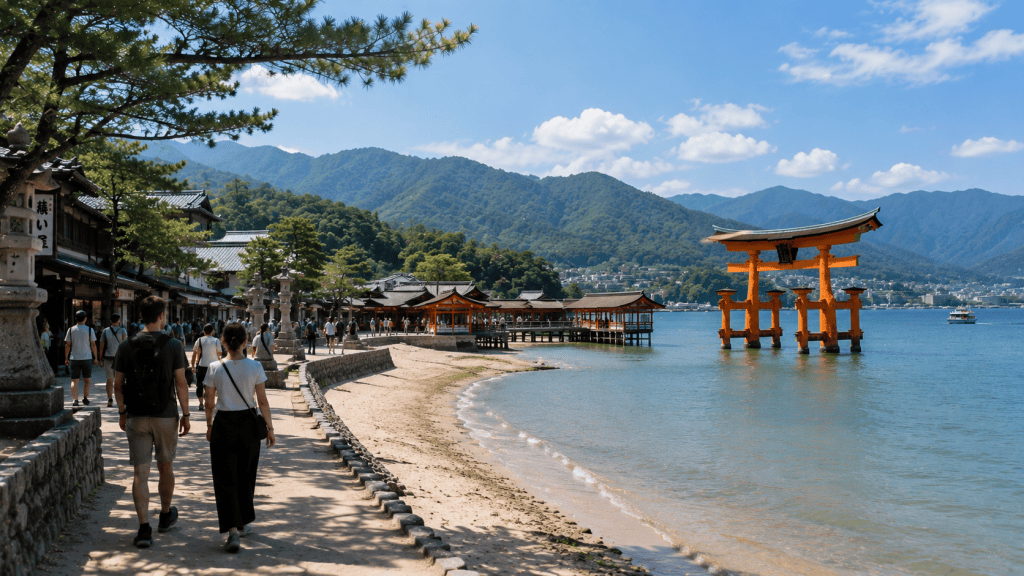
Miyajima is one of the easiest and most rewarding day trips from Hiroshima.
Officially known as Itsukushima, the island is famous for Itsukushima Shrine and its large torii gate standing in the sea, but there is much more to experience once you arrive.
You can walk through traditional streets, visit temples, try local food, explore the forested slopes of Mount Misen and watch the waterfront scenery change with the tide.
Miyajima is close enough to Hiroshima to visit without changing hotels, making it particularly convenient for travelers spending two or more days in the area.
If you are still planning your stay in the city, our Hiroshima Travel Guide covers the Peace Memorial Park, local food, transportation, accommodation and other essentials for first-time visitors.
A full day gives you enough time to see the main sights without treating the island as a quick photo stop.
This itinerary shows you how to spend one day on Miyajima, from getting there in the morning to visiting Itsukushima Shrine, Daisho-in and Mount Misen, with time for local food and a relaxed walk before returning to Hiroshima.
1. How to Get to Miyajima from Hiroshima
Getting to Miyajima from Hiroshima is straightforward, which is one reason the island works so well as a day trip.
A common route is to travel from Hiroshima Station to Miyajimaguchi Station by JR train and then walk to the nearby ferry terminal.
From Miyajimaguchi, ferries cross to Miyajima in about 10 minutes.
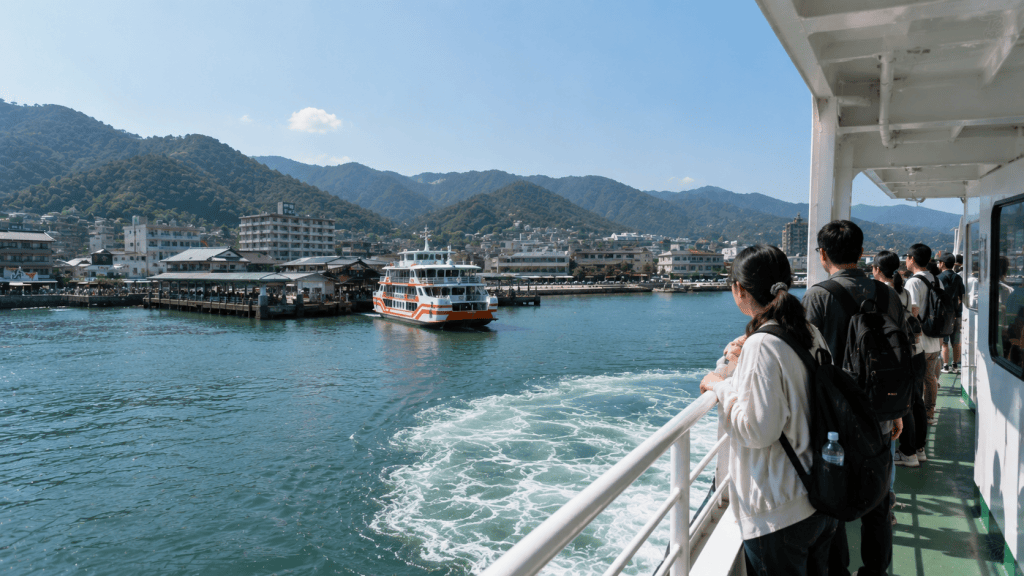
Two main ferry operators serve this route: JR West Miyajima Ferry and Miyajima Matsudai Kisen. Both connect Miyajimaguchi with Miyajima, so check the current schedules and choose the service that works best for your trip.
Another option is to travel by boat from the Hiroshima city area, including services that can connect the Peace Memorial Park area with Miyajima. This can be convenient depending on where you are staying and how you plan your day.
Whichever route you choose, try to leave Hiroshima reasonably early. Arriving on Miyajima in the morning gives you more time to explore the shrine, temples, town and Mount Misen without watching the clock all afternoon.
If you are using public transportation elsewhere in Japan as well, our Getting Around Japan guide explains trains, IC cards and the Shinkansen in more detail.
2. Start at Itsukushima Shrine and the Great Torii Gate
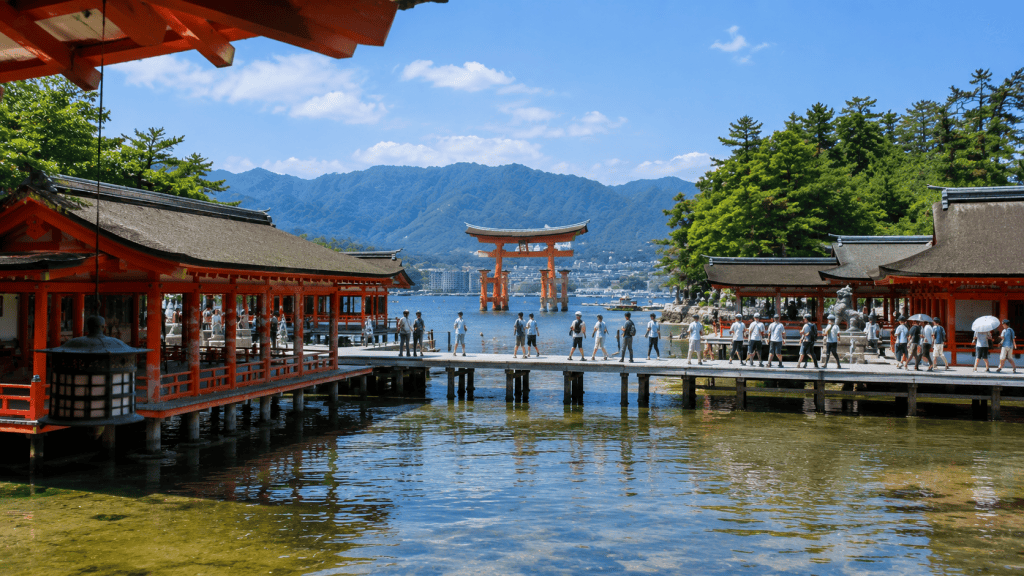
Once you arrive on Miyajima, make your way toward Itsukushima Shrine, one of the island’s most important landmarks.
The shrine is famous for its buildings extending over the waterfront and the enormous vermilion torii gate standing offshore.
One of the most interesting things about visiting Miyajima is that the scenery changes throughout the day with the tide.
When the water is high enough, the shrine and torii appear to float above the sea. When the tide is sufficiently low, it may be possible to walk across the exposed ground toward the Great Torii Gate.
Because the timing changes every day, check the Miyajima tide information before your visit rather than planning around a fixed time.
Give yourself time to walk through the shrine and enjoy the waterfront from different viewpoints instead of rushing through simply to take a photograph of the torii.
Even if the tide is not exactly where you hoped when you first arrive, you may have another opportunity later in the day. If you spend most of the day on Miyajima, return to the waterfront before leaving and see how the landscape has changed.
3. Walk Through Omotesando Shopping Street
After visiting Itsukushima Shrine, spend some time exploring the streets around the waterfront.
Omotesando Shopping Street is one of the liveliest areas on Miyajima, with restaurants, cafés and shops selling local food, sweets and souvenirs.
This is a good place to stop for a snack or an early lunch before continuing deeper into the island.
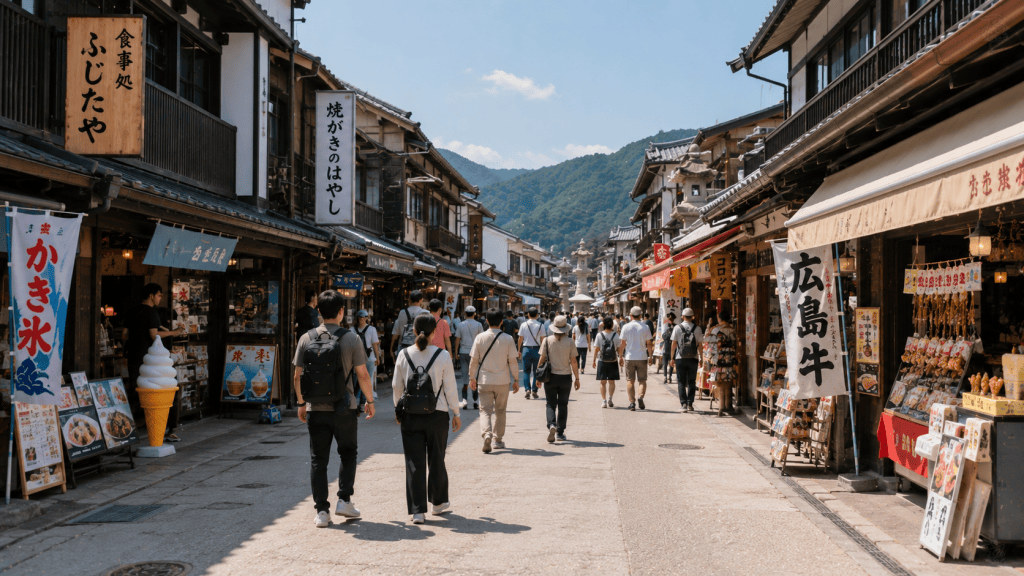
One of Miyajima’s best-known specialties is momiji manju, a maple-leaf-shaped cake traditionally filled with sweet red bean paste. Today, you can also find versions with custard, chocolate and other fillings.
Another local specialty is anago-meshi, grilled conger eel served over rice. Oysters are also strongly associated with Hiroshima and are widely available around Miyajima.
The street can become busy around the middle of the day, so there is no need to visit every shop immediately. You can always return later before taking the ferry back to Hiroshima.
If you are interested in discovering more regional dishes during your trip, our Japanese Food Guide introduces 15 foods worth trying in Japan.
4. Visit Daisho-in Temple
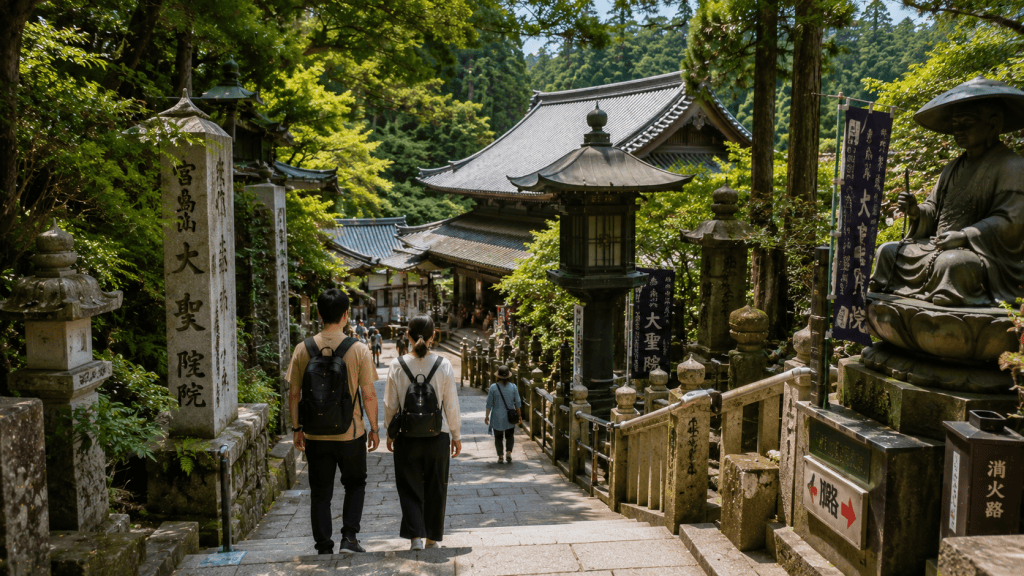
From the main tourist streets, continue toward Daisho-in, one of the most important Buddhist temples on Miyajima.
The temple sits at the base of Mount Misen and feels noticeably quieter than the busy waterfront around Itsukushima Shrine.
As you explore the grounds, you will find temple halls, statues, stone steps and forested paths spread across the hillside.
Take your time walking through the complex rather than treating Daisho-in as a quick stop between other attractions.
The slightly elevated location also gives the temple a peaceful atmosphere that contrasts nicely with the shops and crowds closer to the waterfront.
Daisho-in is particularly worthwhile if you want your Miyajima day trip to include more than the island’s most famous shrine and torii gate.
As with other religious sites in Japan, keep your voice at a respectful level and follow any signs or instructions around temple buildings.
Daisho-in’s official English information describes the temple as lying at the foot of Mount Misen and provides information about its halls and religious sites.
5. Explore Mount Misen
If you have enough time and the weather is suitable, continue your day by exploring Mount Misen.
Rising above Miyajima, the mountain offers forest scenery and elevated views across the Seto Inland Sea.
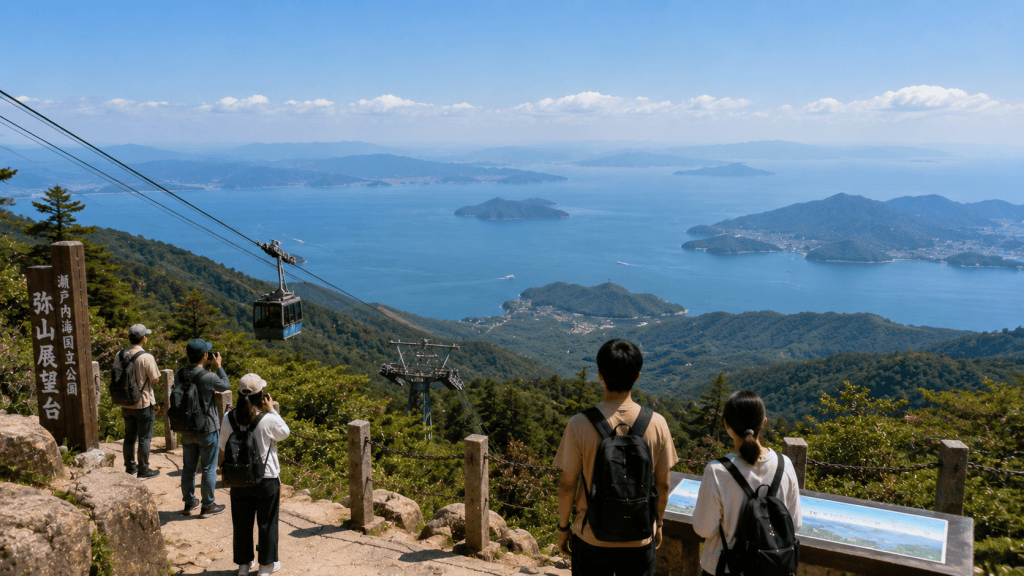
You do not necessarily need to hike all the way from the town. The Miyajima Ropeway can take you much of the way up the mountain, although reaching the highest viewpoints still requires walking.
From the upper ropeway area, trails lead toward the summit and other viewpoints. Wear comfortable shoes and allow more time than you would for a simple sightseeing stop.
Conditions can also change with the season and weather, so check current ropeway operations before building your entire day around the mountain.
If hiking is not a priority, you can skip Mount Misen and spend more time around the waterfront, temples and traditional streets instead.
A Miyajima day trip does not need to include every attraction. Choose the parts of the island that best match your interests and travel pace.
The official Miyajima Ropeway site currently provides operating information and notes that service can be suspended because of weather or maintenance, so travelers should check the latest status before visiting.
6. Take a Break for Miyajima’s Local Food
After exploring Mount Misen or the temple area, take some time to enjoy Miyajima’s local food.
Anago-meshi is one of the island’s signature dishes, combining grilled conger eel with rice and a savory-sweet sauce.
Hiroshima is also one of Japan’s best-known oyster-producing regions, and you will find oysters prepared in several ways around Miyajima.
For something sweet, try momiji manju. The small maple-leaf-shaped cakes are easy to find around the main shopping streets and make a convenient snack during a day of sightseeing.
Some shops also sell freshly prepared or fried versions that are best eaten immediately.
Lunch periods can be busy, particularly on weekends and holidays, so consider eating slightly earlier or later than the busiest times if your schedule allows.
There is no need to plan every meal in advance. Part of the fun of Miyajima is walking through the streets and choosing somewhere that looks appealing when you are ready for a break.
7. Return to the Waterfront Before Leaving
Before taking the ferry back to Hiroshima, return to the waterfront around Itsukushima Shrine if you have time.
The scenery may look completely different from when you arrived.
Because the tide changes throughout the day, the Great Torii Gate may now be surrounded by water, standing above exposed ground or somewhere between the two.
This is one reason it is worth spending most of a day on Miyajima rather than visiting only long enough to photograph the shrine.
The late afternoon can also feel different from the busiest part of the day as some day-trippers begin leaving the island.
Take a final walk along the waterfront, browse the shops if there is anything you missed earlier and then make your way back to the ferry terminal.
Once you return to Miyajimaguchi, continue back to Hiroshima and enjoy the evening in the city.
8. How Long Should You Spend on Miyajima?
For most first-time visitors, six to eight hours on Miyajima gives you enough time to enjoy the island without rushing.
If you mainly want to visit Itsukushima Shrine, see the Great Torii Gate and walk through the main shopping streets, half a day may be enough.
A full day is better if you also want to visit Daisho-in, explore Mount Misen, stop for local food and see how the waterfront changes with the tide.
Remember to include the journey from Hiroshima when planning your day. Leaving reasonably early gives you much more flexibility, especially if Mount Misen is part of your itinerary.
You also do not need to follow a strict schedule. If the weather is poor or you decide not to visit Mount Misen, use the extra time to explore the temple area, shops and waterfront at a slower pace.
For a first visit, it is usually better to enjoy fewer places properly than to rush through every attraction on the island.
9. Best Time to Visit Miyajima
Miyajima can be visited throughout the year, but the experience changes with the seasons.
Spring brings mild weather and cherry blossoms, making it a popular time for walking around the island.
Summer is green and beautiful, but the heat and humidity can make hiking Mount Misen more demanding. Carry water and avoid underestimating the conditions.
Autumn is particularly popular because of the colorful foliage, especially around Momijidani Park and the slopes of Mount Misen.
Winter is generally cooler and can feel quieter than the busiest spring and autumn periods. It is also a good season for enjoying Hiroshima-area oysters.
Weekends, public holidays and peak seasonal periods can be busy, so arriving earlier in the day can make the visit more comfortable.
Weather matters more if you plan to hike or use the ropeway, while the tide matters if seeing a particular view of Itsukushima Shrine and the Great Torii Gate is important to you.
If you are choosing dates for your wider Japan trip, our Best Time to Visit Japan guide explains the country’s seasons month by month.
10. Be Respectful Around Miyajima’s Deer
You will probably encounter deer while walking around Miyajima.
They may appear comfortable around people, but they are still wild animals and should be treated with respect.
Do not feed them, tease them or deliberately encourage them to approach for photographs.
Keep paper, food packaging and other belongings under control as well. Curious deer may approach items you are carrying, so avoid leaving bags or loose objects where they can reach them.
Give the animals space, particularly if they appear agitated or are caring for young.
Seeing deer wandering around the island can be a memorable part of your visit, but enjoying them from a respectful distance is better for both visitors and the animals.
11. A Simple One-Day Miyajima Itinerary
You do not need to follow an exact timetable, but having a simple route in mind can help you make the most of your day.
Here is an easy itinerary for a first visit:
Morning: Travel to Miyajima and Visit Itsukushima Shrine
Leave Hiroshima in the morning and travel to Miyajimaguchi before taking the ferry to Miyajima.
Once you arrive, walk toward the waterfront and visit Itsukushima Shrine and the Great Torii Gate.
Take your time around the shrine and check the tide so you know whether it may be worth returning later in the day.
Late Morning: Explore the Streets and Daisho-in
Walk through the streets around the shrine and Omotesando Shopping Street.
Continue toward Daisho-in Temple, allowing enough time to explore the hillside temple grounds without rushing.
Afternoon: Mount Misen and Local Food
Depending on the weather and your energy level, head toward Mount Misen and use the ropeway or hiking trails to explore the mountain.
If you prefer a more relaxed day, skip the mountain and spend additional time around the temples, shops and waterfront instead.
Stop for lunch or snacks and try Miyajima specialties such as anago-meshi, oysters or momiji manju.
Late Afternoon: Return to the Waterfront
Before leaving the island, return toward Itsukushima Shrine and the Great Torii Gate.
If the tide has changed since the morning, you may see a very different view from the one you experienced when you arrived.
Browse the shops, enjoy a final walk and then take the ferry back toward Hiroshima.
12. Practical Tips for Your Miyajima Day Trip
A little preparation can make your day on Miyajima much easier.
Start reasonably early. You will have more time to explore before worrying about the return journey.
Check the tide before you go. If seeing the shrine at high tide or walking closer to the torii at low tide matters to you, use the official tide information when planning your visit.
Check the weather and ropeway status. This is particularly important if Mount Misen is one of your priorities.
Wear comfortable shoes. Even without a full hike, you may spend much of the day walking on temple grounds, shopping streets and paths around the island.
Carry some water. This becomes especially important during Japan’s hot and humid summer months.
Do not feed the deer. Observe them without treating them like domesticated animals.
Avoid overplanning. Miyajima is a place where the changing tide, scenery and atmosphere are part of the experience, so leave some flexibility in your schedule.
Finally, check the latest transportation and attraction information shortly before your visit. Ferry schedules, ropeway operations and facility information can change.
Conclusion: Miyajima Is Worth a Full Day
Miyajima is close enough to Hiroshima for an easy day trip, but the island deserves more than a quick visit to the Great Torii Gate.
Itsukushima Shrine may be the most famous sight, but walking through the traditional streets, visiting Daisho-in, exploring Mount Misen and trying local food reveal much more of the island.
Spending most of a day on Miyajima also gives you the chance to experience the waterfront at different stages of the tide, which can completely change the scenery around the shrine and torii gate.
You do not need to see everything.
Choose the experiences that interest you most, leave some flexibility in your schedule and take time to enjoy the island at a comfortable pace.
For most first-time visitors staying in Hiroshima, one full day on Miyajima and one day in central Hiroshima creates a balanced two-day visit to the area.
 Beyond Japan Guide
Leave a comment