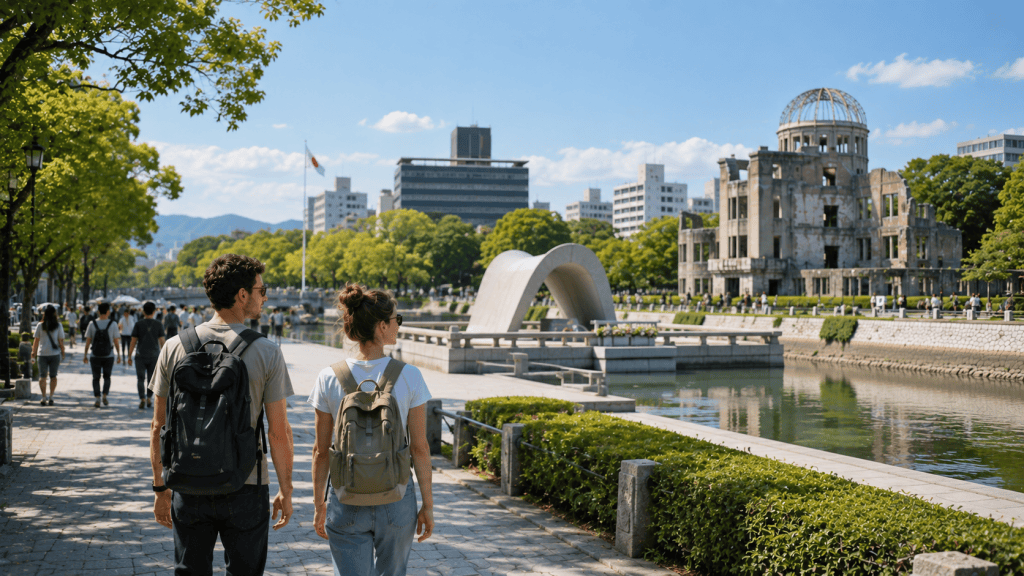
Hiroshima is one of Japan’s most meaningful and rewarding cities to visit, combining powerful history, local food, relaxed riverside scenery and easy access to one of the country’s most famous islands.
For many first-time visitors, the Peace Memorial Park and Atomic Bomb Dome are the main reasons to come. These places offer an important opportunity to learn about the events of 1945 and reflect on Hiroshima’s message of peace.
But Hiroshima is more than its wartime history.
The city is also known for Hiroshima-style okonomiyaki, peaceful gardens, a reconstructed castle and a compact center that is relatively easy to explore.
Just outside the city, Miyajima offers a completely different experience, with Itsukushima Shrine, mountain scenery, traditional streets and views across the Seto Inland Sea.
Hiroshima also fits naturally into a longer journey through western Japan. From Kyoto or Osaka, you can reach the city by Shinkansen and continue onward to other destinations if you have more time.
This guide covers the best things to do in Hiroshima, how long to stay, how to get around, where to stay, what to eat and how to include Miyajima in your first visit.
1. Why Visit Hiroshima?
Hiroshima offers a very different experience from Tokyo, Kyoto and Osaka.
The city is best known internationally for its history, but a visit also reveals a relaxed regional city built around rivers, parks and convenient public transportation.
You can spend time learning about Hiroshima’s past at the Peace Memorial Park, explore the city center, try Hiroshima-style okonomiyaki and visit gardens and historic sites without constantly traveling long distances between attractions.
Hiroshima is also the main gateway to Miyajima, one of the most memorable destinations in western Japan.
This combination makes Hiroshima particularly rewarding if you have enough time to travel beyond Japan’s classic Tokyo–Kyoto–Osaka route.
For most first-time visitors, two full days works well: one day for central Hiroshima and another for Miyajima. With a third day, you can slow down or explore more of the surrounding region.
2. Visit Hiroshima Peace Memorial Park
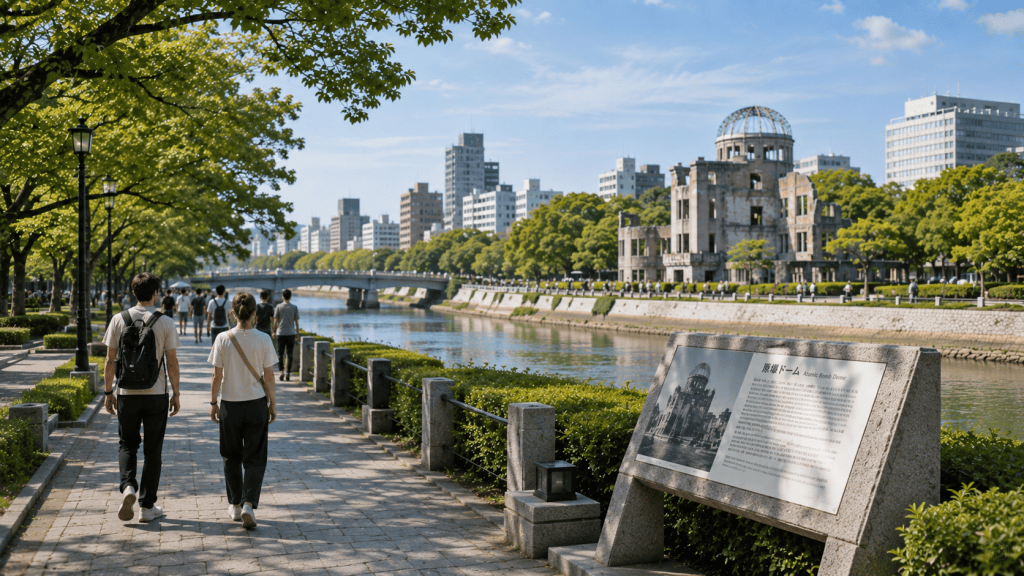
Hiroshima Peace Memorial Park is one of the most important places to visit in the city.
The park is located near the hypocenter of the atomic bombing of Hiroshima on August 6, 1945, and today it serves as a place of remembrance and reflection as well as a symbol of the hope for lasting peace.
One of its most recognizable landmarks is the Atomic Bomb Dome, the remains of the former Hiroshima Prefectural Industrial Promotion Hall. The building survived close to the hypocenter and has been preserved as a reminder of the destruction caused by the atomic bomb.
The park also contains several memorials, including the Cenotaph for the Victims of the Atomic Bomb and the Children’s Peace Monument.
Give yourself time to walk through the park rather than treating it as a quick sightseeing stop.
The Hiroshima Peace Memorial Museum provides much deeper historical context through photographs, personal belongings, testimonies and other materials related to the bombing and its consequences.
Some of the exhibits can be emotionally difficult to experience, so allow enough time to visit at your own pace.
Visiting the park and museum can help you understand not only what happened to Hiroshima in 1945, but also why peace and remembrance remain such important parts of the city’s identity today.
3. Explore Hiroshima Castle and Shukkeien Garden
After visiting the Peace Memorial Park, spend some time exploring another side of Hiroshima.
Hiroshima Castle is surrounded by a moat and spacious grounds that offer a glimpse into the city’s history before the events of 1945.
The castle you see today is not the original structure. Hiroshima Castle was destroyed by the atomic bombing, and the main keep was later reconstructed.
Nearby, Shukkeien Garden offers a much quieter experience.
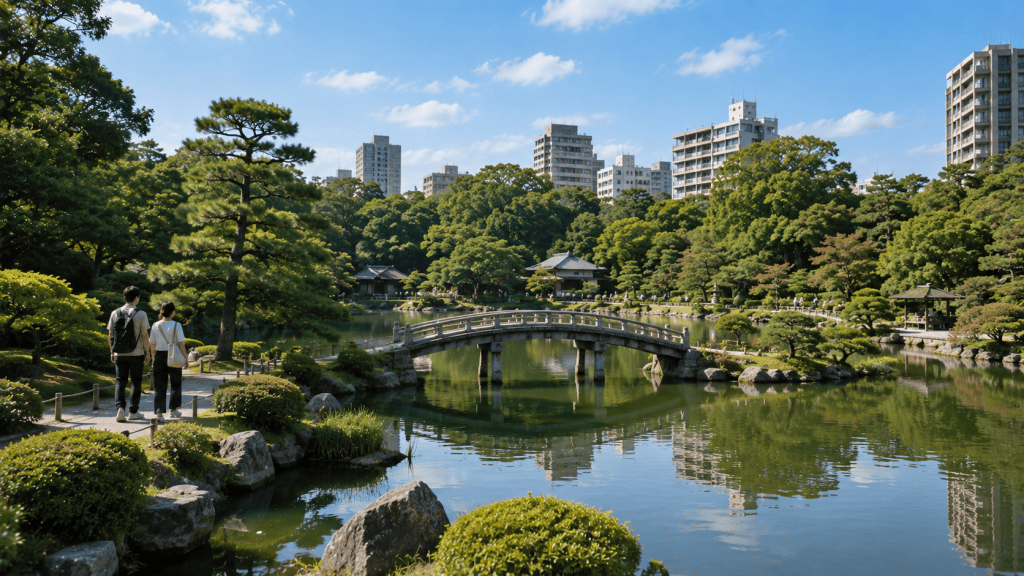
The traditional Japanese landscape garden features a central pond, bridges, small islands, tea houses and carefully arranged scenery designed to be enjoyed while walking around the grounds.
It is a pleasant place to slow down after exploring some of Hiroshima’s busier and more emotionally demanding historical sites.
You do not necessarily need to spend several hours at either location. Depending on your interests, they can fit naturally into the same day as the Peace Memorial Park and other attractions in central Hiroshima.
4. Take a Day Trip to Miyajima
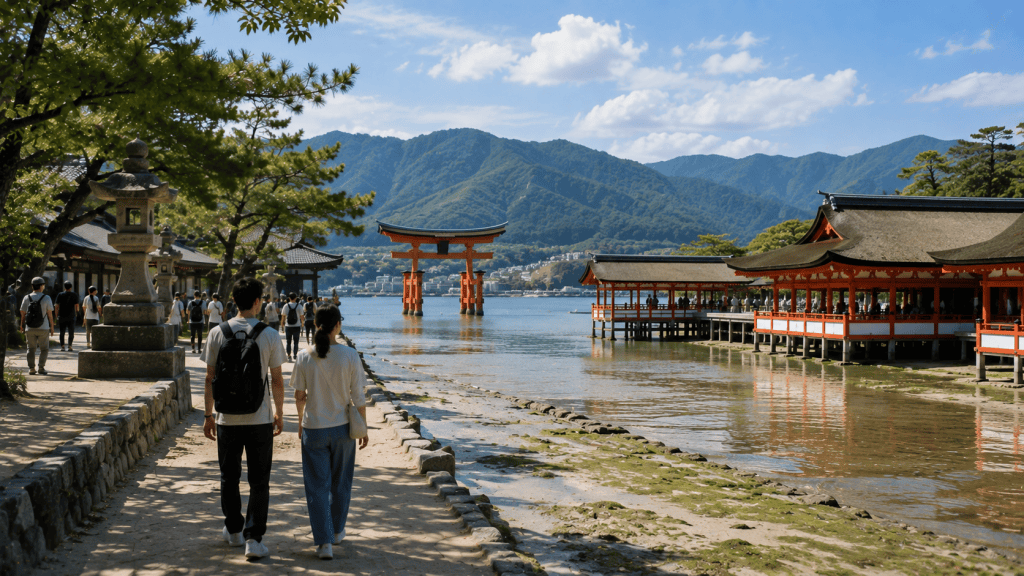
Miyajima is one of the main reasons to spend more than one day in Hiroshima.
Located just outside the city, the island is famous for Itsukushima Shrine and its large torii gate standing in the sea.
The appearance of the shrine and torii changes dramatically with the tide. Around high tide, the shrine can appear to float above the water, while low tide reveals the ground beneath the torii and creates a completely different landscape.
But Miyajima is worth exploring beyond the famous waterfront view.
Walk through the traditional streets near the shrine, try local specialties, visit smaller temples and take time to enjoy the island rather than immediately returning to Hiroshima.
If you have several hours available, consider exploring Mount Misen as well. The mountain rises behind the town and offers another side of Miyajima, with forest scenery and elevated views over the Seto Inland Sea.
You will also see deer around the island. They are part of the Miyajima experience, but remember that they are wild animals. Give them space and avoid feeding or disturbing them.
For most first-time visitors, it is worth allowing at least half a day, and preferably most of a day, for Miyajima.
Spending a full day gives you more freedom to explore at a relaxed pace and experience how the scenery changes with the tide.
Planning to spend a full day on the island? Our Miyajima Day Trip guide provides a complete one-day itinerary covering Itsukushima Shrine, Daisho-in, Mount Misen, local food and practical travel tips.
5. Try Hiroshima-Style Okonomiyaki
Hiroshima is one of the best cities in Japan for travelers who enjoy local food.
The city’s most famous dish is Hiroshima-style okonomiyaki, a savory dish made by layering ingredients such as batter, cabbage, pork, noodles and egg on a hot griddle.
Unlike Osaka-style okonomiyaki, where many of the ingredients are typically mixed together before cooking, Hiroshima-style okonomiyaki is known for its distinctive layered preparation.
You can find specialized okonomiyaki restaurants throughout the city, ranging from small neighborhood counters to buildings filled with multiple okonomiyaki shops.
Sitting at the counter and watching your meal being prepared on the griddle can be part of the experience.
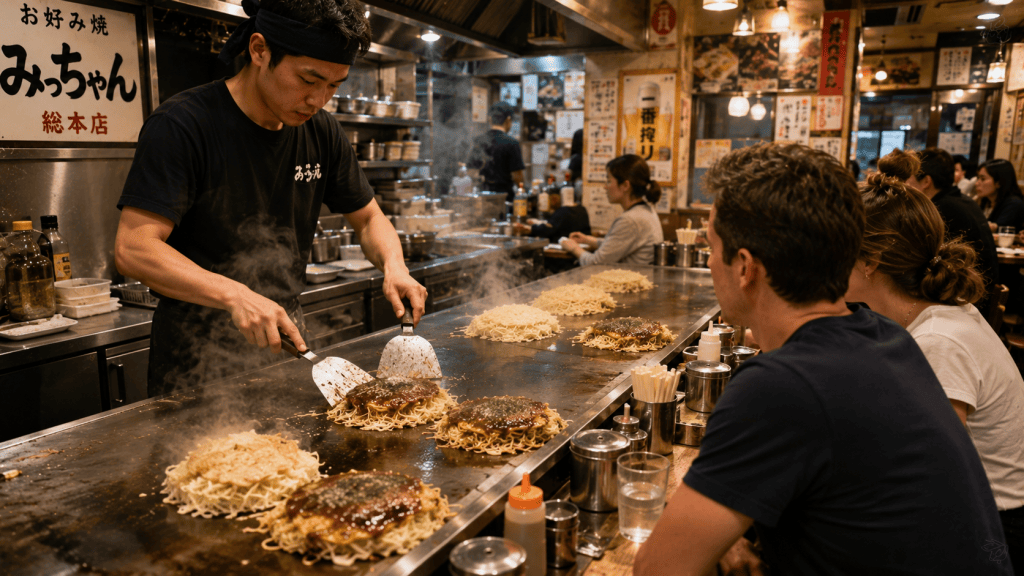
Hiroshima is also known for oysters, particularly during the cooler months, while Miyajima is famous for anago-meshi, grilled conger eel served over rice.
You do not need to visit expensive restaurants to enjoy Hiroshima’s food culture. Trying a few regional specialties is one of the easiest ways to make the city feel different from other stops on your trip.
If you want to discover more dishes during your journey, our Japanese Food Guide introduces 15 foods worth trying in Japan.
6. Explore Downtown Hiroshima
Hiroshima is compact enough that you can experience much of the city center without spending your entire day moving between distant attractions.
Hondori is one of the main shopping areas in central Hiroshima, with a covered pedestrian arcade lined with shops, cafés and restaurants.
The surrounding streets are useful when you want to take a break from sightseeing, find somewhere to eat or simply experience the everyday atmosphere of the city.
In the evening, areas around Hondori and nearby Nagarekawa become livelier, with restaurants, izakaya and other places to eat and drink.
Hiroshima’s rivers also give the city center a more open feeling than you might expect. Walking between neighborhoods can be enjoyable when the weather is comfortable, particularly around the riverside areas near the Peace Memorial Park.
You do not need a detailed sightseeing plan for every hour of your stay. Leave some time to walk around, stop somewhere that looks interesting and experience Hiroshima beyond its major landmarks.
7. How to Get Around Hiroshima
Hiroshima is relatively easy to explore once you understand the basic transportation options.
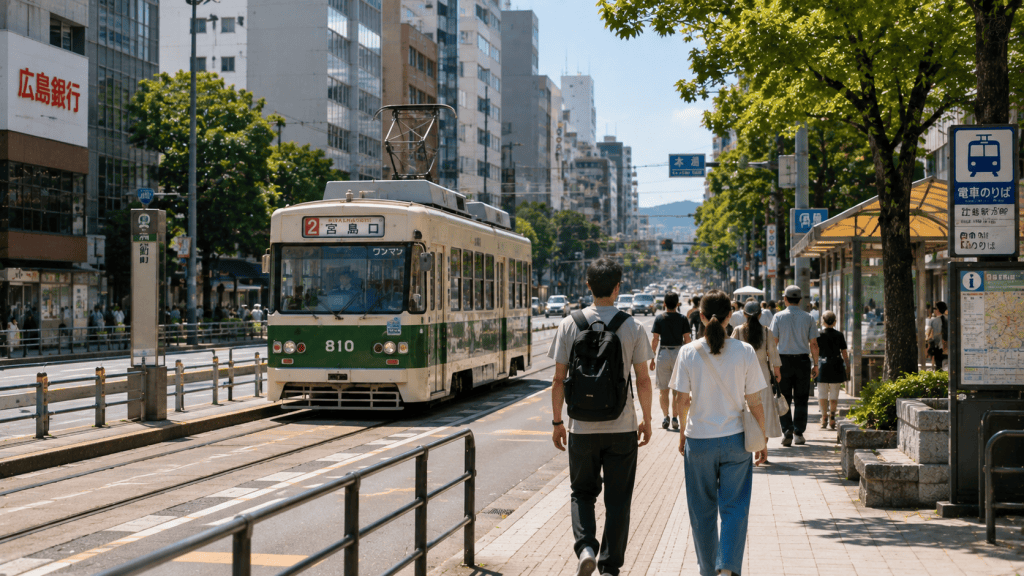
Streetcars are one of the most useful ways to get around central Hiroshima. They connect Hiroshima Station with areas around the city center and major attractions, including the Atomic Bomb Dome.
Buses are another option, and the Hiroshima Sightseeing Loop Bus can be useful for travelers visiting several major sights in the city.
Many attractions in central Hiroshima are also close enough to combine with walking. Once you reach the Peace Memorial Park area, you can explore Hondori and other parts of downtown without relying on transportation for every short journey.
If you are traveling to Miyajima, the journey involves reaching the Miyajimaguchi area and then taking a ferry to the island. Check your route before leaving, particularly if you want to arrive at a specific time of day.
Hiroshima’s transportation system is much easier to manage when you use a navigation app to compare routes and departure times.
For a broader explanation of trains, IC cards and transportation around the country, see our Getting Around Japan guide.
8. Where to Stay in Hiroshima
For most first-time visitors, there are two particularly convenient areas to consider when choosing accommodation in Hiroshima.
Around Hiroshima Station is a practical choice if you are arriving by Shinkansen, leaving early in the morning or continuing your journey to another city.
Staying near the station also makes it easier to handle luggage on arrival and departure days.
Central Hiroshima, particularly around areas such as Hondori and the Peace Memorial Park, can be more convenient if sightseeing, restaurants and evening walks are your priorities.
From this part of the city, several major attractions are within walking distance, while streetcars and buses provide connections to Hiroshima Station and other areas.
There is no single best area for every traveler.
If Hiroshima is mainly a short stop between other cities, staying near the station may be the simplest option. If you have two or three nights and want to spend more time exploring the city itself, staying downtown can make your visit feel more relaxed.
Whichever area you choose, check the distance from the nearest station or streetcar stop before booking rather than looking only at the hotel price.
For a broader comparison of hotels, ryokan and other accommodation styles, see our Where to Stay in Japan guide.
9. How Many Days Do You Need in Hiroshima?
For most first-time visitors, two days in Hiroshima is a good amount of time.
One day can be spent exploring central Hiroshima, including the Peace Memorial Park, Atomic Bomb Dome, Peace Memorial Museum and other nearby attractions.
Use the second day for Miyajima, giving yourself enough time to visit Itsukushima Shrine, walk through the town and explore more of the island without rushing back to the city.
If you only have one day, Hiroshima is still possible, but trying to combine the Peace Memorial Park and Miyajima can make the day feel rushed.
With three days, you can travel at a slower pace, spend more time at museums and gardens or add another destination in the surrounding region.
Hiroshima works particularly well as part of a longer journey through western Japan rather than as a quick stop squeezed between Kyoto and Osaka.
If your first trip to Japan is only seven or ten days, prioritize the destinations that matter most to you. If you have around two weeks, adding Hiroshima becomes much easier without making your itinerary unnecessarily busy.
If you are still deciding how much you can realistically fit into your trip, our 10 Days in Japan itinerary shows a first-time route focused on Tokyo, Kyoto, Nara and Osaka.
10. How to Get to Hiroshima from Tokyo, Kyoto and Osaka
Hiroshima is connected to Japan’s major cities by the Sanyo Shinkansen, making it relatively easy to include in a longer journey through the country.
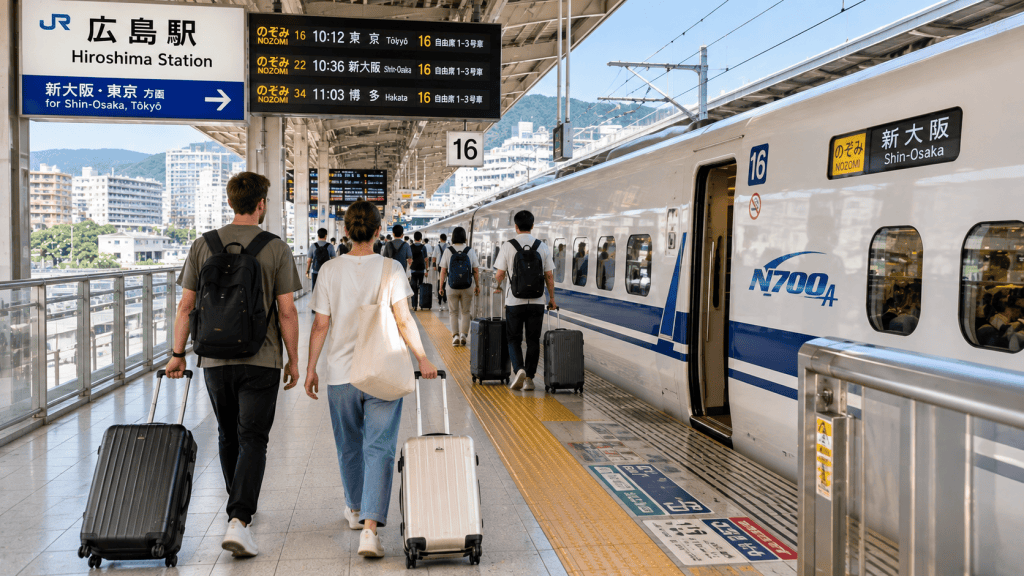
From Osaka, the Shinkansen journey from Shin-Osaka to Hiroshima is roughly 1.5 hours on the fastest services.
From Kyoto, direct Shinkansen services can take you to Hiroshima in around 1 hour 40 minutes, although journey times vary depending on the train.
From Tokyo, the journey is considerably longer. Direct Shinkansen services take roughly four hours, making Hiroshima possible to reach in a single travel day but less suitable as a casual day trip.
If you are following a first-time route through Tokyo, Kyoto and Osaka, Hiroshima usually fits most naturally after Kyoto or Osaka rather than as a separate trip from Tokyo.
You can also continue farther west from Hiroshima, making the city a useful base or stop for travelers exploring more of western Japan.
Always check your specific train before traveling, since departure times, stopping patterns and journey times vary by service.
For more information about using the Shinkansen and traveling between cities, see our Getting Around Japan guide.
11. Best Time to Visit Hiroshima
Hiroshima can be visited throughout the year, and each season offers a slightly different experience.
Spring is one of the most popular times to visit, with mild temperatures and cherry blossoms appearing around the city and Miyajima.
Summer is hot and humid, so sightseeing can be more tiring during the middle of the day. August is also an especially significant period in Hiroshima because of the anniversary of the atomic bombing on August 6.
Autumn brings cooler temperatures and colorful foliage, making it an excellent season for walking around Hiroshima and exploring Miyajima.
Winter is generally quieter and can be a good option if you prefer fewer crowds. It is also a good season to enjoy Hiroshima’s oysters.
There is no single perfect month for everyone. Choose your travel dates based on the weather, crowds and experiences that matter most to you.
If you are still deciding when to travel, our Best Time to Visit Japan guide compares the seasons and months across the country.
12. A Simple 2-Day Hiroshima Itinerary
If you have two days in Hiroshima, you can see the city’s most important sights without trying to fit everything into a single day.
A simple first-time itinerary could look like this:
Day 1: Central Hiroshima
Start your day at Hiroshima Peace Memorial Park.
Visit the Atomic Bomb Dome, walk through the memorial park and allow enough time for the Hiroshima Peace Memorial Museum rather than rushing through the area.
Afterward, walk toward Hondori and stop for lunch in central Hiroshima.
During the afternoon, visit Hiroshima Castle and Shukkeien Garden, or choose just one if you prefer a slower day.
In the evening, explore the downtown area and try Hiroshima-style okonomiyaki for dinner.
Day 2: Miyajima
Leave Hiroshima in the morning and travel to Miyajima.
Visit Itsukushima Shrine and explore the streets around the waterfront before continuing farther into the island.
Depending on your interests and available time, you can visit Daisho-in, explore Mount Misen or simply spend more time walking through the town and enjoying the scenery.
Stop for lunch and try a local specialty such as anago-meshi or oysters.
Before leaving, take another look at the waterfront. If the tide has changed significantly since you arrived, the view of Itsukushima Shrine and the torii gate may look completely different.
Return to Hiroshima in the late afternoon or evening.
This itinerary keeps the two main experiences separate: one day for Hiroshima’s city center and one day for Miyajima.
Conclusion: Hiroshima Is Worth Adding to a Longer Japan Trip
Hiroshima offers something very different from Japan’s largest tourist cities.
Its history makes it an important place to visit with time and respect, particularly around the Peace Memorial Park and museum.
At the same time, the city has much more to experience, from Hiroshima-style okonomiyaki and peaceful gardens to streetcars, riverside walks and lively downtown streets.
Miyajima adds another dimension to the trip, combining one of Japan’s most recognizable shrines with traditional streets, mountain scenery and views across the Seto Inland Sea.
For most first-time visitors, spending two days in Hiroshima and Miyajima provides a good balance without rushing.
If your Japan itinerary is long enough to travel beyond Tokyo, Kyoto and Osaka, Hiroshima is one of the most rewarding destinations to consider adding to your journey.
 Beyond Japan Guide
Leave a comment