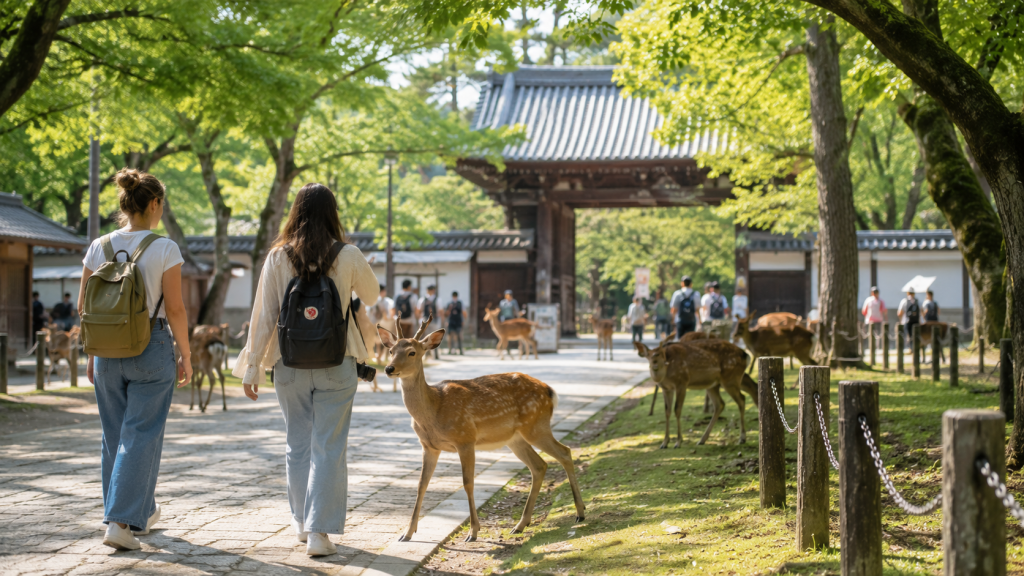
Nara is one of the easiest and most rewarding day trips from Kyoto or Osaka.
Known for its free-roaming deer, ancient temples and peaceful parks, the city offers a very different atmosphere from Japan’s larger urban destinations. Many of Nara’s most famous sights are located within walking distance of each other, making it possible to experience a lot without rushing from place to place.
On a first visit, you can spend the morning exploring Nara Park and Todai-ji, walk through the forested grounds of Kasuga Taisha in the afternoon, and finish the day wandering through the traditional streets of Naramachi.
This one-day Nara itinerary shows you how to make the most of your visit while keeping the pace comfortable.
1. Is Nara Worth a Day Trip?
Yes. Nara is an excellent day trip for travelers staying in Kyoto or Osaka, especially if you want to experience a quieter side of Japan without traveling far from the major cities.
The biggest advantage is how close many of the main attractions are to each other. Nara Park, Todai-ji and Kasuga Taisha can all be explored as part of the same walking route.
You will also find a different atmosphere from Kyoto and Osaka. Deer wander through the park, historic temples rise above tree-lined paths, and quieter streets appear just a short walk away from the busiest sightseeing areas.
For most first-time visitors, one full day is enough to see the highlights while still leaving time to slow down and enjoy the surroundings.
If Nara is part of a longer trip across the country, our 7-Day Japan Itinerary shows how Tokyo, Kyoto and Osaka can fit into a first visit to Japan.
2. Kyoto or Osaka: Where Should You Start?
Nara works well as a day trip from either Kyoto or Osaka, so the better starting point usually depends on where you are already staying.
From Kyoto, trains connect the city with Nara directly, making it easy to add Nara to a stay in Kyoto.
From Osaka, Nara is also an easy train ride away, particularly if you are staying in an area with convenient access to the Kintetsu network.
You do not need to change hotels just to visit Nara. For most travelers, it makes more sense to keep your accommodation in Kyoto or Osaka, travel to Nara in the morning and return in the late afternoon or evening.
Staying in Kyoto? Our Kyoto for First-Time Visitors guide covers the best areas, things to do and practical tips for planning your stay.
If Osaka is your base, our Osaka for First-Time Visitors guide can help you plan the rest of your time in the city.
3. How to Get to Nara
Both JR and Kintetsu trains can be used to reach Nara, and the best option depends on your starting point and the route suggested by your navigation app.
Kintetsu Nara Station is particularly convenient for this itinerary because it places you within easy walking distance of Nara Park and many of the city’s main attractions.
JR Nara Station is farther from the park, but it is still a practical option and may work better depending on your accommodation, rail pass or route.
Before leaving your hotel, check the latest train route and departure time on a navigation app rather than relying on a fixed timetable from a travel article.
If you are not familiar with Japan’s railway system, our Getting Around Japan guide explains trains, IC cards and the Shinkansen in more detail.
You can also check our Japan Travel Apps guide for useful tools for maps, train routes and navigation.
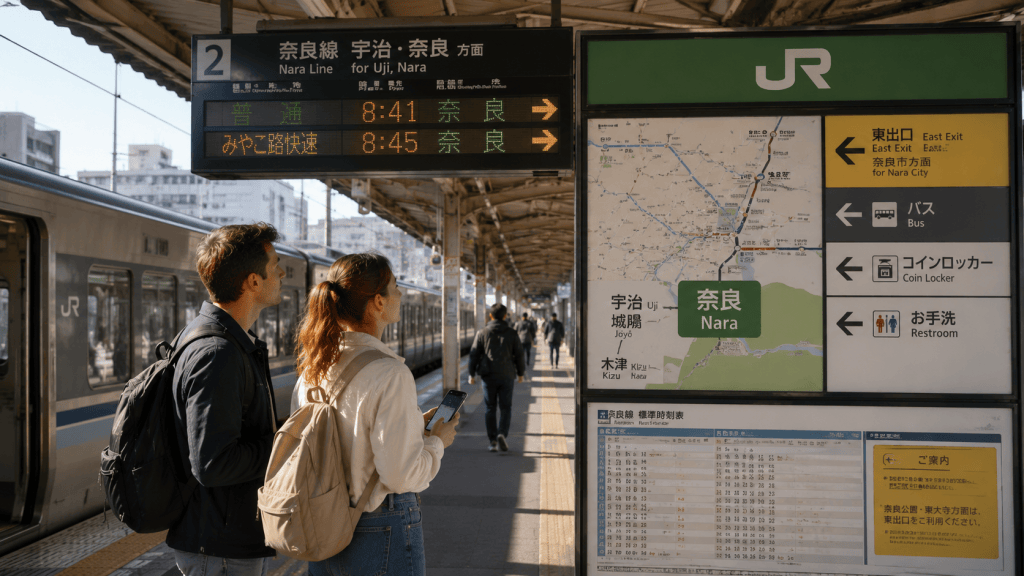
4. 9:00 AM — Arrive in Nara
Try to arrive in Nara at around 9:00 AM. This gives you plenty of time to explore the main sights without turning the day into a race.
If you arrive at Kintetsu Nara Station, you can begin walking toward Nara Park almost immediately.
There is no need to follow the schedule in this itinerary minute by minute. Think of the times as a simple guide to help you organize the day.
One of the best things about Nara is that much of the sightseeing can be done on foot, so once you reach the main park area, you can slow down and enjoy the city at a more relaxed pace.
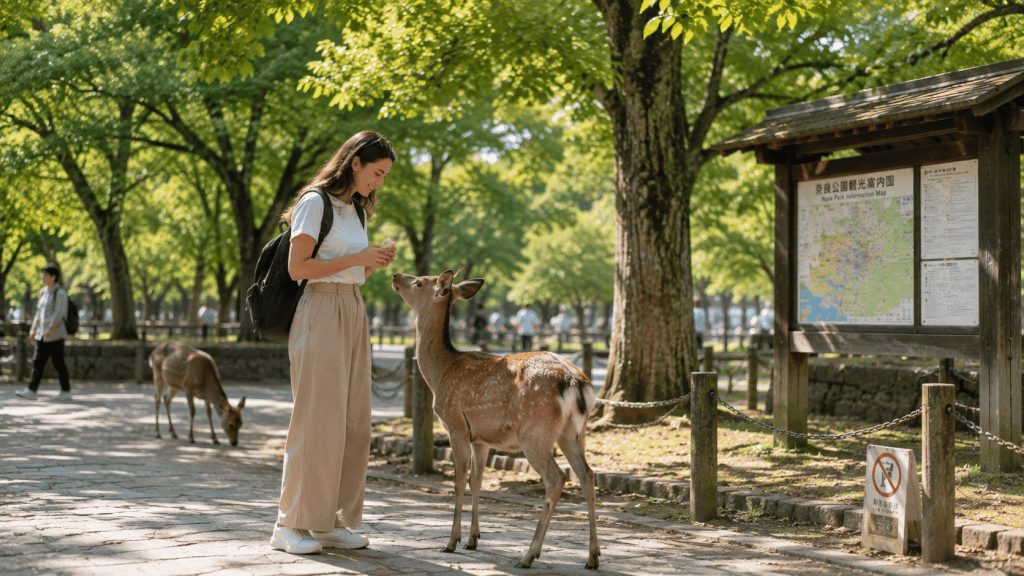
5. 9:30 AM — Explore Nara Park and Meet the Deer
Start your morning in Nara Park, one of the city’s most famous landmarks.
The park is known around the world for the deer that roam freely through the area. You will often see them near walking paths, temples and open grassy spaces as you make your way through the park.
Special deer crackers called shika senbei are sold around the park if you would like to feed them.
Take your time here rather than treating the deer as a quick photo stop. The combination of open parkland, historic surroundings and wandering deer is a big part of what makes Nara feel so different from Kyoto and Osaka.
From the park, continue toward Todai-ji.
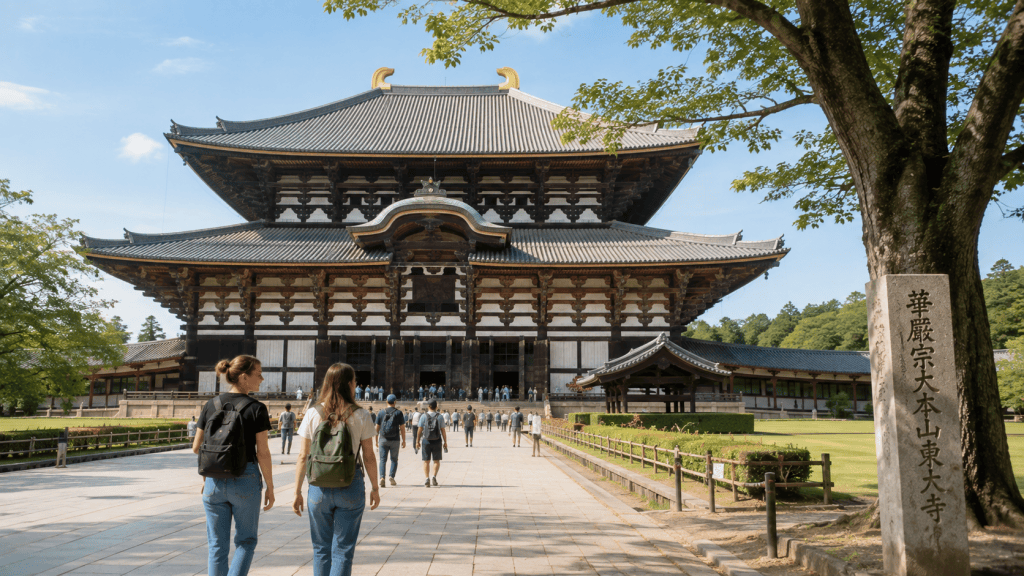
6. 10:30 AM — Visit Todai-ji and the Great Buddha
Continue to Todai-ji, one of Nara’s most important and impressive temples.
As you approach the temple, you will pass through the monumental Nandaimon Gate before reaching the Great Buddha Hall, known as Daibutsuden.
Inside is the enormous bronze Great Buddha, one of Nara’s most recognizable cultural landmarks.
Even if you have already visited temples in Kyoto, the scale of Todai-ji makes this stop feel very different.
Allow enough time to explore the hall without rushing. If your schedule is flexible, you can also wander a little farther through the temple grounds before continuing with the itinerary.
Todai-ji Great Buddha Hall
Admission: ¥800 for adults
Opening hours: 7:30 AM–5:30 PM from April to October; 8:00 AM–5:00 PM from November to March
Opening hours and admission fees can change, so check the official Todai-ji website before your visit.
7. 12:00 PM — Stop for Lunch
After visiting Todai-ji, take a break for lunch before continuing deeper into the Nara Park area.
You will find restaurants and cafes around the park and on the streets leading back toward central Nara.
There is no single restaurant you need to visit for this itinerary. Choose somewhere that fits your schedule and appetite rather than spending too much of the day waiting in line at one popular restaurant.
If you want something with a local connection, look for dishes such as kakinoha-zushi, sushi wrapped in persimmon leaves, or save room for traditional sweets later in the afternoon.
8. 1:30 PM — Walk to Kasuga Taisha
After lunch, continue through the park toward Kasuga Taisha.
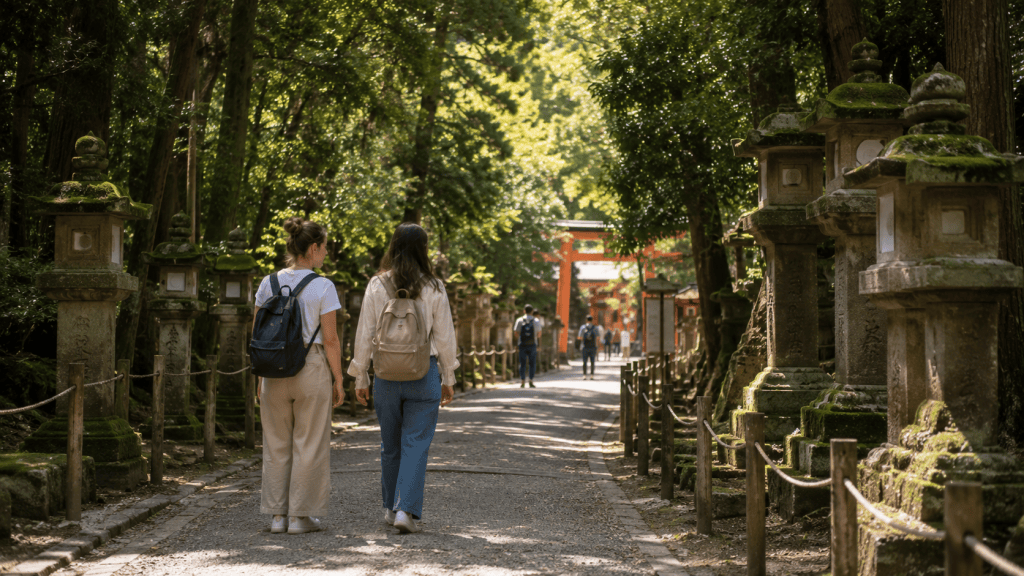
The walk itself is part of the experience. As you approach the shrine, the atmosphere becomes quieter and more forested, with stone lanterns lining parts of the route.
Kasuga Taisha has a history stretching back more than 1,200 years and remains one of Nara’s most important Shinto shrines.
You can explore the main worship area without spending the entire afternoon here, making it a natural stop between Todai-ji and the later part of your day.
If you want to enter the special worship area inside the cloister, check the latest opening information before your visit.
Kasuga Taisha
General worship: Free
Special worship area: ¥700
Special worship reception: 9:00 AM–4:00 PM
Hours and access to some areas can change during ceremonies and events, so check the official Kasuga Taisha website before your visit.
9. 3:00 PM — Explore Naramachi
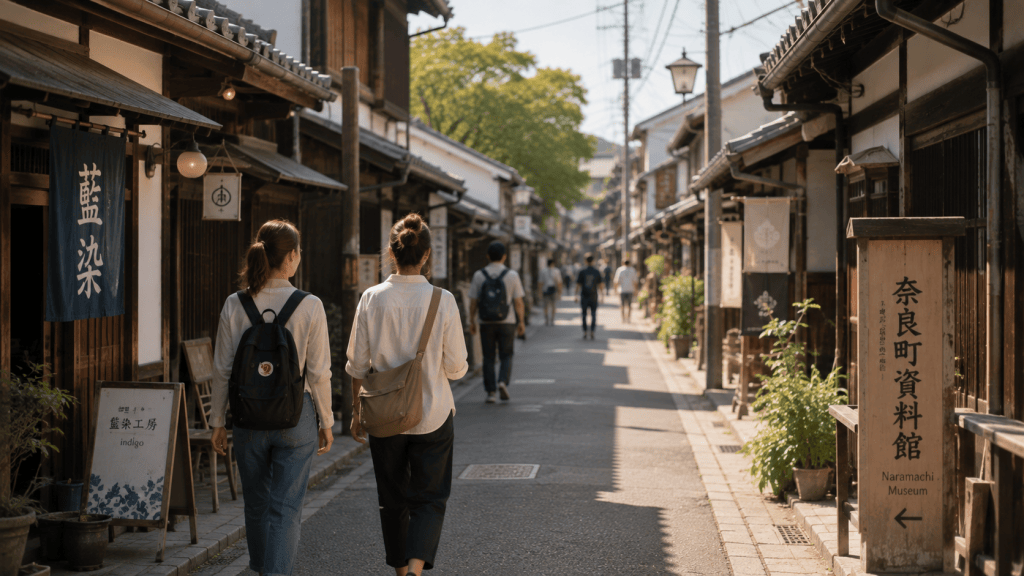
In the afternoon, make your way toward Naramachi, the historic district south of central Nara.
This is a good place to slow down after visiting the larger temple and shrine complexes around Nara Park.
Walk through the narrow streets, browse small shops and cafes, and enjoy the atmosphere of the traditional neighborhood.
You do not need a detailed checklist here. Leave some room in your itinerary to wander, stop for a drink or snack, and explore whatever catches your attention.
Naramachi also gives the final part of the day a different character from the temples, shrines and parkland you explored earlier.
10. 4:30–5:00 PM — Return to Kyoto or Osaka
By late afternoon, begin making your way back toward the station.
If you started early and still have energy, you can stay a little longer for dinner or continue exploring central Nara. Otherwise, returning between roughly 4:30 and 5:00 PM gives you a comfortable evening back in Kyoto or Osaka.
Check your train route before leaving Naramachi so you know whether Kintetsu Nara Station or JR Nara Station is more convenient for your return journey.
There is no need to squeeze every attraction into one visit. A relaxed day covering Nara Park, Todai-ji, Kasuga Taisha and Naramachi is already a rewarding introduction to the city.
11. What to Eat in Nara
Nara is not as famous for food as Osaka, but there are still several local specialties worth trying during your visit.
One of the best known is kakinoha-zushi, a traditional style of sushi wrapped in persimmon leaves. It is commonly made with fish such as mackerel or salmon and is easy to find in Nara.
You may also come across traditional Japanese sweets, local sake and dishes using ingredients from the surrounding region.
For a one-day itinerary, you do not need to plan every meal around famous restaurants. Trying one local specialty while keeping your schedule flexible is usually enough.
If you want to explore more Japanese dishes during your trip, see our Japanese Food Guide.
12. Tips for Visiting the Deer in Nara Park
The deer in Nara Park may seem friendly, but they are still wild animals.
If you want to feed them, only use the special deer crackers called shika senbei that are sold around the park.
Do not give the deer your own food, and never offer them paper, plastic or other objects.
Avoid teasing the deer or holding food just out of reach. Some deer can become impatient when they see crackers, so be especially careful if you are traveling with small children.
Once you have finished feeding them, showing your empty hands can help signal that you have no more food.
Enjoy seeing the deer, but give them space and treat them with respect.
13. How Much Does a Nara Day Trip Cost?
A Nara day trip can be relatively affordable, especially because many of the main sights are within walking distance.
Your main expenses will usually be round-trip train transportation, temple or shrine admission fees, food and any snacks or souvenirs you buy during the day.
Nara Park itself is free to explore, while some temples and special shrine areas charge admission fees.
For example, the Great Buddha Hall at Todai-ji currently charges ¥800 for adult admission, while special worship inside Kasuga Taisha currently costs ¥700.
Transportation costs depend on whether you travel from Kyoto or Osaka, which railway you use and whether any part of the journey is covered by a pass.
Check current fares before your trip rather than relying on a fixed total budget.
For a broader look at accommodation, transportation, food and other expenses, see our Japan Travel Budget guide.
14. Is Half a Day Enough for Nara?
Half a day in Nara is possible, but you will need to be more selective.
If you only have a few hours, focus on Nara Park and Todai-ji, with a short walk through the surrounding area.
Trying to include Todai-ji, Kasuga Taisha, Naramachi and a relaxed lunch in half a day can make the visit feel rushed.
For a first trip, a full day is the better option if your schedule allows it.
Nara is especially enjoyable when you have enough time to walk between the sights rather than constantly checking the clock.
15. What to Bring for a Nara Day Trip
You do not need much for a day trip to Nara, but a few simple things can make the day more comfortable.
Wear comfortable walking shoes because much of this itinerary is designed to be explored on foot.
Bring a small bag, water and weather-appropriate clothing, especially during Japan’s hot summers or colder winter months.
A portable phone charger can also be useful because you may use your phone frequently for maps, train routes and photos.
There is no need to bring large luggage. If you are visiting Nara as a day trip, leave your suitcase at your hotel in Kyoto or Osaka whenever possible.
Conclusion: A Relaxing Day Beyond Kyoto and Osaka
Nara is close enough to Kyoto and Osaka for an easy day trip, but the experience feels surprisingly different from both cities.
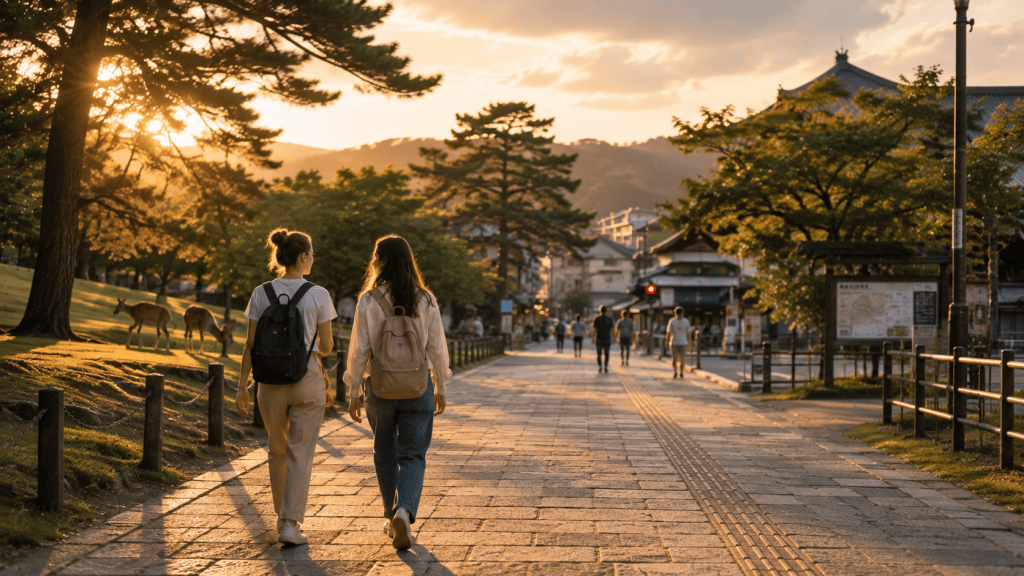
In a single day, you can walk among the deer in Nara Park, see the Great Buddha at Todai-ji, follow lantern-lined paths toward Kasuga Taisha and slow down in the traditional streets of Naramachi.
The key is not to rush.
Give yourself enough time to walk, explore and enjoy the atmosphere rather than trying to check every attraction off a list.
If this is your first trip to Japan, Nara can be a memorable break from the busier streets of Kyoto and Osaka and a chance to experience another side of the country.
Planning the rest of your trip? Our 7-Day Japan Itinerary can help you organize Tokyo, Kyoto and Osaka as part of your first trip to Japan.
 Beyond Japan Guide
Leave a comment