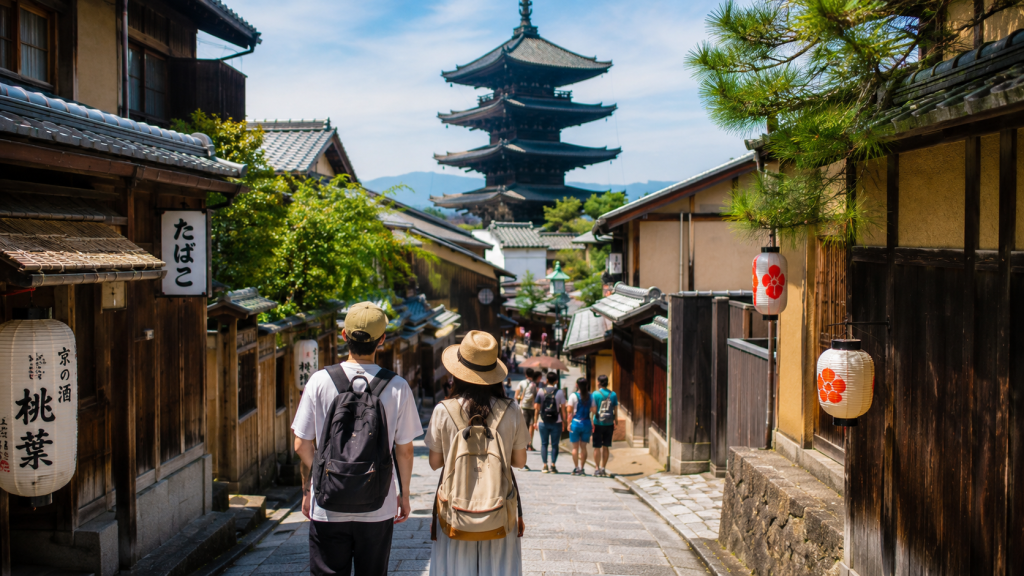
Kyoto is the Japan many travelers imagine before they arrive.
Historic temples, wooden townhouses, traditional gardens and quiet streets create a completely different atmosphere from modern Tokyo.
But Kyoto can also be more challenging to explore than first-time visitors expect.
Famous attractions are spread across different parts of the city, transportation takes time, and some of the most popular places can become extremely crowded during the day.
The key is not trying to see everything.
Choose a few areas, start early when it matters, walk whenever you can and leave enough time to enjoy the streets between the famous sights.
This guide covers the essential places, transportation, food and practical tips you need to enjoy your first trip to Kyoto without rushing.
Visiting Japan for the first time? Read our First Time in Japan guide for practical things to know before your trip.
1. Kiyomizu-dera & Higashiyama — Start with Historic Kyoto
For many first-time visitors, Higashiyama is one of the best places to experience the Kyoto they imagined before arriving.
Kiyomizu-dera is one of the city’s best-known temples, but the experience is about much more than the temple itself.
Walk through the historic streets around Sannenzaka and Ninenzaka, where traditional-style buildings, small shops, cafés and restaurants line the slopes.
This area can become very busy later in the day, so arriving earlier can make walking through the neighborhood more enjoyable.
Rather than visiting Kiyomizu-dera and immediately moving on, give yourself time to explore the surrounding streets.
Kyoto is often at its best when the journey between places becomes part of the experience.
2. Gion — Walk Through Kyoto’s Traditional Streets
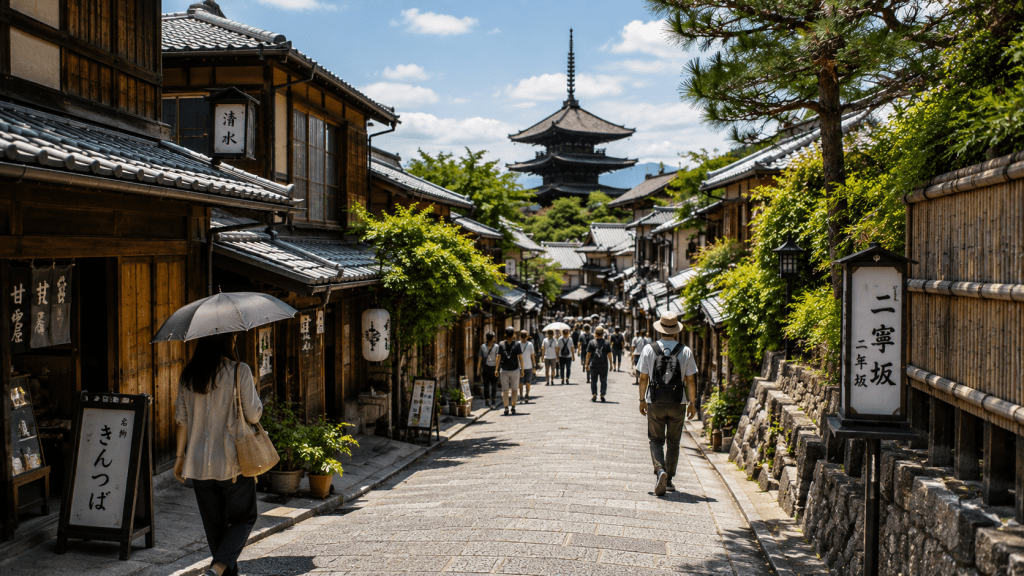
Gion is one of Kyoto’s most famous historic districts.
Traditional wooden buildings, narrow streets and old teahouses give parts of the neighborhood a distinctive atmosphere.
Hanamikoji is well known, but do not treat Gion as a single street to photograph.
Walk through the surrounding area and you will find quieter streets that reveal another side of the neighborhood.
Early morning can feel peaceful, while evening creates a completely different atmosphere as restaurants and lanterns begin to light up.
Remember that Gion is not a theme park. People live and work here, so respect private property, follow local signs and avoid blocking narrow streets while taking photographs.
3. Fushimi Inari — Walk Through Thousands of Torii Gates
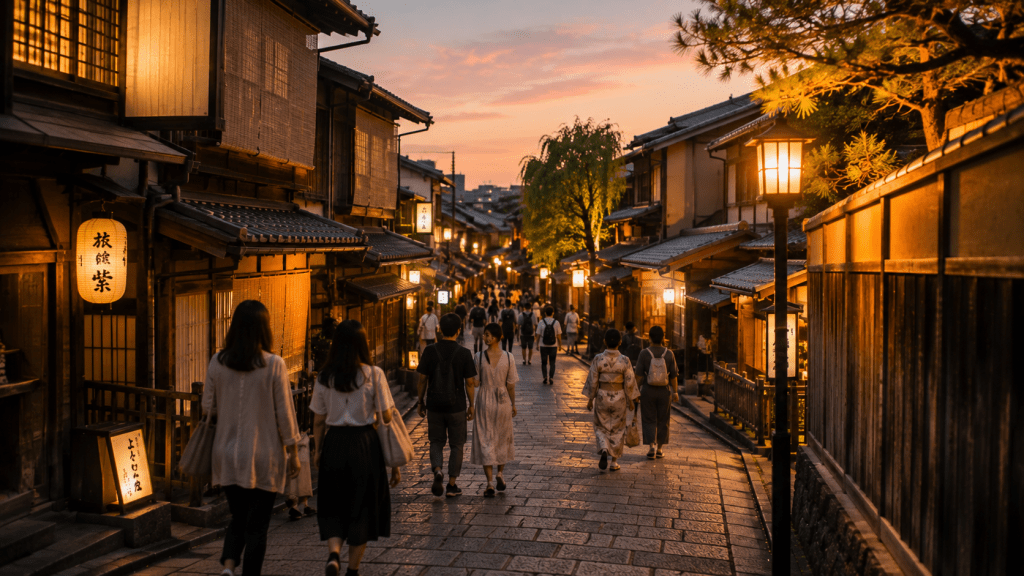
Fushimi Inari Taisha is famous for the seemingly endless rows of vermilion torii gates climbing the slopes of Mount Inari.
It is one of Kyoto’s most recognizable sights.
It is also one of the places where timing can dramatically change your experience.
The area near the entrance can become extremely busy, particularly during popular travel periods.
Arriving early is one option. Another is to continue walking beyond the first sections of torii gates, as many visitors turn back relatively quickly.
You do not have to hike the entire mountain. Walk as far as your time and energy allow, then return at your own pace.
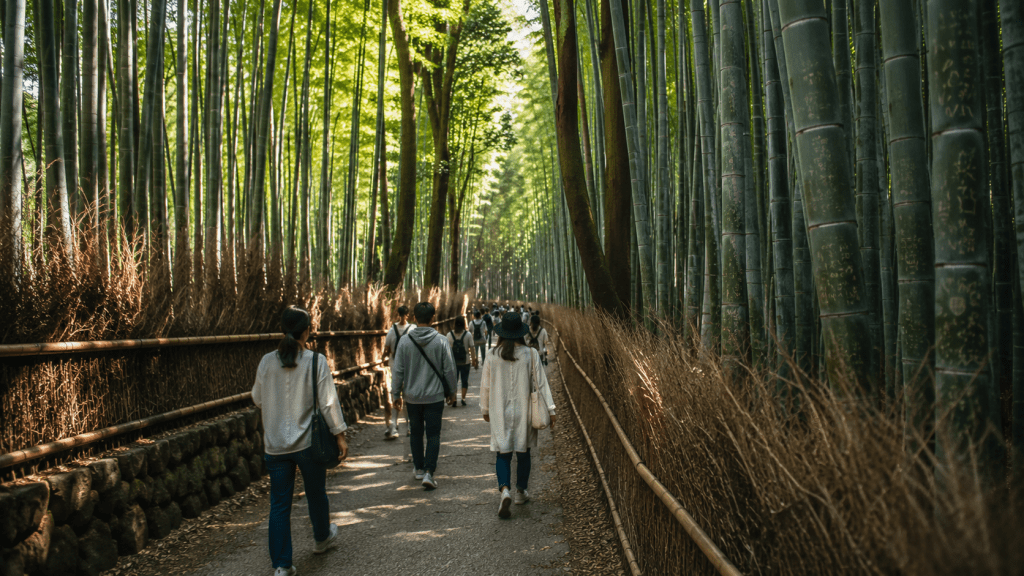
4. Arashiyama — More Than the Bamboo Grove
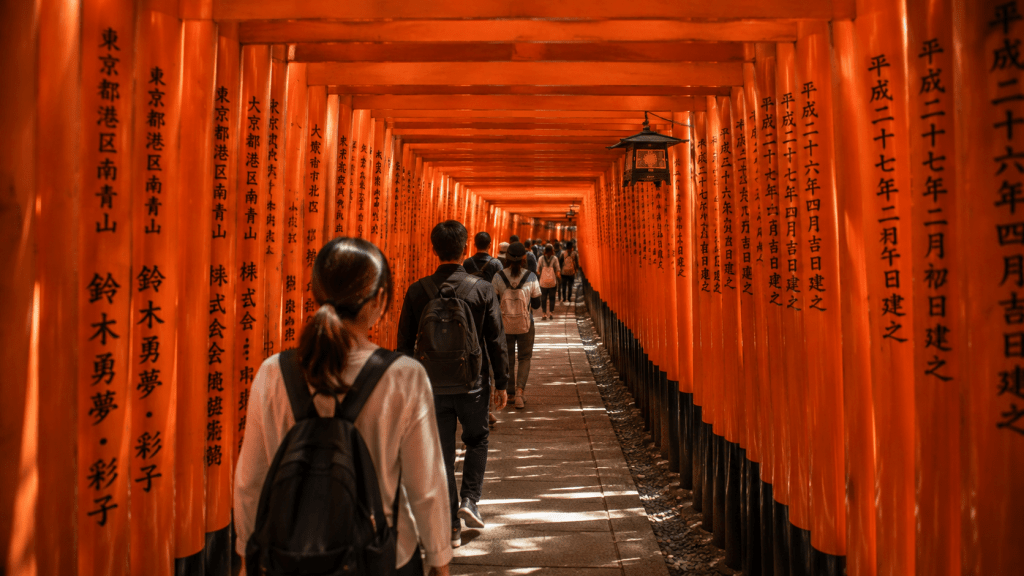
Many visitors associate Arashiyama with one image: the bamboo grove.
It is worth seeing, but Arashiyama has much more to offer.
The wider area includes temples, gardens, riverside scenery and walking routes that can easily fill several hours.
Rather than arriving only for a quick bamboo photograph, consider spending part of your morning exploring the neighborhood.
Walk toward the river, cross Togetsukyo Bridge, visit a temple or simply enjoy the landscape.
As with several famous Kyoto attractions, arriving earlier can make the experience more relaxed.
5. Kinkaku-ji — Kyoto’s Famous Golden Pavilion
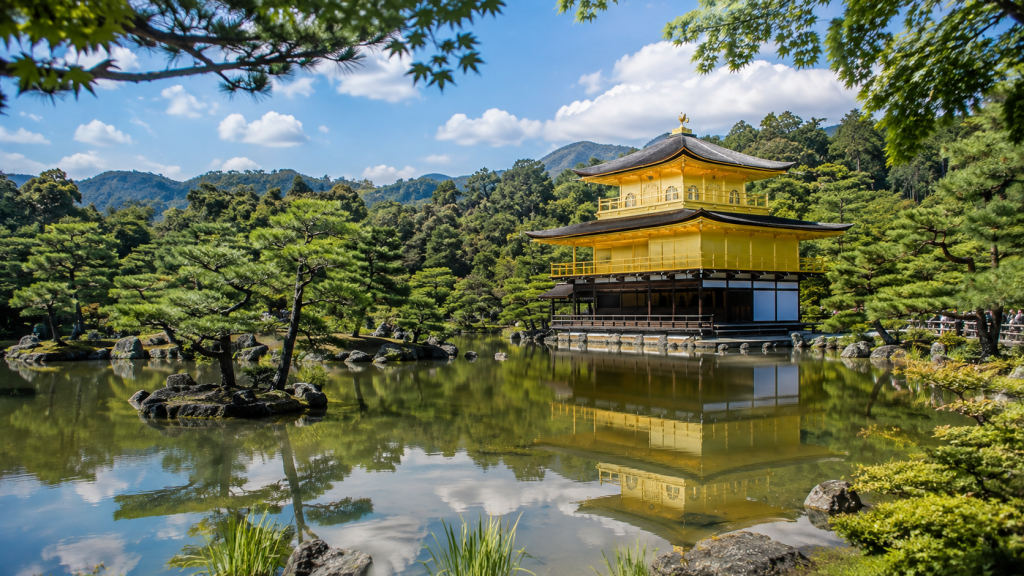
Kinkaku-ji, commonly known as the Golden Pavilion, is one of Kyoto’s most recognizable landmarks.
The gold-covered building reflected in the pond is an unforgettable sight, especially when the weather is calm.
Unlike Higashiyama or Arashiyama, however, Kinkaku-ji is not an area where most travelers need to spend half a day.
Think of it as one important stop rather than the center of an entire day’s itinerary.
Its location also means you should consider transportation time when planning the rest of your day.
Trying to combine attractions from opposite sides of Kyoto can create much more travel than expected.
6. Nishiki Market — Discover Kyoto Through Food
Food is another way to understand Kyoto.
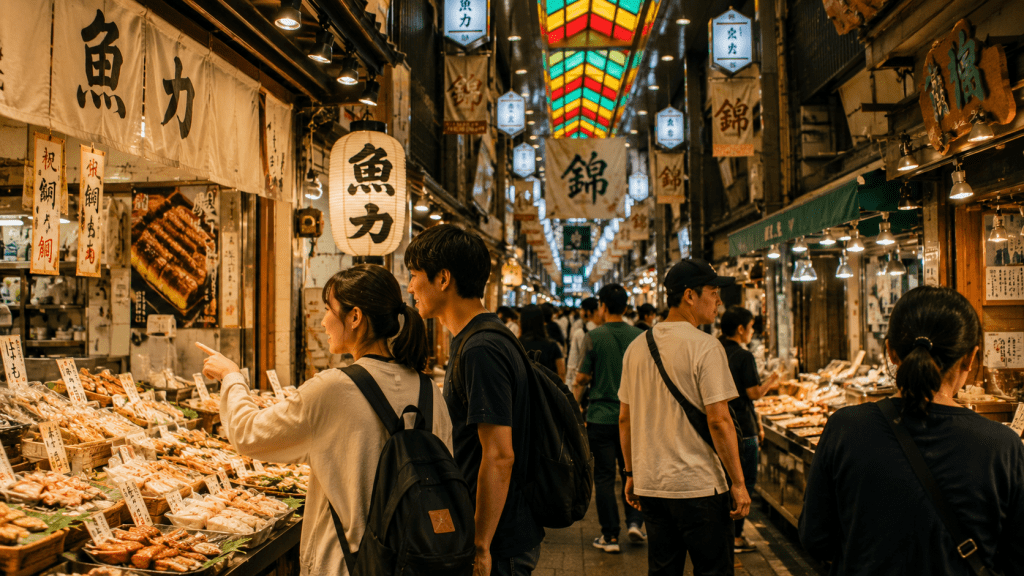
Nishiki Market is one of the city’s best-known food areas, with shops selling ingredients, snacks, sweets, pickles and other specialties.
It can be fun for first-time visitors because you can see many different parts of Kyoto’s food culture in one relatively compact area.
But remember that it is a functioning market and shopping street, not simply a tourist attraction.
Be considerate when stopping, eating or taking photographs, particularly when the street is crowded.
And do not limit your Kyoto food experience to the market. Small restaurants, cafés, noodle shops and traditional sweet shops throughout the city can be just as memorable.
7. Explore Kyoto Beyond the Famous Sights
Kyoto’s famous temples deserve their reputation.
But your favorite part of the city may be somewhere you never planned to visit.
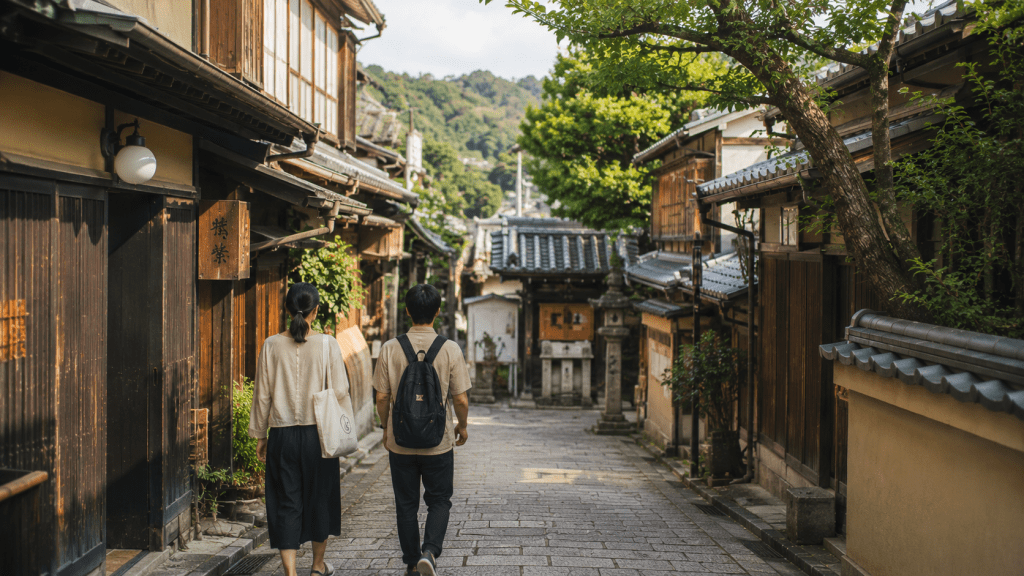
Walk away from the busiest sightseeing routes and you may find a small shrine, quiet residential lane, local bakery, neighborhood café or temple with only a few visitors.
You do not need to search for a “secret Kyoto.”
Simply give yourself enough time to walk.
That is often enough to discover a quieter side of the city.
8. What Should You Eat in Kyoto?
Kyoto has a food culture shaped by history, seasonality and local ingredients.
Traditional Kyoto cuisine can be refined, but eating well here does not always mean booking an expensive restaurant.
You might enjoy tofu dishes, soba, seasonal vegetables, traditional sweets or matcha.
Kyoto is also a good place to slow down at a tea house and enjoy matcha with wagashi rather than treating every meal as something to finish quickly.
And remember: Kyoto food is only one part of Japan’s enormous regional food culture.
For more ideas, read our Japanese Food Guide.
9. How to Get Around Kyoto
Kyoto requires a slightly different approach from Tokyo.
Trains are useful for some journeys, but buses, subways and walking may all be part of your day depending on where you are going.
The important thing is to plan by area, not simply by attraction.
Visiting nearby sights together is usually more efficient than repeatedly crossing the city.
Walking is also a major part of the Kyoto experience. Some of the city’s most memorable streets and small discoveries happen between destinations.
Wear comfortable shoes and avoid planning every journey down to the minute.
For current transportation information and practical travel advice, check the Kyoto City Official Travel Guide.
If Kyoto is part of a larger trip across Japan, our Getting Around Japan guide explains trains, IC cards and the Shinkansen.
10. How Many Days Do You Need in Kyoto?
For a first visit, three full days is a good starting point.
Two days is possible, but you will need to be selective.
Three days allows you to divide the city into different areas and explore at a more comfortable pace.
Four days gives you additional flexibility for quieter neighborhoods, museums, gardens or simply slower mornings.
If you have only one day, resist the temptation to visit every famous temple.
Choose one or two areas and experience them properly.
For travelers combining Tokyo, Kyoto and Osaka, see our 7-Day Japan Itinerary.
11. Where Should First-Time Visitors Stay in Kyoto?
There is no single perfect area for everyone.
Kyoto Station is convenient for the Shinkansen and useful if you plan to make day trips or move between cities.
Downtown Kyoto, including areas around Kawaramachi and Karasuma, provides convenient access to restaurants, shopping and transportation.
Gion and Higashiyama can be attractive if historic surroundings and atmosphere are especially important to you.
The best location depends on your itinerary.
If you expect to travel outside Kyoto frequently, transportation convenience may matter more than staying beside a famous attraction.
For more help choosing between hotels, ryokan and other accommodation options, read our Where to Stay in Japan guide.
12. A Simple 3-Day Kyoto Itinerary
Day 1 — Eastern Kyoto
Kiyomizu-dera → Higashiyama → Gion
Start early around Kiyomizu-dera and gradually make your way through Higashiyama toward Gion.
Day 2 — Fushimi Inari + Central Kyoto
Fushimi Inari → Nishiki Market → Downtown Kyoto
Visit Fushimi Inari earlier in the day before returning toward central Kyoto.
Day 3 — Western & Northern Kyoto
Arashiyama → Kinkaku-ji
Start your morning in Arashiyama and later move toward Kinkaku-ji.
If that feels like too much transportation for one day, choose one area and spend more time there instead.
A good Kyoto itinerary should feel like a journey, not a race.
13. When Is the Best Time to Visit Kyoto?
Kyoto changes dramatically with the seasons.
Spring is famous for cherry blossoms, while autumn brings some of Japan’s most celebrated fall colors.
Both seasons can also bring large numbers of visitors.
Summer is hot and humid, but traditional events and green landscapes create a different atmosphere.
Winter is colder and quieter, and occasional snow can completely transform temples and gardens.
There is no perfect season for everyone.
If you can choose your travel dates, compare the advantages of each season in our Best Time to Visit Japan guide.
14. Common Mistakes First-Time Kyoto Visitors Make
Trying to Visit Too Many Temples
After several temples in one day, even beautiful places can begin to blend together. Choose fewer and experience them properly.
Underestimating Travel Time
Kyoto’s major attractions are spread across different parts of the city. Do not assume everything is close simply because it is “in Kyoto.”
Starting Too Late
For some famous attractions, earlier mornings can provide a noticeably different experience.
Only Visiting Famous Places
Kiyomizu-dera, Fushimi Inari and Arashiyama are popular for good reasons. But leave space for ordinary streets and unexpected discoveries too.
Treating Historic Neighborhoods Like Theme Parks
Kyoto’s traditional districts are real neighborhoods. Respect private property, local rules and the people who live and work there.
15. Tokyo or Kyoto — Which Should You Spend More Time In?
For most first-time visitors, the answer is not choosing one over the other.
They offer very different experiences.
Tokyo gives you enormous neighborhoods, modern city energy, shopping, food and seemingly endless possibilities.
Kyoto offers a different rhythm, with temples, historic streets, gardens and traditions playing a much larger role in the travel experience.
If your schedule allows, experience both.
Rather than asking which city is “better,” think about what you want from your trip and divide your time accordingly.
Planning the Tokyo part of your journey? Read our Tokyo for First-Time Visitors guide.
Slow Down and Experience Kyoto
Kyoto rewards travelers who leave space in their itinerary.
See Kiyomizu-dera. Walk beneath the torii gates of Fushimi Inari. Experience the landscapes of Arashiyama.
But do not spend your entire trip moving from famous sight to famous sight.
Walk through a quiet street. Stop for tea. Enter a small temple you had not planned to visit.
Notice the gardens, wooden buildings and everyday life between the landmarks.
Those moments can become just as memorable as Kyoto’s most famous sights.
And after Tokyo and Kyoto, there is much more of Japan waiting to be discovered.
Continue with our 10 Beautiful Places Beyond Tokyo and Kyoto.
Continuing your journey to Osaka? Read our Osaka for First-Time Visitors guide for the best areas, food, transportation and practical tips for planning your stay.
 Beyond Japan Guide
Leave a comment