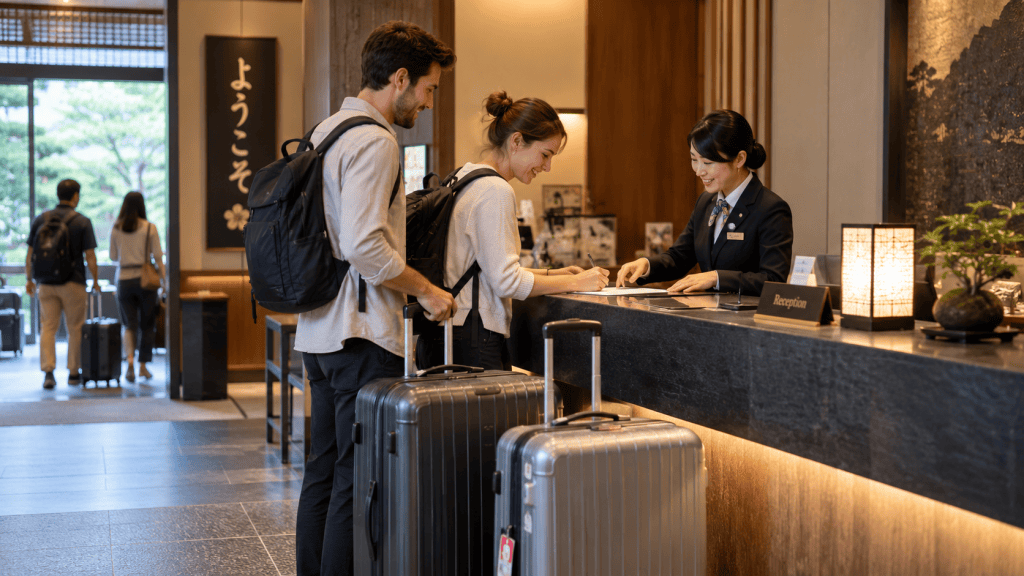
Traveling around Japan by train is convenient, but moving between cities with a large suitcase can quickly become tiring.
Crowded stations, stairs, busy platforms and limited luggage space can make heavy bags especially inconvenient when traveling between destinations such as Tokyo, Kyoto and Osaka.
Fortunately, Japan has an extensive luggage delivery system that allows travelers to send suitcases ahead instead of carrying them throughout the journey.
Often called luggage forwarding or takkyubin, these services can deliver bags between hotels, from airports to accommodation and, with sufficient advance time, from accommodation to airports.
Many hotels can help arrange the shipment at the front desk, while delivery services are also available through designated counters and other participating locations.
Japan’s official tourism website also provides an overview of Hands-Free Travel and luggage services for international visitors.
The system is straightforward once you understand how it works, but delivery times, acceptance locations and airport deadlines vary. Travelers staying in vacation rentals or accommodation without a staffed reception desk may also need a different approach.
This guide explains how luggage forwarding works in Japan, how to send bags between hotels, what to expect when using the service and the practical details to check before sending your suitcase.
1. What Is Luggage Forwarding in Japan?
Luggage forwarding is a delivery service that allows you to send suitcases and other eligible baggage to another location in Japan instead of carrying everything with you.
You may hear the Japanese term takkyubin during your trip. It refers to Japan’s widely used door-to-door parcel delivery services, which are used by residents as well as travelers.
For visitors, one of the most useful ways to use the service is to send a suitcase from one hotel to another while traveling between cities.
For example, if you are leaving Tokyo for Kyoto, you may be able to leave your suitcase with the hotel staff in Tokyo, complete the necessary shipping information and have the bag delivered to your hotel in Kyoto.
You can then travel by train with only a smaller bag containing the items you need during the journey.
Luggage delivery can also be useful when traveling to or from an airport or when you want to spend part of your trip without carrying a large suitcase.
The exact service available depends on where you send the luggage from, where it is going and which delivery company or counter you use.
One of the major providers is Yamato Transport, which provides Hands-Free Travel services for international visitors.
2. Why Use Luggage Forwarding in Japan?
Japan’s railway network makes it easy to travel between cities, but large luggage can make otherwise simple journeys more difficult.
Major stations can be extremely busy, and some routes require walking long distances through station buildings or changing between different train lines.
Carrying a large suitcase up stairs, through crowded platforms and onto trains can quickly become inconvenient.
Luggage forwarding allows you to travel with a smaller day bag instead.
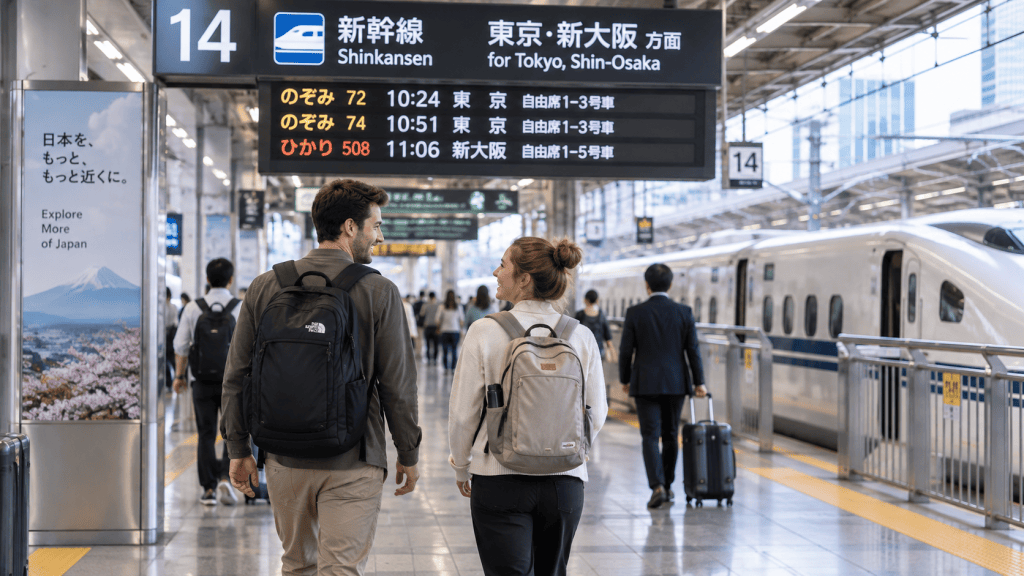
This can be particularly useful when:
- traveling between several cities
- using the Shinkansen
- changing trains multiple times
- traveling with children
- staying somewhere for only one night
- visiting a destination before checking into your next hotel
It can also make sightseeing on a travel day much easier. Instead of looking for a locker or returning to your hotel to collect your suitcase, you can continue your journey with only the essentials you need.
Luggage forwarding is not necessary for every traveler, but it can make a multi-city Japan itinerary significantly more comfortable.
3. How to Send Luggage Between Hotels
Sending luggage from one hotel to another is one of the easiest ways for travelers to use luggage forwarding in Japan.
Start by asking the front desk of your current hotel whether they can arrange luggage delivery.
If they offer the service, tell the staff that you want to send your suitcase to your next hotel.
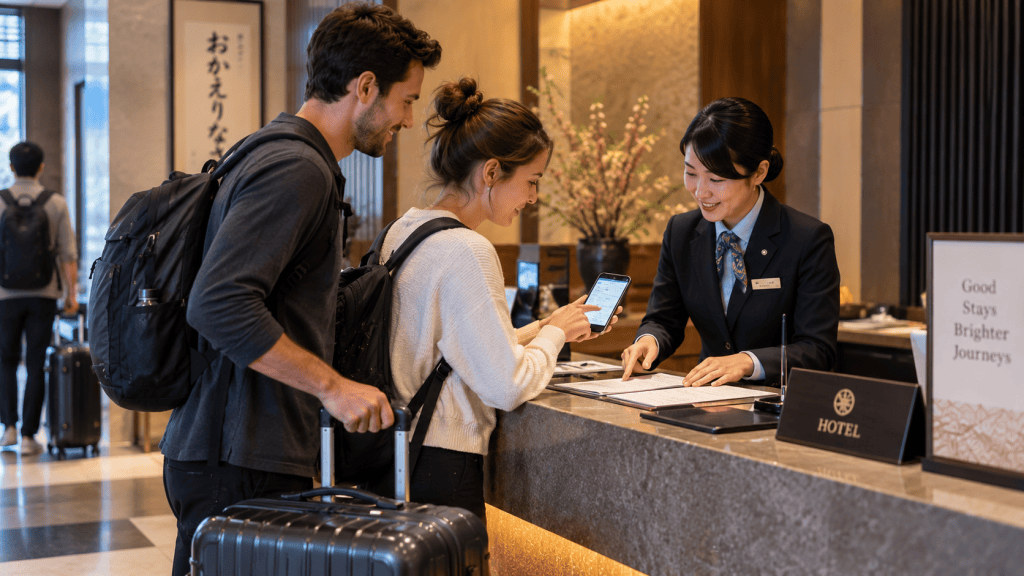
You will normally need information about the destination, including the hotel name, address and contact details. Having your next hotel reservation available on your phone can make the process easier.
Before sending the bag, confirm that the destination hotel can receive luggage on your behalf.
Complete the required shipping information, pay according to the service available at your hotel and keep your receipt or tracking information.
Do not pack anything you will need before the suitcase arrives.
Keep your passport, medication, valuables, electronics, travel documents and at least one change of clothes with you rather than assuming that your luggage will always arrive exactly when expected.
Weather, traffic and other conditions can occasionally affect delivery, so build some flexibility into your plans.
4. How Long Does Luggage Delivery Take?
Delivery time depends on the route, destination, service and conditions at the time of shipment.
On many common routes, luggage may arrive the following day, but you should never assume that every shipment will be delivered overnight.
Longer distances, islands, remote areas, weather conditions and other operational factors can require additional time.
Airport delivery also requires special attention because luggage usually needs to be sent sufficiently in advance of your flight.
The safest approach is to tell the hotel staff or service counter where you are going and when you need the suitcase before completing the shipment.
If the luggage cannot arrive when you need it, adjust your plan rather than sending essential belongings ahead.
For itineraries involving an overnight stop between major cities, forwarding can be particularly useful. You can send the large suitcase directly to a later hotel and travel for one or two nights with a smaller bag.
Always confirm the estimated delivery date when you send your luggage, especially when your itinerary is tightly scheduled.
5. Can You Send Luggage from an Airbnb or Vacation Rental?
This is where luggage forwarding can be less straightforward.
Hotels with staffed reception desks can often help send and receive luggage, but many vacation rentals do not have staff available to handle deliveries.
If your accommodation does not have a reception desk, do not assume that a delivery company can simply leave your suitcase there.
You may need to take the luggage to a delivery counter, a participating convenience store or another eligible drop-off location instead.
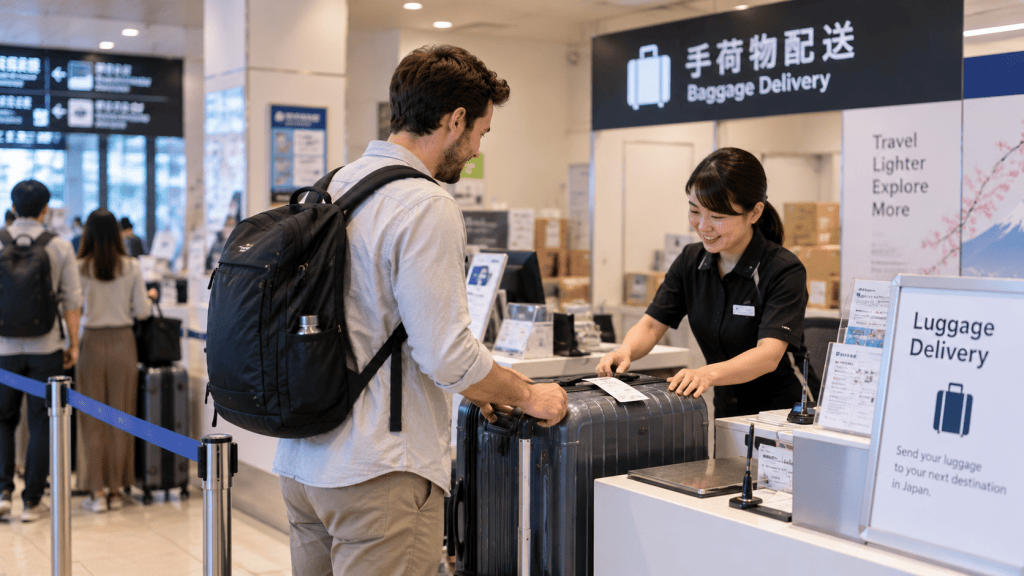
Receiving luggage can also require a different arrangement. Depending on the service, you may need to collect the bag from an appropriate delivery office or use another supported destination.
If you are staying in an Airbnb, apartment or other self-service accommodation, check the property’s luggage policy before sending anything.
Yamato Transport also provides specific luggage delivery precautions for private lodging without reception staff.
This is especially important when planning a tight multi-city itinerary, because discovering that your accommodation cannot receive a suitcase after it has already been shipped can create unnecessary problems.
6. How to Send Luggage to the Airport
Luggage forwarding can also make your departure from Japan much easier.
Instead of carrying a large suitcase from your final hotel through crowded stations and onto an airport train, you may be able to send it to the airport in advance.
This is particularly useful if you want to spend your final day sightseeing, shopping or moving around the city with only a small bag.
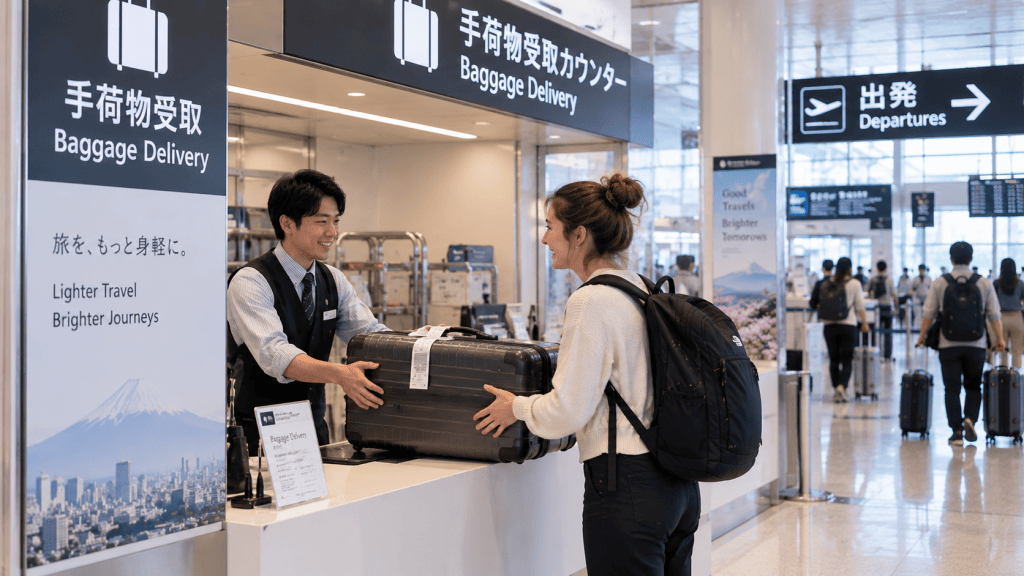
However, airport delivery requires more planning than ordinary hotel-to-hotel forwarding.
Do not assume that you can send your suitcase the night before your flight and collect it at the airport the next morning.
The required sending deadline depends on the airport, departure terminal, service location and delivery company.
When arranging airport delivery, provide your flight information carefully and confirm when the suitcase must be sent and where you will collect it at the airport.
Keep everything you need for the final part of your trip with you, including your passport, medication, valuables, electronics and anything required for your flight.
Most importantly, check the latest airport delivery requirements directly with the service provider before sending your luggage.
7. Where Can You Send Luggage From?
Hotels are often the most convenient place for travelers to arrange luggage forwarding, but they are not the only option.
Depending on the delivery company and location, you may also be able to send luggage from:
- luggage delivery counters
- delivery company service centers
- participating convenience stores
- some airports and major transportation hubs
The available services are not identical at every location.
A convenience store, for example, may accept certain shipments, but that does not mean every store can handle every type of luggage delivery or provide the same assistance as a staffed delivery counter.
If you are unsure where to send your suitcase, ask your hotel first. Even if the hotel does not arrange the shipment directly, the staff may be able to point you toward a nearby service counter or other suitable location.
Travelers staying in accommodation without reception staff should plan this part of the journey in advance rather than waiting until check-out.
8. How Much Does Luggage Forwarding Cost?
The cost of luggage forwarding in Japan varies depending on factors such as the size of your suitcase, the distance it travels and the service you use.
For this reason, there is no single nationwide price that applies to every traveler and every suitcase.
Larger luggage and longer routes generally cost more than smaller items traveling shorter distances.
Additional conditions may also apply when sending luggage to an airport or using specialized services.
When arranging delivery through a hotel or service counter, ask for the total price before completing the shipment.
If you want to estimate the cost before your trip, check the delivery company’s current official rate information using your approximate luggage size and route.
Do not choose luggage forwarding based only on the lowest possible price you see online. The more useful question is whether the cost is worth avoiding the inconvenience of carrying a large suitcase through stations and between cities.
For travelers making several long-distance train journeys, forwarding one large suitcase while keeping a smaller overnight bag can be a practical compromise between convenience and cost.
If you are planning your overall travel expenses, our Japan Travel Budget guide explains the main costs to consider for accommodation, transportation, food and sightseeing.
9. What Should You Keep With You?
Even when luggage forwarding works exactly as planned, you should never send everything you own ahead.
Keep a small backpack, tote or overnight bag with the essentials you may need before your suitcase arrives.
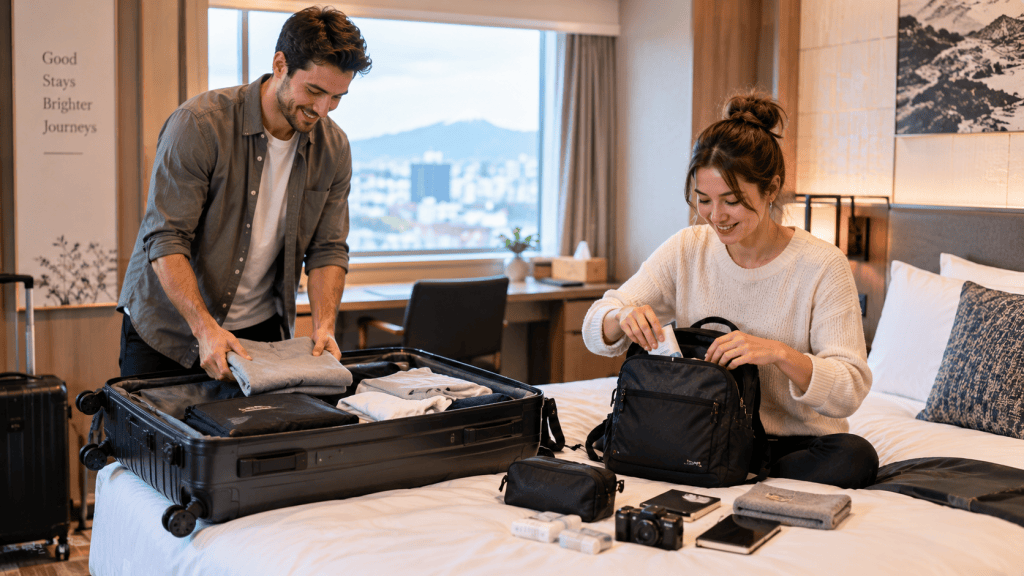
Important items to keep with you include:
- your passport and travel documents
- medication
- money, credit cards and valuables
- phones, cameras and other important electronics
- chargers and power banks
- a change of clothes
- basic toiletries
- anything you need for the next day of your trip
Think of forwarded luggage as something you should be comfortable living without temporarily.
This becomes especially important if you send a suitcase directly to a hotel that you will not reach until the following day.
Packing a small overnight bag also gives you more flexibility if weather, transportation problems or delivery delays affect your plans.
Before handing over your suitcase, take a final moment to check that nothing essential is still inside.
For a complete list of what to bring for your trip, see our Japan Packing List before you start packing.
10. Luggage Forwarding vs. Taking Your Suitcase on the Shinkansen
You do not always need to forward your luggage simply because you are traveling by Shinkansen.
A manageable suitcase can often travel with you, especially if your journey is simple and you are going directly from one hotel to another.
Luggage forwarding becomes more useful when your suitcase is large, you have several transfers, you want to sightsee on a travel day or you are making an overnight stop before reaching your next main destination.
The Shinkansen also has specific rules for oversized baggage on certain routes, so travelers with particularly large luggage should check the current requirements before boarding.
A useful approach is to think about your itinerary rather than automatically choosing one option.
Take your suitcase with you when the journey is straightforward and the bag is easy to manage.
Forward your suitcase when traveling light would significantly simplify the day.
You can also combine the two approaches during the same trip. Carry your suitcase on easier travel days and use luggage forwarding for the more complicated parts of your itinerary.
This flexibility is one of the reasons luggage forwarding works so well for travelers moving through several Japanese cities.
Before traveling with large bags by train, read our Getting Around Japan guide for more information about the Shinkansen, trains and transportation around the country.
11. Common Luggage Forwarding Mistakes to Avoid
Luggage forwarding is relatively easy to use, but a few simple mistakes can create unnecessary problems.
One of the most common is sending a suitcase without confirming that the destination accommodation can receive it.
This is especially important for vacation rentals and other properties without a staffed reception desk.
Another mistake is sending luggage too late. Delivery times vary, and airport delivery in particular may require additional advance time.
Travelers should also avoid putting essential belongings inside a forwarded suitcase.
Keep your passport, medication, valuables and anything you will need before the expected delivery with you.
Other mistakes include entering incomplete destination information, forgetting to keep the shipping receipt or tracking details and assuming that every hotel or convenience store offers exactly the same service.
Finally, do not build an itinerary that depends on your suitcase arriving at the earliest possible moment.
A little flexibility makes luggage forwarding much easier to use.
For more problems that are easy to avoid on a first trip, see our Japan Travel Mistakes guide.
12. Forward Your Main Suitcase and Travel Overnight With a Small Bag
One of the most useful ways to use luggage forwarding is to send your main suitcase past a short overnight stop.
Imagine that you are traveling from Tokyo to Kyoto but want to spend one night somewhere along the way.
Instead of carrying your large suitcase through the entire detour, you may be able to send it directly from your Tokyo hotel to your Kyoto hotel.
You can then spend the overnight stop with only a small backpack or overnight bag.
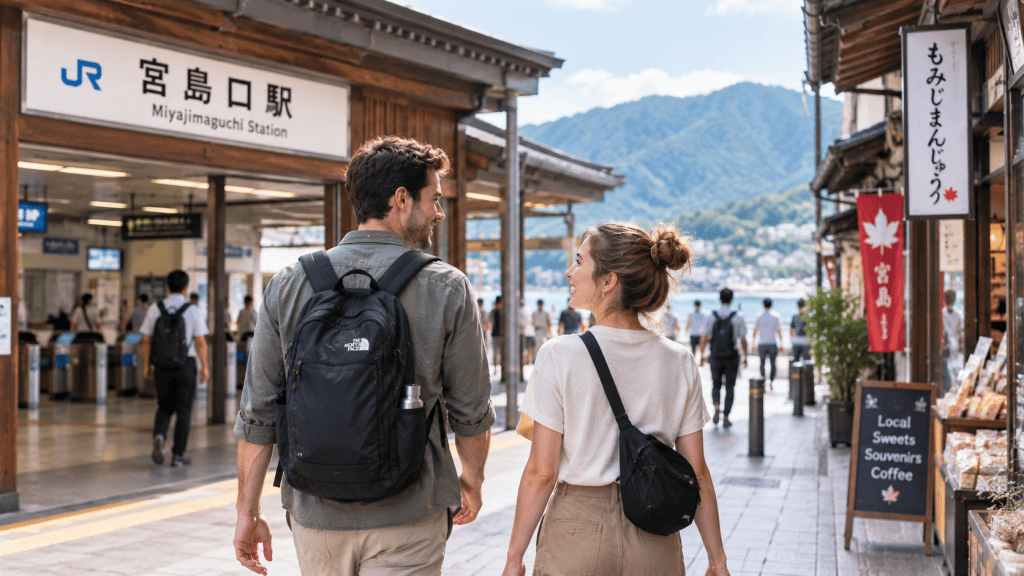
Pack the clothes, toiletries, chargers and other essentials you need for that part of the trip, while the rest of your belongings travel separately.
This approach can be particularly convenient when visiting places where you expect to walk frequently, use local transportation or change accommodation after only one night.
The same strategy can work elsewhere in Japan whenever your route includes a short stop between two longer hotel stays.
Just make sure your destination hotel can receive the suitcase and confirm the expected delivery date before sending it.
13. Confirm These Details Before Sending Your Suitcase
Before handing over your luggage, take a minute to confirm the important details.
Check:
- the name of the destination hotel or receiving location
- the complete delivery address
- the hotel’s contact information
- whether the hotel can receive luggage before you arrive
- the expected delivery date
- the delivery cost
- any restrictions that apply to your luggage
- your receipt or tracking information
If you are sending luggage to an airport, also confirm the airport, terminal, collection counter and required delivery deadline.
Showing your hotel reservation on your phone can help reduce mistakes when completing the shipping information.
If anything is unclear, ask before sending the suitcase rather than trying to solve the problem after it has already left.
A few minutes of checking can prevent much larger problems later in your trip.
14. What Should You Not Put in Forwarded Luggage?
Luggage delivery services have restrictions on what they can accept, so do not assume that everything inside an ordinary travel suitcase can be forwarded.
Rules vary by company and service, but restricted items can include hazardous materials, certain valuables and documents that are difficult or impossible to replace.
Your passport should always remain with you.
Cash, important cards, essential medication and other valuables are also better kept in your personal bag rather than forwarded with your suitcase.
Airline baggage rules and domestic delivery rules are not the same, so something you carried to Japan does not automatically qualify for every luggage forwarding service.
If you are unsure about a particular item, check with the delivery company or hotel staff before shipping the bag.
This is especially important when carrying unusual, fragile or high-value items.
15. Is Luggage Forwarding Worth It?
Luggage forwarding is not something every traveler needs to use on every journey.
If you are traveling with a small suitcase, staying in only one or two cities and moving directly between hotels, carrying your luggage may be perfectly manageable.
The service becomes much more useful when you have a large suitcase, several city-to-city journeys or an itinerary that includes short overnight stops.
Families, travelers carrying multiple bags and anyone who finds moving heavy luggage difficult may also find the extra convenience particularly valuable.
Think of luggage forwarding as a tool rather than a requirement.
You can use it once during your trip, several times or not at all.
For many first-time visitors, the best approach is a combination: carry your luggage when the journey is simple and forward it when doing so makes a complicated travel day noticeably easier.
Japan’s extensive delivery network makes that flexibility possible. Yamato, for example, operates a nationwide TA-Q-BIN network and specifically promotes luggage delivery and temporary storage to visitors as part of its Hands-Free Travel services.
Conclusion: Luggage Forwarding Can Make Japan Travel Much Easier
Japan’s trains make traveling between cities remarkably convenient, but carrying a large suitcase can make the journey more difficult than it needs to be.
Luggage forwarding gives you another option.
By sending your main suitcase ahead, you can move through stations more easily, take short overnight trips with a smaller bag and spend travel days sightseeing without constantly thinking about where to leave your luggage.
The key is to plan ahead.
Confirm that your destination can receive the bag, check the expected delivery date, keep essential belongings with you and allow extra time when sending luggage to an airport.
You do not need to forward your suitcase on every journey.
Use the service where it genuinely makes your itinerary easier, and carry your luggage when the route is simple.
For travelers visiting several destinations in Japan, understanding how luggage forwarding works can make the difference between simply moving from city to city and traveling comfortably along the way.
 Beyond Japan Guide
Leave a comment