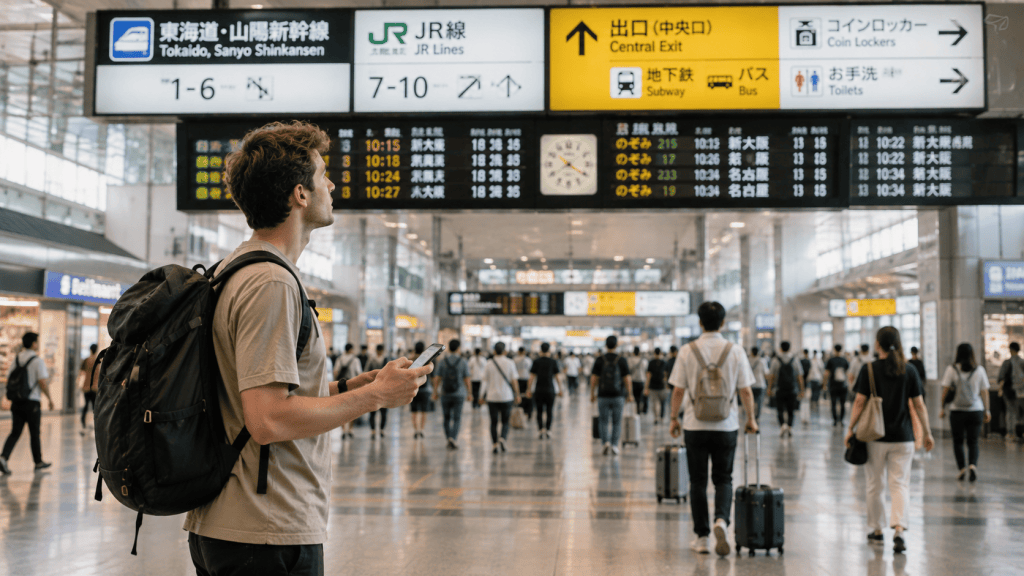
Japan is an easy country to travel around once you understand the basics, but first-time visitors often make small mistakes that can make their trip more stressful than it needs to be.
Some travelers try to fit too many cities into a short itinerary. Others arrive with oversized luggage, misunderstand how trains work, rely entirely on credit cards or assume that everyday customs will be the same as at home.
Most of these mistakes are not serious.
They are simply the result of traveling somewhere unfamiliar — and many of them are easy to avoid with a little preparation.
The goal is not to memorize every rule before you arrive. Japan is a place where you can learn as you travel.
Instead, it helps to understand a few common situations that regularly surprise first-time visitors, from navigating large railway stations to choosing where to stay and knowing how much cash to carry.
Here are 15 common Japan travel mistakes to avoid — and what to do instead.
1. Trying to See Too Much in One Trip
Japan may look relatively compact on a map, but trying to visit too many destinations in a short trip can quickly become exhausting.
Tokyo, Kyoto, Osaka, Hiroshima, Mount Fuji and other famous destinations may all seem possible to combine, but every hotel change takes time.
You need to pack, check out, travel to the station, take the train, find your next hotel and check in again.
A trip that looks efficient on paper can therefore turn into a journey dominated by transportation.
For a first visit, it is usually better to choose a few main bases and explore them properly rather than changing cities almost every day.
Leave some free time as well.
Wandering through a neighborhood, stopping at a small café or changing your plans because you discovered somewhere interesting can become just as memorable as visiting a famous attraction.
If you are unsure how much to fit into your trip, compare our 7 Days in Japan itinerary and 10 Days in Japan itinerary for two realistic first-time routes.
2. Packing Too Much
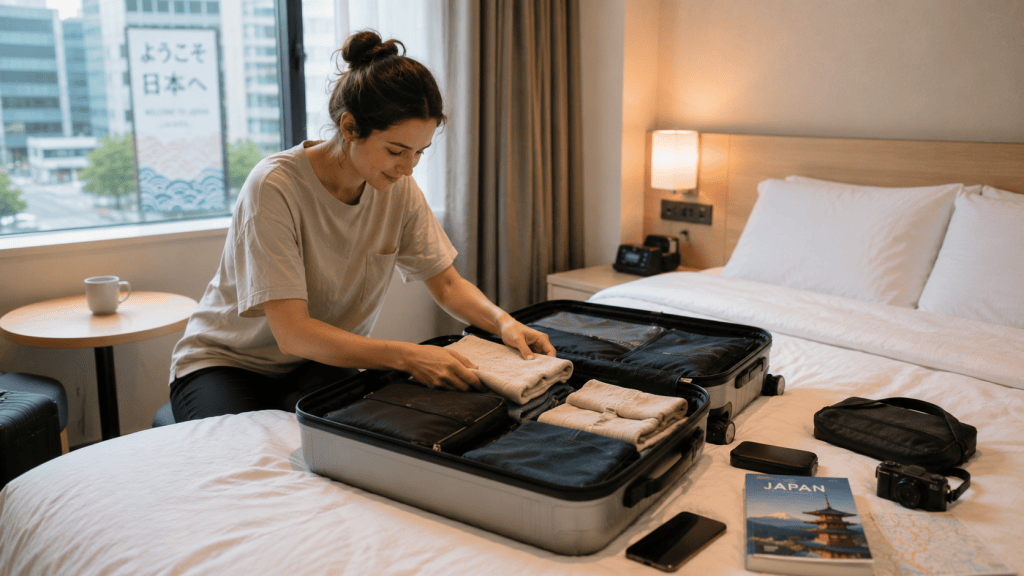
Overpacking is one of the easiest ways to make traveling around Japan harder than necessary.
Large suitcases can become inconvenient when you are moving through busy railway stations, transferring between trains or walking from a station to your accommodation.
This becomes especially noticeable on a multi-city trip.
Bring clothing and personal items you will actually use rather than preparing for every possible situation.
Many everyday items can be purchased after you arrive, and laundry facilities are available at many accommodations and laundromats.
If you need to travel with larger bags, luggage forwarding services can also make some journeys easier.
The important question is not how much your airline allows you to bring. It is how much luggage you can comfortably manage while traveling.
Before packing, see our Japan Packing List for a practical guide to clothing, shoes, electronics and other travel essentials.
3. Assuming Every Train Works the Same Way
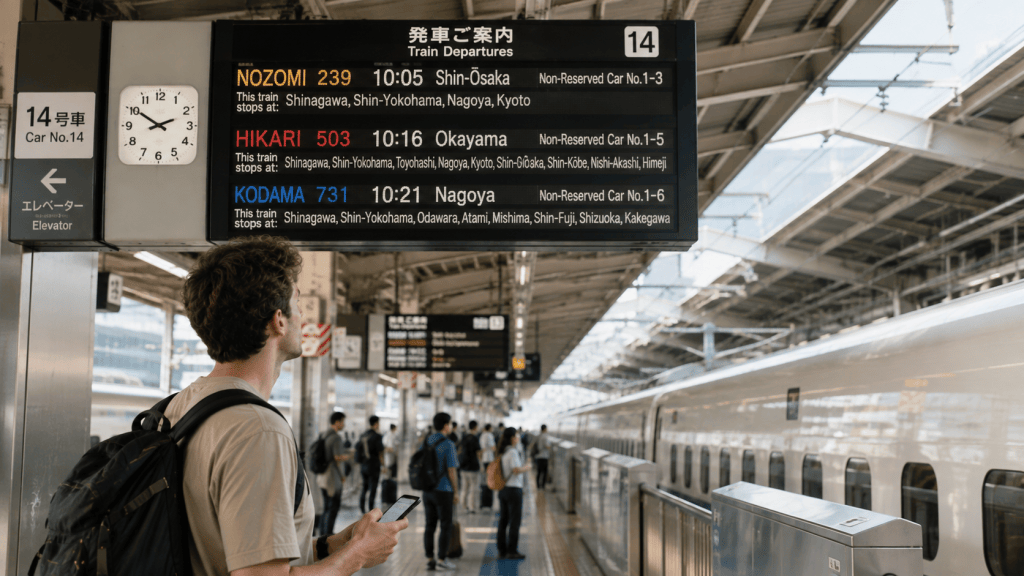
Japan’s railway system is convenient, but not every train works in exactly the same way.
Local, rapid, express, limited express and Shinkansen services can have different stopping patterns, fares and ticket requirements.
Two trains may even leave from the same station and travel in the same general direction while stopping at very different places.
Before boarding, check the train type as well as the destination.
This is particularly important when using limited express trains or the Shinkansen, where additional tickets or seat reservations may be required depending on the service.
Do not worry about memorizing the entire railway system before your trip.
A navigation app can usually show you which train to take, when it departs and where to transfer.
Our Getting Around Japan guide explains trains, IC cards and the Shinkansen in more detail.
4. Buying a Rail Pass Without Checking Whether You Need It
A rail pass is not automatically the cheapest option for every trip to Japan.
Whether a pass saves money depends on your itinerary, the trains you plan to use and how much long-distance travel you will actually make.
Some travelers buy a nationwide rail pass simply because they have heard that it is essential for visiting Japan.
Instead, compare the cost of the pass with the individual fares for the journeys in your itinerary.
If you are spending most of your trip in one city or making only a few long-distance journeys, regular tickets may be more practical.
Regional rail passes can also be worth considering when your travel is concentrated in a particular part of Japan.
The best choice is the one that matches your actual route rather than the one that covers the largest area.
Our Getting Around Japan guide explains the main transportation options, while our Japan Travel Budget guide can help you think about transportation costs as part of your overall trip.
5. Underestimating How Large Japanese Stations Can Be
A station name on a map can make a transfer look much simpler than it actually is.
Major stations such as Tokyo, Shinjuku, Shibuya, Kyoto and Osaka can have multiple railway lines, platforms, ticket gates, underground passages and exits.
Reaching the correct platform — or simply finding the right exit — may take longer than you expect.
Avoid planning extremely tight transfers when you are unfamiliar with a station.
Give yourself extra time, follow the signs carefully and check the exit number when your navigation app provides one.
This is especially useful when meeting someone, finding a hotel or walking to an attraction after leaving the station.
If you take the wrong exit, there is usually no need to panic. Check your map, reorient yourself and continue from there.
Building a little extra time into your itinerary makes large stations much less stressful.
6. Relying Only on Credit Cards
Credit and debit cards are widely accepted in Japan, especially at major hotels, department stores, convenience stores and many restaurants.
But relying entirely on cards can still cause problems.
Some smaller businesses, local restaurants, temples, ticket machines and places outside major tourist areas may require or prefer cash.
Carry a reasonable amount of Japanese yen together with your usual payment cards.
You do not need to carry your entire travel budget in cash, but having some available can prevent unnecessary problems when a card is not accepted.
It is also useful to bring more than one payment card if possible and keep your backup card separate from your main wallet.
IC cards such as Suica, PASMO and ICOCA can also be convenient for transportation and many small everyday purchases.
Our Japan Travel Budget guide explains typical travel costs and payment considerations in more detail.
7. Arriving Without a Plan for Mobile Internet
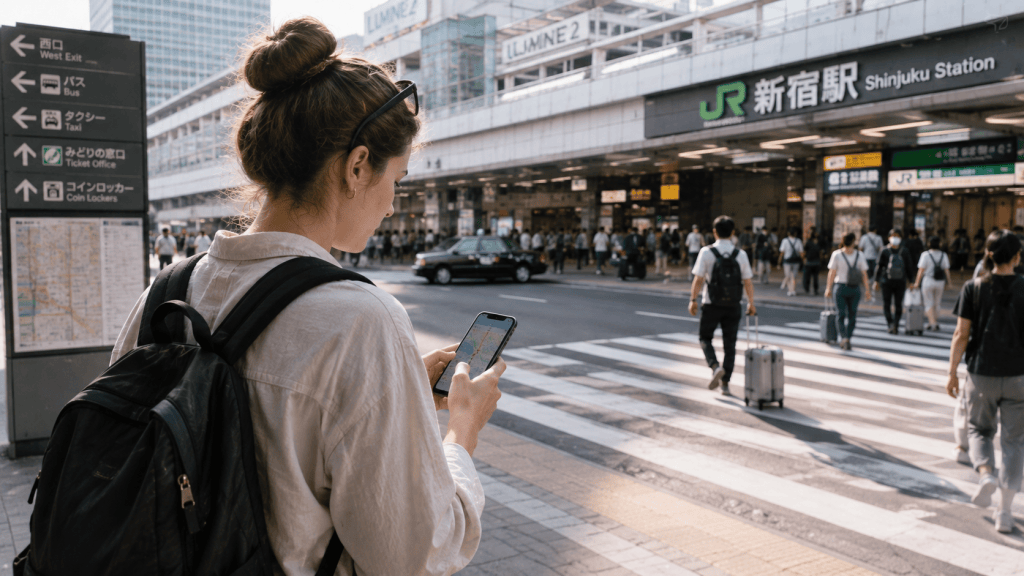
Reliable mobile internet can make traveling around Japan much easier.
You may use your phone throughout the day for maps, train routes, translation, restaurant searches, reservations and communication.
Do not wait until you are standing at the airport after arrival to start thinking about how you will connect.
Before your trip, decide whether you will use international roaming, an eSIM, a physical SIM card or pocket Wi-Fi.
The best option depends on your phone, the length of your trip and whether you need to connect multiple devices.
If you choose an eSIM or physical SIM, check that your phone is compatible with the service before purchasing it.
It is also useful to download important travel apps and save essential information before departure so that you are not completely dependent on an internet connection immediately after landing.
Our Japan eSIM, SIM Card & Pocket Wi-Fi guide compares the main internet options, while our Japan Travel Apps guide covers useful apps for navigation, trains and translation.
8. Ignoring Basic Train Etiquette
You do not need to memorize a long list of rules before using trains in Japan.
A few basic habits are usually enough.
Let passengers get off before you board, avoid blocking doors and walkways, keep conversations at a considerate volume and avoid talking on the phone inside regular train cars.
Be aware of the space your luggage takes up, particularly on crowded trains.
Be mindful of priority seats and offer your seat to passengers who may need it more.
If you are unsure what to do, observe the signs and the people around you.
Most visitors will not follow every local habit perfectly, and that is not expected.
Being aware of other passengers and making a reasonable effort to be considerate is much more important than worrying about making a small mistake.
Our Getting Around Japan guide covers more of the practical basics of using trains and public transportation.
9. Treating Every Japanese Custom as a Strict Rule
Reading about Japanese etiquette before your trip is useful, but trying to memorize every custom can create unnecessary anxiety.
You may come across long lists explaining exactly how to bow, where to stand, how to use chopsticks or what you should never do in public.
Some customs are important, but not every social habit needs to become a rule that you are afraid of breaking.
As a visitor, focus on the basics.
Be considerate of other people, keep your voice reasonable in quiet places, follow signs, remove your shoes when clearly required and respect the rules of the place you are visiting.
If you are unsure, observe what people around you are doing or simply ask.
You will occasionally make small mistakes. That is normal when traveling in a different culture.
Showing awareness and respect matters much more than trying to behave perfectly at every moment.
Want to understand the most useful customs before your trip? Our Japan Travel Etiquette guide explains essential manners for trains, dining, temples, onsen and other everyday situations.
10. Choosing a Hotel Without Checking the Location
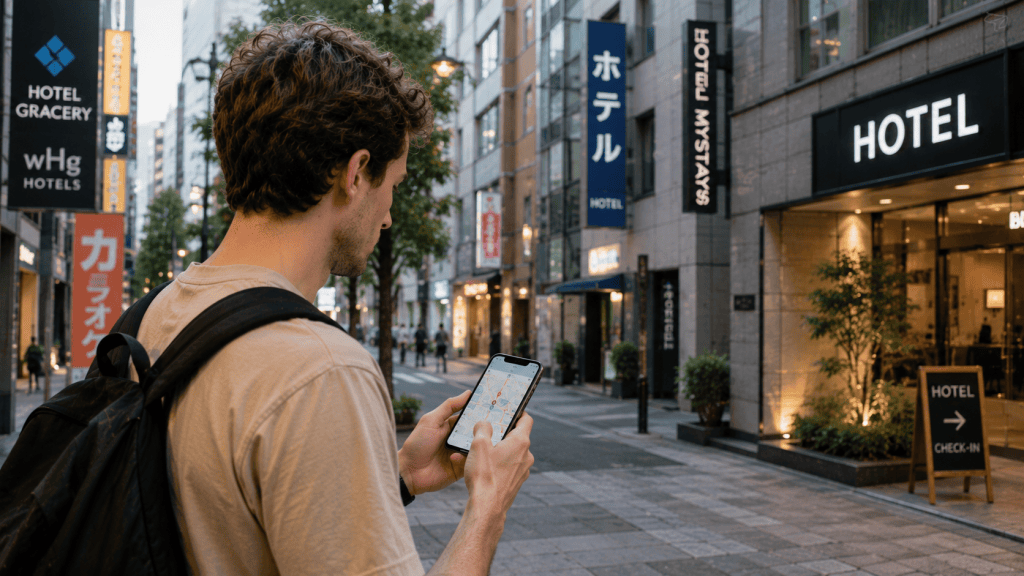
A hotel that looks inexpensive can become much less convenient if it is far from the places you actually want to visit.
Before booking accommodation, check the location on a map rather than looking only at the room price.
Pay attention to the nearest station, how long it takes to walk there and whether the area is convenient for the sightseeing you plan to do.
A hotel near a useful train or subway station can save a surprising amount of time over several days.
This does not mean you always need to stay in the busiest tourist district.
Sometimes staying slightly outside the center gives you better value, more space or a quieter neighborhood.
The important thing is to understand the trade-off before booking.
Also think about your itinerary. A convenient location for sightseeing in Tokyo may be different from the best location for an early Shinkansen departure or a day trip outside the city.
Our Where to Stay in Japan guide explains the main accommodation types and what to consider when choosing where to stay.
11. Planning Every Minute of Your Trip
Planning is important, but an itinerary does not need to account for every minute of every day.
Travel in Japan often takes longer than a map suggests.
You may spend extra time navigating a large station, waiting for a train, browsing a shop, exploring a temple or simply discovering a neighborhood you want to see more of.
If every hour is already assigned to another attraction, even a small delay can make the entire day feel rushed.
Choose a few priorities for each day and leave some space between them.
This also gives you flexibility when the weather changes, you become tired or somewhere turns out to be more interesting than expected.
Reservations can still be important for popular attractions, restaurants or transportation, but not every part of the day needs to be fixed in advance.
A good itinerary gives your trip structure without making you feel as though you are following a timetable.
12. Eating Only at Famous or Viral Restaurants
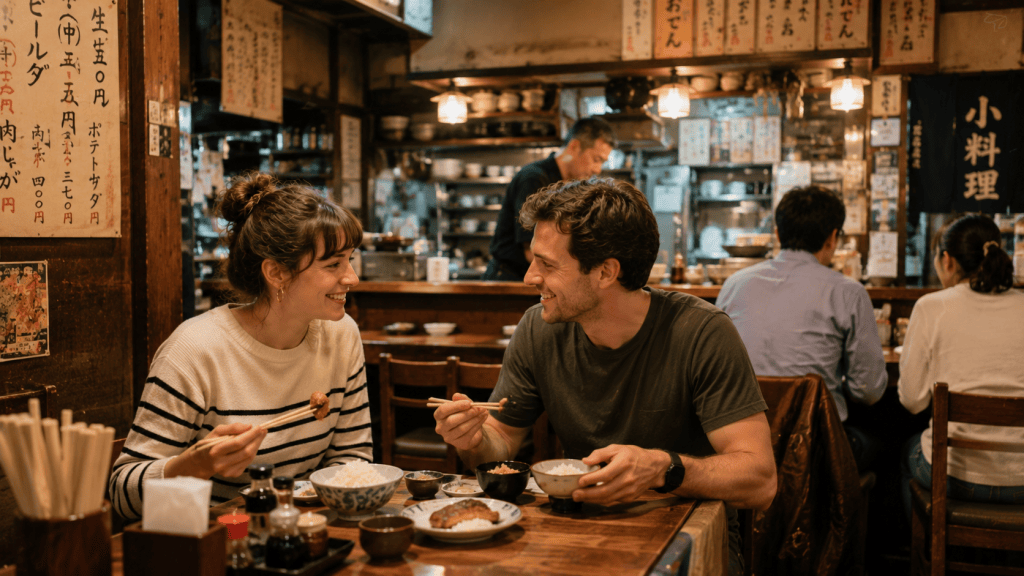
Japan has many famous restaurants, but you do not need to build every meal around places you have seen on social media.
Popular restaurants can involve long lines, difficult reservations or significant detours from the rest of your itinerary.
Sometimes they are worth the effort. Other times, a small restaurant you discover near your hotel or while exploring a neighborhood can be just as memorable.
Give yourself room to try different kinds of places.
Ramen shops, izakaya, local cafés, neighborhood restaurants, food halls and casual chains can all be part of the experience.
Regional food is also worth exploring as you travel around the country. Different parts of Japan have their own specialties, ingredients and local dishes.
Instead of asking only, “What is the most famous restaurant?”, also ask, “What should I try while I am here?”
Our Japanese Food Guide introduces 15 foods worth trying on a first trip to Japan.
13. Staying Only in the Most Famous Tourist Areas
Tokyo, Kyoto and Osaka are popular for good reason, and first-time visitors should not feel that they need to avoid famous destinations simply because they are busy.
But Japan has much more to offer beyond the places that appear on almost every first-time itinerary.
Even within major cities, walking a few streets away from a famous attraction can reveal quieter neighborhoods, local shopping streets, small cafés and everyday scenes that feel very different from the main tourist areas.
If you have more time, consider exploring smaller cities, historic towns, islands, mountain areas or rural destinations as well.
You do not need to replace the classic route entirely.
Adding just one less familiar place can create a very different perspective on the country.
Our Beautiful Places Beyond Tokyo and Kyoto guide introduces 10 destinations for travelers who want to explore another side of Japan.
14. Forgetting to Check Seasonal Conditions
Japan can feel like a very different destination depending on when and where you visit.
A packing list, itinerary or sightseeing plan that works well in April may not make sense in August or January.
Summer can bring intense heat and humidity, while winter conditions vary greatly between relatively mild cities and snowy northern or mountainous regions.
The rainy season and typhoon season can also affect travel plans at certain times of the year.
Check the weather for your actual destinations shortly before departure rather than relying only on general descriptions of Japan’s seasons.
Seasonal events can affect crowds as well.
Cherry blossom season, Golden Week, Obon, autumn foliage periods and the New Year holidays can increase demand for transportation and accommodation.
Understanding the season before you travel helps you choose appropriate clothing, build a more realistic itinerary and decide what needs to be booked in advance.
Our Best Time to Visit Japan guide explains what to expect throughout the year.
15. Worrying Too Much About Making Mistakes
Perhaps the biggest mistake is worrying so much about doing everything correctly that you forget to enjoy the trip.
You will probably take the wrong station exit at some point.
You may order something you did not expect, misunderstand a sign, miss a train or realize that part of your itinerary was too ambitious.
None of that means your trip has gone wrong.
Japan is generally easy to navigate once you understand the basics, and you can solve most small travel problems as they happen.
Prepare for the things that matter, respect the people and places around you, and stay flexible when something does not go according to plan.
You do not need to travel like a local on your first day.
You simply need enough preparation to travel with confidence — and enough curiosity to enjoy what you discover along the way.
If this is your first visit, our First Time in Japan guide covers 15 essential things to know before you go.
Conclusion: Avoid the Mistakes, but Keep the Adventure
A successful trip to Japan does not require perfect planning.
Most common travel mistakes can be avoided by understanding a few basics before you leave: keep your itinerary realistic, travel with manageable luggage, learn how transportation works, carry more than one payment option and make sure you can access maps and travel information when you need them.
At the same time, do not plan so carefully that there is no room left for discovery.
Some of the best moments in Japan happen between the places on your itinerary — in a neighborhood you did not expect to explore, a small restaurant you found by chance or a conversation you never planned to have.
Prepare enough to make your journey easier, then give yourself permission to adapt along the way.
You will make a few small mistakes.
Every traveler does.
What matters is that they do not stop you from enjoying Japan.
 Beyond Japan Guide
Leave a comment