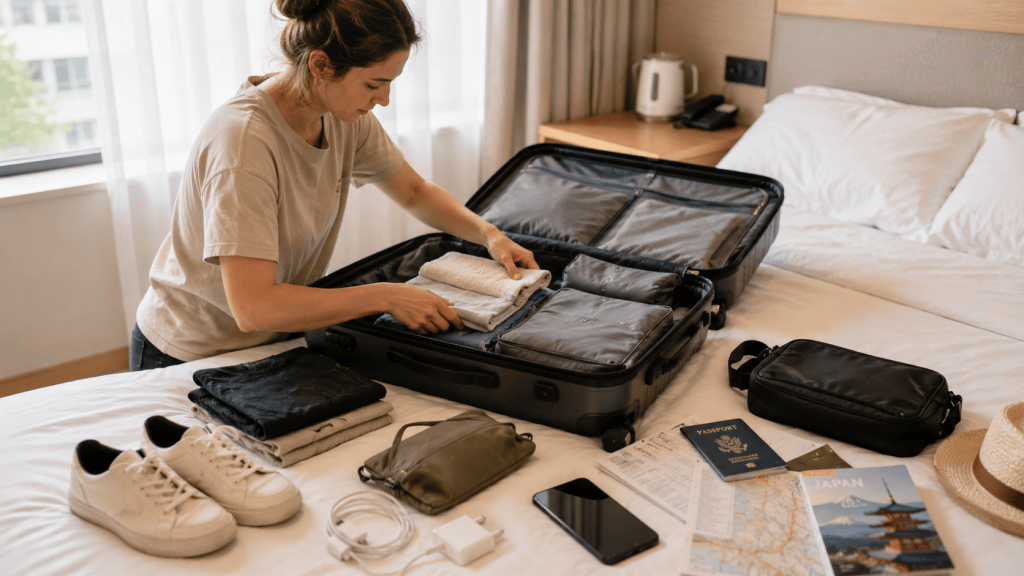
Packing for Japan does not need to be complicated.
Most everyday items are easy to find once you arrive, so the goal is not to pack for every possible situation. It is to bring the essentials, prepare for the season and keep your luggage manageable.
What you need will depend on when you visit, where you travel and how long you stay. A summer trip to Tokyo requires very different clothing from a winter journey through Hokkaido, while a multi-city itinerary may make traveling light especially useful.
There are also a few Japan-specific things worth thinking about before you leave, including comfortable shoes, mobile internet access, electrical devices, medication and the amount of luggage you want to carry between cities.
This Japan packing list covers what to bring, what you can easily buy after arrival and what you may be better off leaving at home.
Use it as a starting point rather than a checklist you have to follow perfectly. The best luggage is the luggage that contains what you actually need — without making your trip harder to move around.
1. What Should You Pack for Japan?
What you need to pack for Japan depends mainly on the season, the length of your trip and the places you plan to visit.
For most travelers, the essentials are simple: travel documents, suitable clothing, comfortable shoes, a phone, charging equipment, medication you may need and a few everyday items.
You do not need to bring everything from home.
Japan has convenience stores, pharmacies, electronics stores and other shops where many everyday items can be purchased after you arrive.
Packing light can also make traveling between cities much easier, especially if your itinerary includes trains, the Shinkansen or several hotel changes.
Before you start packing, check the weather forecast for the destinations you will actually visit. Conditions can vary considerably between regions, particularly if your trip includes places in northern or mountainous areas.
Think of this packing list as a guide rather than a requirement. Bring what you know you will use and avoid filling your suitcase with items you are unlikely to need.
2. Travel Documents & Important Information
Keep your most important travel documents somewhere easy to access during your journey.
Your passport is the obvious priority, but you should also have access to your flight details, accommodation information and any documents required for entering Japan.
Entry requirements can vary depending on your nationality and circumstances, so check the latest official information before departure rather than relying on an old travel checklist.
It is also useful to keep digital copies of important reservations and documents on your phone or in secure cloud storage.
Consider saving your first hotel’s name and address as well. Having it available offline can be useful when navigating from the airport or communicating with transportation staff.
If you use travel insurance, keep your policy information and emergency contact details somewhere you can access quickly.
You do not need to print every reservation, but having essential information available even when your phone has no internet connection can make arrival much easier.
For more preparation advice before your trip, see our First Time in Japan guide.
3. Money, Cards & Cash
You do not need to carry all of your travel money in cash, but it is still useful to have some Japanese yen with you.
Credit and debit cards are widely accepted in major cities, hotels, department stores and many restaurants, but smaller businesses and some places outside major tourist areas may still prefer or require cash.
A good approach is to carry at least one payment card together with a reasonable amount of cash rather than relying entirely on one method.
If possible, bring a backup card and keep it separate from your main wallet. This can be useful if a card is lost, damaged or temporarily declined.
You can also withdraw Japanese yen from compatible ATMs after arrival, although availability and fees will depend on your card and bank.
IC cards such as Suica, PASMO and ICOCA can make transportation easier and can also be used for small purchases at many convenience stores, vending machines and other participating locations.
There is no need to arrive with a wallet full of coins. You will naturally collect them as you travel.
For a more detailed look at transportation cards and everyday travel costs, see our Getting Around Japan guide and Japan Travel Budget guide.
4. Phone, Internet & Essential Electronics
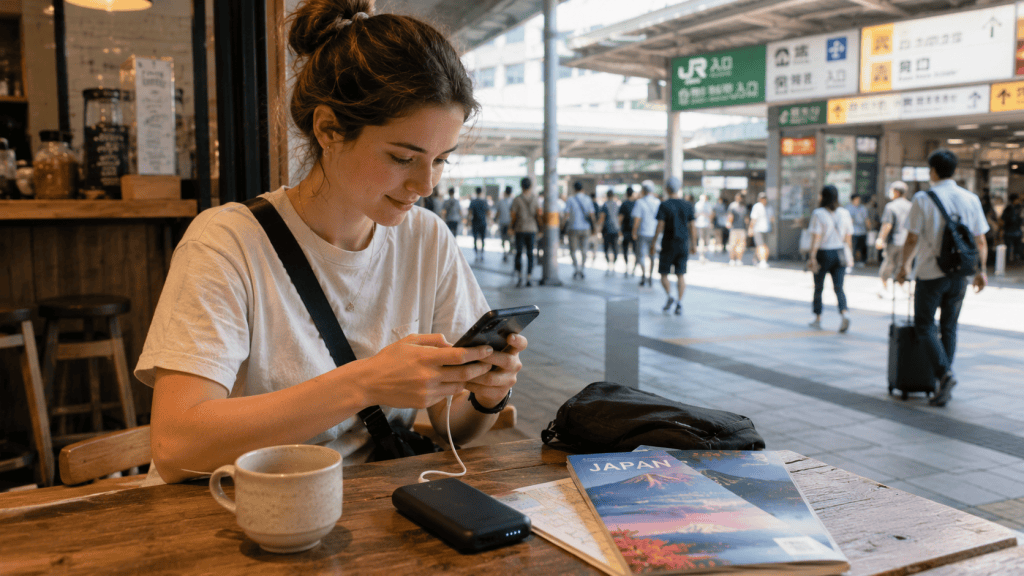
Your smartphone will probably be one of the most useful things you bring to Japan.
You can use it for navigation, train routes, translation, restaurant searches, reservations and keeping copies of important travel information.
Before departure, decide how you plan to connect to the internet.
Depending on your phone and travel style, an eSIM, physical SIM card or pocket Wi-Fi may be the most practical option.
Do not forget the charging equipment you use every day.
A simple electronics packing list might include:
- Smartphone
- Phone charger and charging cable
- Portable power bank
- Plug adapter if required
- Earphones or headphones
- Camera and charger, if you use one
Check your devices before packing rather than assuming they will work with Japan’s electrical system.
Japan uses 100-volt electricity and Type A plugs with two flat parallel pins. Travelers coming from countries with different plug types may need an adapter.
For help choosing your internet connection, see our Japan eSIM, SIM Card & Pocket Wi-Fi guide.
You may also want to download your most useful travel apps before departure. Our Japan Travel Apps guide covers navigation, trains, translation and other useful tools.
5. What Clothes Should You Pack for Japan?
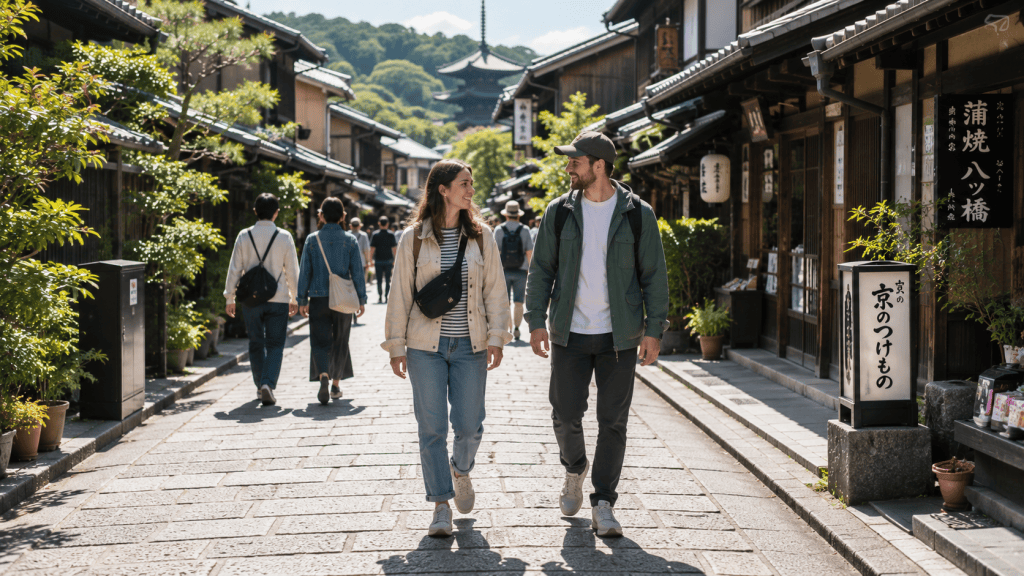
The clothes you need for Japan depend heavily on when and where you travel.
Japan has four distinct seasons, but temperatures can vary considerably between regions. Hokkaido in the north can be much cooler than Tokyo, Kyoto or Osaka, while Okinawa remains relatively warm for much of the year.
Instead of packing based only on the word “spring” or “winter,” check the forecast for your actual destinations shortly before departure.
Layers are especially useful during spring and autumn because temperatures can change between morning, afternoon and evening.
You also do not need a completely different outfit for every day of your trip. If you are traveling for a week or longer, consider packing fewer clothes and doing laundry during your journey.
Here is a simple seasonal starting point.
Spring — March to May
Spring weather can range from cool to pleasantly warm depending on the month and region.
Bring clothes that are easy to layer, such as T-shirts or long-sleeved tops together with a light jacket, cardigan or sweater.
Early spring can still feel cold, particularly in the morning and evening, while conditions generally become warmer as the season progresses.
If you are traveling specifically for cherry blossoms, remember that blooming periods vary across Japan, so the weather you experience will depend on where and when you visit.
Summer — June to August
Summers in much of Japan are hot and humid.
Pack lightweight, breathable clothing that is comfortable for long periods of walking outdoors.
A hat and other sun protection can also be useful, particularly if you plan to spend much of the day sightseeing outside.
June and early summer can bring significant rain in many parts of the country, so a compact umbrella or lightweight rain protection can be useful.
Air-conditioned trains, shops and restaurants may feel much cooler than the temperature outside, so some travelers may also appreciate having a very light extra layer.
Autumn — September to November
Early autumn can still feel like summer, while late autumn may become considerably cooler.
Layers are again the easiest approach.
A light jacket, sweater or cardigan gives you flexibility as temperatures change throughout the day.
If your trip is focused on autumn foliage, remember that the season arrives at different times across the country, beginning earlier in northern and higher-altitude areas.
Winter — December to February
Winter packing depends greatly on your destination.
Tokyo, Kyoto and Osaka can be cold, but a winter trip to Hokkaido, Tohoku or a mountain destination may require much warmer clothing and footwear suitable for snow.
For a typical winter city trip, bring a warm coat together with layers such as sweaters or thermal clothing.
Gloves and a scarf can also be useful, especially if you expect to spend long periods outside.
If your itinerary includes snowy regions, check local conditions before departure and pack appropriate footwear rather than relying on ordinary walking shoes.
Still deciding when to travel? Our Best Time to Visit Japan guide explains what to expect throughout the year.
6. Comfortable Shoes Are More Important Than You Think
You will probably walk much more in Japan than you do at home.
Even when trains cover most of the distance between attractions, you may still spend hours walking through stations, shopping streets, temple grounds, parks and neighborhoods.
Bring at least one pair of comfortable shoes that you have already worn before your trip.
A brand-new pair may look perfect for your photos, but discovering that it causes blisters halfway through your first full day of sightseeing can make the rest of your trip unnecessarily uncomfortable.
Shoes that are easy to put on and take off can also be convenient in Japan because footwear is removed in some traditional accommodation, restaurants, temples and other indoor spaces.
You do not need special footwear simply because you are visiting Japan.
Choose shoes based on the activities in your itinerary. Regular comfortable walking shoes are suitable for most city trips, while hiking or snowy destinations may require more appropriate footwear.
If you bring a second pair, make sure you will actually use it. Shoes take up a surprising amount of luggage space.
7. Toiletries & Personal Items
You do not need to bring your entire bathroom cabinet to Japan.
Everyday toiletries such as shampoo, toothpaste, soap, tissues and basic skincare products are widely available at convenience stores, drugstores and supermarkets.
Bring the personal items you use regularly, especially products that may be difficult to replace with an unfamiliar brand.
A small toiletries kit might include:
- Toothbrush and toothpaste
- Deodorant
- Skincare products
- Sunscreen
- Contact lenses and supplies
- Small hair-care items
- Any other personal products you use every day
Keeping these items in travel-size containers can save luggage space, particularly if you plan to travel between several cities.
Hotels in Japan often provide some basic amenities, but what is included varies by accommodation. Check your hotel information before packing rather than assuming everything will be provided.
If you forget something, you can usually buy basic toiletries after arrival.
8. Medication: Check Japan’s Rules Before You Travel
If you take medication regularly, check Japan’s rules before putting it in your suitcase.
Medicines that are legal and commonly prescribed in your home country are not automatically treated the same way in Japan.
Japan has rules covering the types and quantities of medicines travelers can bring into the country for personal use. Depending on the medication and the amount you carry, you may need to complete an import procedure before traveling.
Some controlled substances are subject to additional restrictions or may require permission before you enter Japan.
Do not rely only on advice from travel forums, social media or an old packing list when deciding whether you can bring a particular medicine.
Check the latest information from Japan’s Ministry of Health, Labour and Welfare well before your departure date.
If you take prescription medication, it can also be useful to keep information about the medicine and your prescription available while traveling.
Most importantly, do not assume that a medicine is permitted simply because it is legal in your own country.
9. Pack Light if You Plan to Travel Between Cities
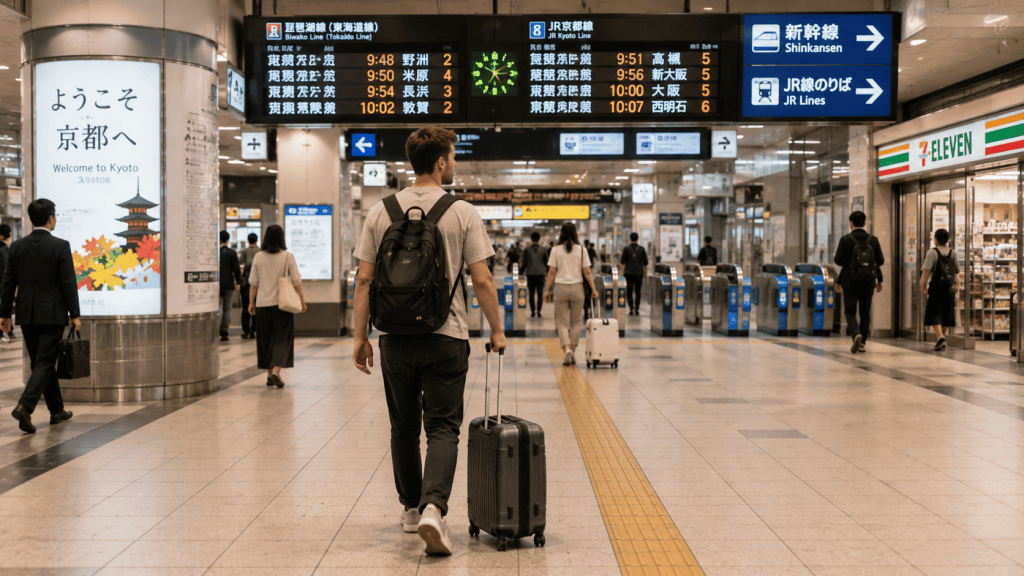
Packing light can make a surprisingly big difference when traveling around Japan.
Even though the transportation system is efficient, you may still need to carry your luggage through large stations, use elevators, walk between platforms or move through busy streets on the way to your hotel.
If your itinerary includes Tokyo, Kyoto, Osaka or several other destinations, avoid bringing a large suitcase simply because you have space available.
Choose luggage that you can comfortably manage by yourself.
A smaller suitcase or travel bag can make train journeys, hotel changes and station transfers much easier.
You can also use coin lockers and luggage storage services when you do not want to carry your bags while sightseeing.
Japan also has luggage delivery services that can send bags between airports, hotels and other participating locations.
These services can be particularly useful when you want to travel with only a small bag for part of your journey.
If you are following a multi-city itinerary, think about how often you will move your luggage before deciding how much to pack.
Our 10 Days in Japan itinerary is a good example of why keeping luggage manageable can make a multi-city trip easier.
10. Useful Items to Pack for Japan
Beyond the basic essentials, a few small items can make traveling around Japan more comfortable.
You do not need to buy special travel gear just because you are visiting Japan. Focus on lightweight items that solve practical problems during a normal sightseeing day.
Depending on the season and your itinerary, useful items may include:
- A small day bag or backpack
- A reusable water bottle
- A compact umbrella
- A small hand towel
- Tissues
- A reusable shopping bag
- A small bag for carrying trash
- Sunglasses and sunscreen
- A portable power bank
- A few basic first-aid supplies
A small bag for trash can be particularly useful because public trash bins may not always be available where you expect them.
A compact umbrella is also useful during rainy periods, although inexpensive umbrellas are widely available in Japan if you prefer to buy one after arrival.
Do not treat this as a list of ten more things you must fit into your suitcase.
Choose the items that match your season, activities and personal travel habits.
11. What You Probably Don’t Need to Pack
One of the easiest ways to overpack for Japan is to prepare for situations that are unlikely to happen.
You usually do not need to bring large quantities of everyday toiletries, snacks, bottled water or other basic items that can easily be purchased after arrival.
You also do not need a different outfit for every day if you are comfortable using laundry facilities during a longer trip.
Avoid packing several pairs of shoes unless your itinerary genuinely requires different footwear.
Large amounts of cash are unnecessary for most travelers as well. Carry enough yen for situations where cash is useful, but combine it with suitable payment cards rather than keeping your entire travel budget in your wallet.
Think carefully before packing bulky “just in case” items.
Every extra item has to travel with you through airports, stations, hotels and potentially several cities.
If something is inexpensive, easy to find in Japan and not essential for your first day, buying it after arrival may be easier than carrying it throughout your entire trip.
12. Choose the Right Luggage for Your Itinerary
The best suitcase for Japan is not necessarily the largest one you can take on the plane.
Think about how you will travel after leaving the airport.
If you are staying in one city for your entire trip, luggage size may not matter very much. If you are moving between Tokyo, Kyoto, Osaka and other destinations, a suitcase you can comfortably handle yourself becomes much more important.
Large railway stations can involve long walks, crowded platforms and transfers between different levels.
Traveling with manageable luggage gives you more flexibility when using trains and changing hotels.
If you do need to travel with a large suitcase, Japan’s luggage forwarding and storage services can reduce how often you need to carry it yourself.
Many major stations and tourist facilities also have coin lockers, although availability can be limited at busy times.
Plan your luggage around your itinerary rather than your airline baggage allowance.
13. Final Japan Packing Checklist
Before closing your suitcase, run through this final checklist.
Travel essentials
- Passport
- Entry documents if required
- Flight and accommodation information
- Travel insurance information
- Payment cards
- Japanese yen
Electronics
- Smartphone
- Charging cables
- Portable power bank
- Plug adapter if required
- Camera and charger if needed
- Internet connection arranged or planned
Clothing
- Clothes suitable for the season
- Comfortable walking shoes
- Light layers when appropriate
- Rain protection if needed
- Sleepwear and underwear
Personal items
- Toiletries
- Prescription medication
- Glasses or contact lenses
- Sunscreen
- Small day bag
Useful extras
- Compact umbrella
- Reusable shopping bag
- Small hand towel
- Small trash bag
- Reusable water bottle
Before departure, check the weather one final time, confirm Japan’s rules for any medication you are bringing and make sure your essential documents are easy to access.
Then stop adding things.
You will probably enjoy traveling around Japan much more with a suitcase that still has some empty space.
Conclusion: Pack for the Trip You Are Actually Taking
Packing for Japan is mostly about preparing for the trip you are actually taking rather than every situation you can imagine.
Bring the essentials, choose clothing for the season, wear comfortable shoes and make sure your phone, internet connection and important travel information are ready before departure.
At the same time, remember that Japan is an easy place to buy many everyday items if you forget something.
Keeping your luggage manageable can make airports, railway stations, hotel changes and multi-city journeys much easier.
Check the weather shortly before you leave, verify the latest official rules for medication and other restricted items, and adjust this packing list to your own itinerary.
Most importantly, leave a little space in your suitcase.
You may be glad you did when it is time to bring something home from Japan.
Still preparing for your first visit? Our First Time in Japan guide covers 15 essential things to know before you go.
 Beyond Japan Guide
Leave a comment