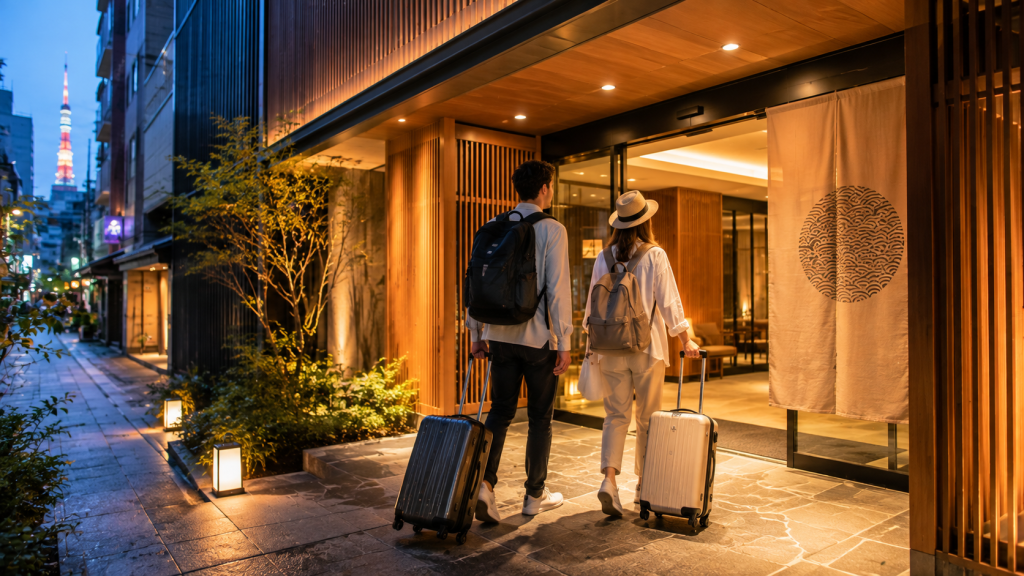
Choosing where to stay can make a surprisingly big difference to your trip to Japan.
Japan offers everything from international hotels and compact business hotels to traditional ryokan, capsule hotels, hostels and family-run guesthouses.
But the type of accommodation is only part of the decision.
Location matters just as much.
A hotel close to a useful train station can save you time every day, while a night at a traditional ryokan can become one of the most memorable experiences of your entire trip.
The best choice depends on your budget, itinerary and the kind of experience you want.
This guide explains the main accommodation options in Japan, where first-time visitors should consider staying and the practical details worth checking before you book.
1. Understanding Accommodation in Japan
Japan has accommodation for almost every type of traveler.
You can stay in a familiar Western-style hotel, choose a compact business hotel near a train station or spend a night experiencing traditional Japanese hospitality at a ryokan.
Budget travelers can also find hostels, guesthouses and capsule hotels in many cities.
The important thing is not to assume that one type of accommodation is always better than another.
A convenient business hotel might be perfect for several nights of city sightseeing, while a ryokan may be worth choosing for one special night during the same trip.
Think about each part of your itinerary separately and choose accommodation that makes that part of the journey easier or more memorable.
2. Hotels in Japan — The Familiar Choice
Hotels are the easiest option for many first-time visitors.
Major cities offer everything from simple mid-range hotels to international luxury properties.
The basic experience will usually feel familiar, but Japanese hotel rooms can sometimes be smaller than travelers expect, particularly in central urban areas.
When comparing hotels, do not look only at the nightly price.
Check the room size, bed configuration, distance from the nearest useful station and whether breakfast is included.
A slightly more expensive hotel in a convenient location may save you significant time and transportation effort during a short trip.
3. Business Hotels — Convenient and Practical
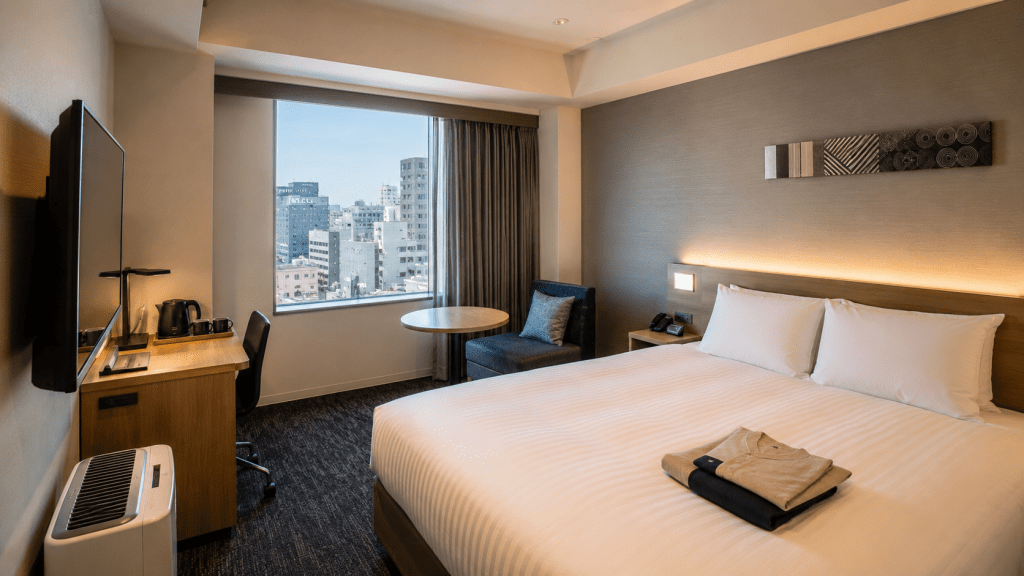
The term “business hotel” can be confusing if you have never traveled in Japan.
These hotels were traditionally designed for business travelers, but they are also widely used by tourists.
Rooms are usually compact and relatively simple, but locations are often convenient, particularly around major train stations.
For travelers who plan to spend most of the day exploring and mainly need a clean, comfortable place to sleep, a business hotel can be an excellent choice.
Just check the room dimensions before booking.
What looks perfectly normal in photographs may feel much smaller once two travelers and several large suitcases are inside.
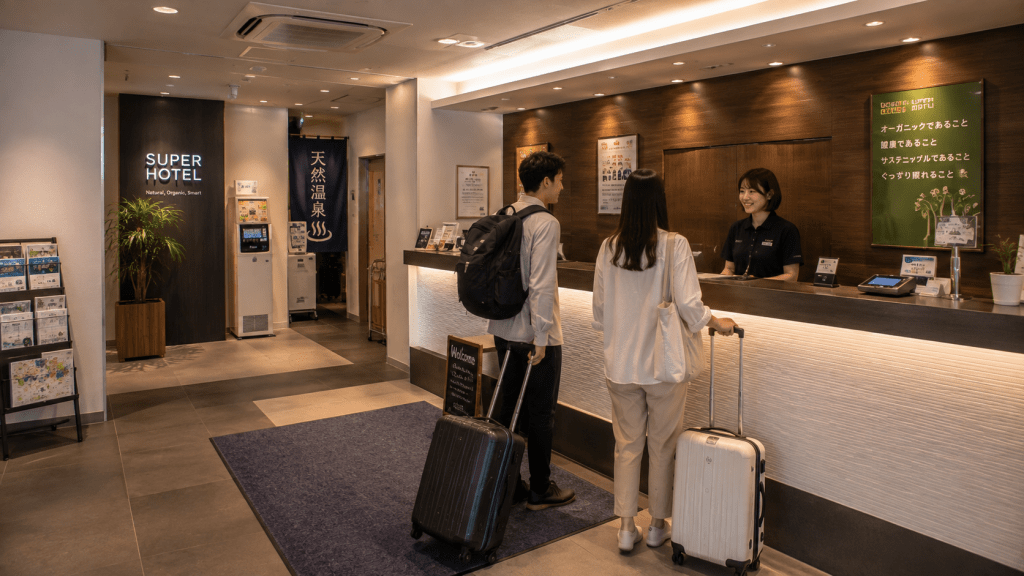
4. Ryokan — Experience Traditional Japanese Hospitality
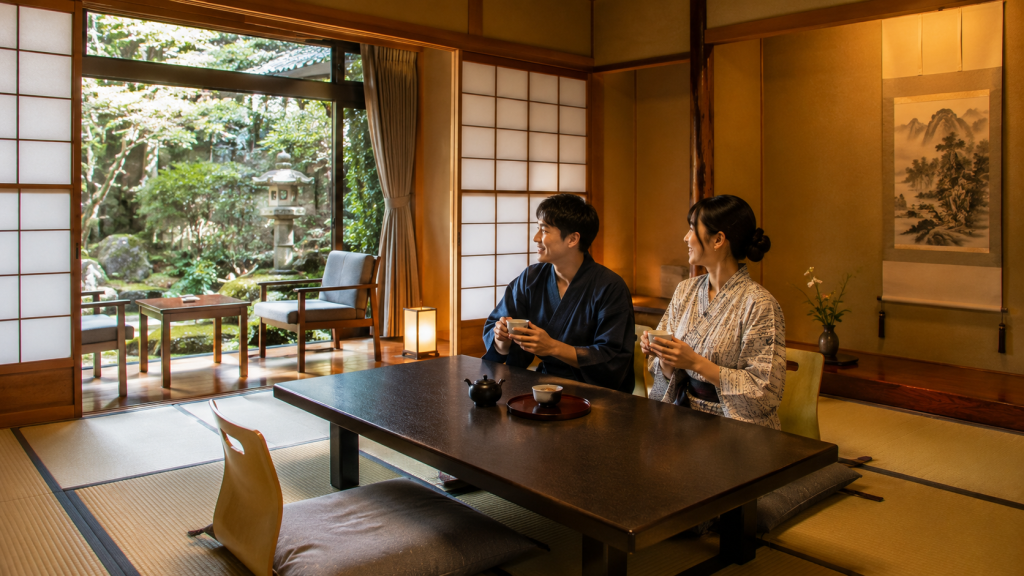
A ryokan offers something very different from a standard hotel.
Traditional features may include tatami flooring, futon bedding, yukata robes and Japanese-style rooms.
Some ryokan also include elaborate seasonal meals, while others focus more simply on accommodation and hospitality.
Staying at a ryokan can be one of the most memorable experiences of a trip to Japan, particularly if it is your first visit.
But you do not need to stay in ryokan every night.
For many travelers, combining convenient city hotels with one carefully chosen ryokan stay provides a good balance between practicality and experience.
5. Onsen Ryokan — Combine Accommodation with Hot Springs
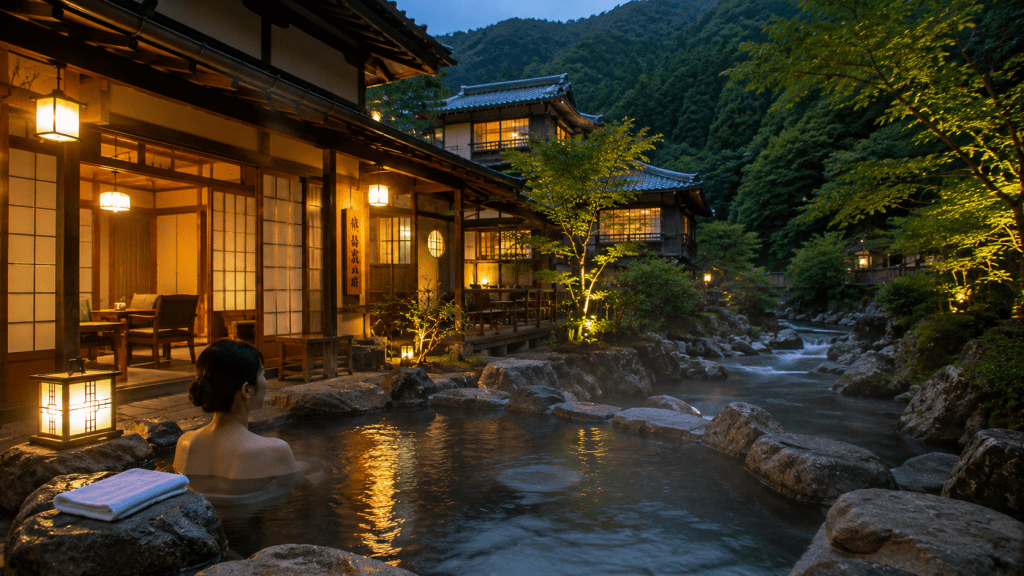
If you want a more immersive experience, consider spending a night at an onsen ryokan.
These properties combine traditional accommodation with access to natural hot spring baths.
Many are located in mountain towns, coastal areas and historic hot spring destinations, although onsen accommodation can be found throughout Japan.
Depending on the property, your stay may also include dinner and breakfast featuring regional and seasonal ingredients.
An onsen ryokan is therefore more than simply a place to sleep.
It can become one of the main experiences of your destination.
Before booking, check the property’s bathing rules, meal arrangements, check-in time and policies regarding tattoos if they apply to you.
6. Capsule Hotels — A Uniquely Japanese Experience
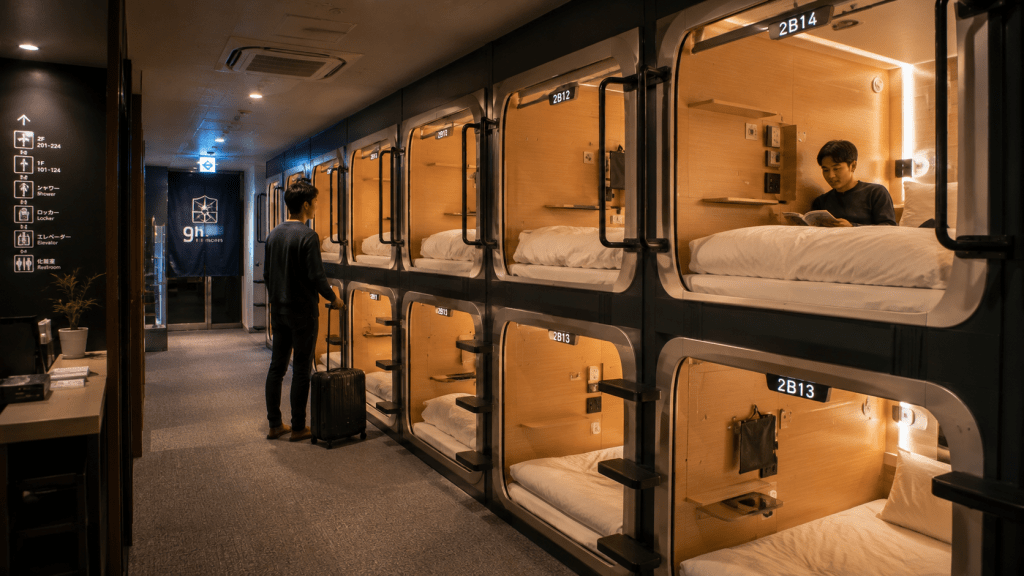
Capsule hotels are one of Japan’s most famous accommodation concepts.
Instead of a conventional private room, guests sleep in individual compact sleeping spaces with shared facilities elsewhere in the property.
They can be useful for solo travelers, short overnight stays or travelers who simply want to experience something different.
However, a capsule hotel is not automatically the best budget option for every trip.
Couples may be separated depending on the property, large luggage can require separate storage and travelers who want more personal space may prefer a standard hotel or hostel.
Consider a capsule hotel as one accommodation option rather than something every visitor needs to experience.
7. Hostels, Guesthouses and Minshuku
Travelers looking for lower prices or a more social experience have several additional options.
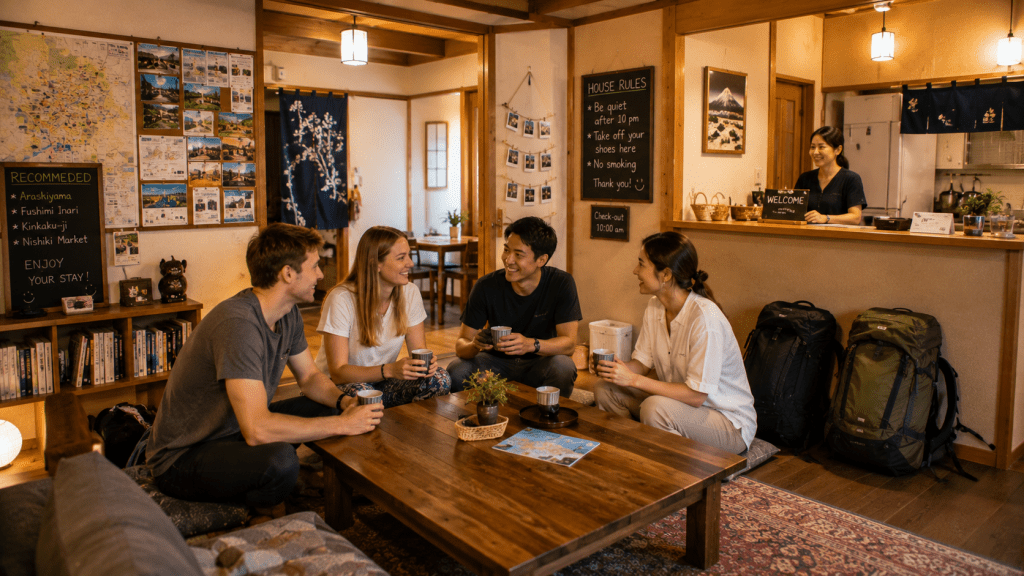
Hostels are common in major tourist destinations and can be useful for solo travelers who want shared spaces and opportunities to meet other people.
Guesthouses vary widely, from modern budget accommodation to small locally operated properties.
You may also encounter minshuku, traditional family-run accommodation that can offer a more personal and local experience.
Facilities and services vary considerably, so read the property details carefully rather than choosing based only on the accommodation category.
Shared bathrooms, limited check-in hours or fewer English-language services may be completely normal at smaller properties.
8. Where Should First-Time Visitors Stay?
For a first trip to Japan, location is often more important than choosing the most impressive hotel.
In Tokyo, staying near a useful train or subway station can make exploring the city’s enormous neighborhoods much easier.
In Kyoto, consider whether you value convenient transportation around Kyoto Station or easier access to restaurants and historic areas closer to downtown and Higashiyama.
In Osaka, Namba is convenient for food and nightlife, while Umeda can be particularly useful for transportation and day trips.
There is no single perfect neighborhood in any of these cities.
Choose the area that works with your itinerary rather than automatically booking the most famous location.
For detailed advice on each city, read our Tokyo for First-Time Visitors, Kyoto for First-Time Visitors and Osaka for First-Time Visitors guides.
Still planning your route? Our 7-Day Japan Itinerary shows one simple way to combine Tokyo, Kyoto and Osaka on a first trip.
9. Stay Near a Station or Near an Attraction?
For most first-time visitors, staying near useful transportation is usually more valuable than staying beside a single attraction.
Japan’s cities are designed around extensive train and subway networks.
A hotel within comfortable walking distance of a useful station can make mornings easier, reduce unnecessary walking with luggage and give you more flexibility at night.
But “near a station” does not always mean “convenient.”
Check which train or subway lines actually serve that station and whether they connect efficiently with the places you plan to visit.
If you are still learning how Japan’s transportation works, our Getting Around Japan guide explains trains, IC cards and the Shinkansen.
10. How Much Does Accommodation Cost in Japan?
Accommodation prices in Japan vary enormously depending on the destination, season, day of the week and type of property.
Budget accommodation and simple business hotels can help keep costs down, while luxury hotels and ryokan with dinner and breakfast can cost considerably more.
Prices can also rise during popular travel periods, major events and weekends in high-demand destinations.
Instead of deciding that one accommodation type is always “cheap” or “expensive,” compare the total value of each stay.
A ryokan that includes dinner, breakfast and an onsen experience is very different from a room-only hotel rate.
Likewise, paying slightly more for a convenient location may reduce transportation costs and save valuable travel time.
Accommodation is only one part of your total travel costs. For a complete breakdown of food, transportation, attractions and everyday expenses, read our Japan Travel Budget guide.
11. When Should You Book Accommodation in Japan?
For popular destinations and travel periods, booking earlier gives you more choice.
This can be especially important during cherry blossom season, autumn foliage periods and major Japanese holiday periods such as Golden Week and New Year.
Ryokan and smaller properties may also have fewer rooms than large city hotels, so waiting until the last minute can significantly reduce your options.
If your itinerary is flexible, compare several dates before booking.
A small change in your schedule can sometimes give you better accommodation choices.
Before deciding when to travel, read our Best Time to Visit Japan guide for a complete overview of Japan’s seasons.
12. What to Expect in a Japanese Hotel Room
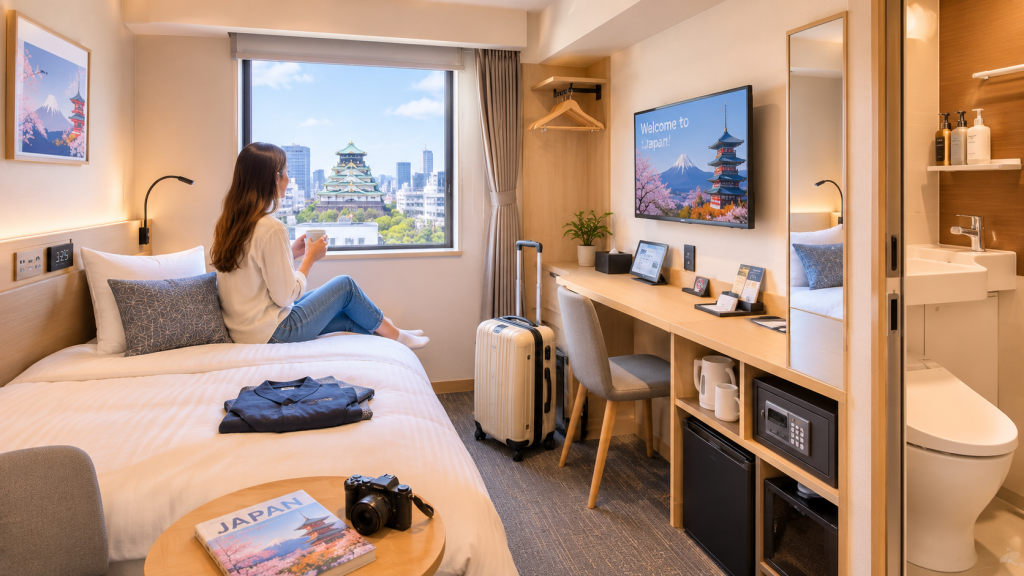
Japanese hotel rooms are often designed to use space efficiently.
In major cities, this can mean less floor space than some international travelers expect.
Always check the listed room size and bed configuration before booking, especially if you are traveling with large luggage.
Bathrooms can also be compact, particularly in business hotels.
On the other hand, many hotels provide thoughtful practical features and amenities that make short stays comfortable.
The important thing is to check the actual room details rather than judging size from photographs alone.
13. Ryokan Etiquette for First-Time Visitors
Staying at a ryokan can involve customs that may be unfamiliar to first-time visitors.
Shoes are generally removed before entering tatami areas, and you may be provided with slippers for other parts of the property.
A yukata may be provided for you to wear during your stay.
If meals are included, dinner and breakfast may be served at specific times, so check the schedule when you arrive.
Futon bedding may be prepared for you later in the evening depending on the property.
You do not need to memorize every rule before arriving.
Pay attention to instructions from the staff, observe the space around you and ask politely if you are unsure.
14. Onsen Etiquette — Know the Basics Before You Bathe
Onsen can be one of the highlights of staying at a traditional Japanese inn, but bathing customs are different from those in many other countries.
Wash your body before entering the bath, keep your small towel out of the bathwater and remember that swimwear is generally not worn in traditional communal baths.
Tattoo policies vary by facility.
Some properties allow tattoos, some may permit covers for smaller tattoos and others may have restrictions.
Check the rules of your accommodation before booking rather than assuming that every onsen follows the same policy.
A little preparation can make your first onsen experience much more comfortable.
15. Common Accommodation Mistakes in Japan
Choosing a Hotel Based Only on Price
A cheaper room far from useful transportation may cost you time every day.
Not Checking the Room Size
Japanese city hotel rooms can be compact. Check the listed dimensions before booking.
Ignoring the Exact Station
Large cities may have several stations with similar names or multiple railway companies serving the same general area.
Arriving Late at a Ryokan Without Checking
Ryokan that include dinner may have specific arrival and meal times. Contact the property if your schedule changes.
Assuming Every Onsen Has the Same Tattoo Policy
Rules vary between facilities. Check before booking.
Booking Every Night at the Same Type of Accommodation
Mixing practical city hotels with one ryokan or onsen stay can give you both convenience and a memorable Japanese experience.
Choose Accommodation That Fits Your Journey
The best place to stay in Japan is not always the most expensive hotel or the most traditional ryokan.
It is the accommodation that fits the experience you want at that point in your journey.
Choose convenience when you have busy sightseeing days. Stay near useful transportation when moving between cities. Consider a ryokan when you want to slow down and experience traditional hospitality.
And always check the details before booking — room size, location, meal arrangements, check-in times and property rules can all affect your stay.
With the right accommodation, where you sleep becomes more than a practical decision.
It becomes part of the journey itself.
Planning your first trip to Japan? Start with our First Time in Japan guide for more practical advice before you go.
 Beyond Japan Guide
Leave a comment