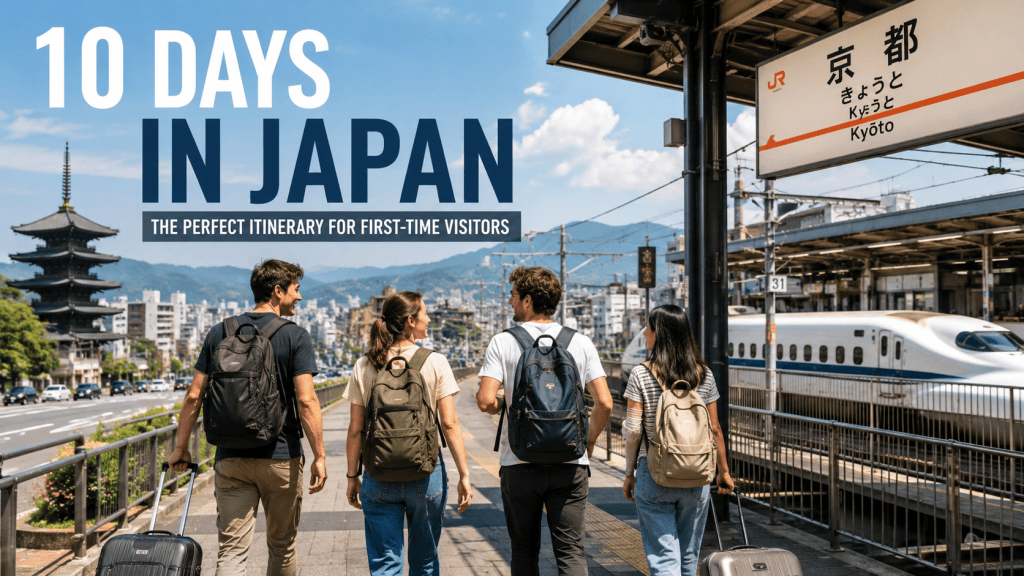
Ten days is a great amount of time for a first trip to Japan.
It gives you enough time to experience Tokyo’s modern energy, explore the temples and historic streets of Kyoto, enjoy Osaka’s famous food culture and still fit in one or two easy day trips without constantly changing hotels.
The challenge is deciding how much to include.
Japan has so many interesting places that it is easy to build an itinerary that looks exciting on paper but feels exhausting once you start moving between cities.
For most first-time visitors, the best approach is to keep the route simple.
This 10-day Japan itinerary focuses on Tokyo, Kyoto and Osaka, with time for a day trip from Tokyo and a visit to Nara. The route gives you a mix of modern cities, traditional neighborhoods, temples, food and scenery while keeping long-distance travel manageable.
You will not see everything Japan has to offer in ten days — and you do not need to.
The goal of this itinerary is to help you experience several different sides of Japan while still leaving enough time to enjoy the journey.
1. Is 10 Days Enough for a First Trip to Japan?
Yes. Ten days is enough to experience several of Japan’s most famous destinations without turning your trip into a race.
For a first visit, Tokyo, Kyoto and Osaka make a practical route because they offer very different experiences while being well connected by public transportation.
Tokyo gives you modern neighborhoods, traditional districts and countless food options. Kyoto introduces you to temples, shrines and historic streets, while Osaka brings a more casual atmosphere known for food and nightlife.
With ten days, you can also add one or two day trips without changing hotels every night.
In this itinerary, you will spend several days in Tokyo before taking a day trip outside the city. You will then travel to Kyoto, visit Nara as a day trip and finish your journey in Osaka.
This keeps the number of hotel changes manageable while still giving you a varied first experience of Japan.
If you only have one week, our 7-Day Japan Itinerary offers a shorter route focused on Tokyo, Kyoto and Osaka.
2. 10-Day Japan Itinerary at a Glance
| Day | Base | Main Plan |
|---|---|---|
| Day 1 | Tokyo | Arrive in Japan and explore your local area |
| Day 2 | Tokyo | Asakusa, Ueno and traditional Tokyo |
| Day 3 | Tokyo | Meiji Shrine, Harajuku and Shibuya |
| Day 4 | Tokyo | Day trip from Tokyo |
| Day 5 | Kyoto | Travel to Kyoto and explore Higashiyama |
| Day 6 | Kyoto | Fushimi Inari and more of Kyoto |
| Day 7 | Kyoto | Nara day trip |
| Day 8 | Osaka | Travel to Osaka and explore the city |
| Day 9 | Osaka | Osaka Castle, local neighborhoods and food |
| Day 10 | Osaka | Final sightseeing and departure |
This route uses Tokyo, Kyoto and Osaka as the main bases, which means you do not need to change hotels every time you take a day trip.
The itinerary can also be adjusted depending on your arrival airport, departure airport and personal interests.
If your flight arrives and departs from Tokyo, you may want to return to Tokyo on Day 9 and spend your final night there instead of leaving Japan from the Osaka area.
Before booking hotels, check your flight schedule and decide where you want to spend your final night.
3. Day 1 — Arrive in Tokyo and Take It Easy
Your first day in Japan should be simple.
After a long international flight, immigration, collecting your luggage and traveling from the airport to your hotel can take more time and energy than expected.
Check in, leave your luggage and spend the rest of the day exploring the area around your hotel.
If you are staying in Shinjuku, Shibuya or Ueno, walk around the neighborhood, find somewhere casual for dinner and get familiar with the nearest train station.
There is no need to visit several major attractions on your first evening.
Use the day to adjust to Japan, learn how the train system works and enjoy your first meal without rushing.
If you arrive early and still have plenty of energy, add one nearby attraction rather than traveling across Tokyo.
A relaxed first day will make the rest of your itinerary much easier.
4. Day 2 — Asakusa, Ueno and Traditional Tokyo
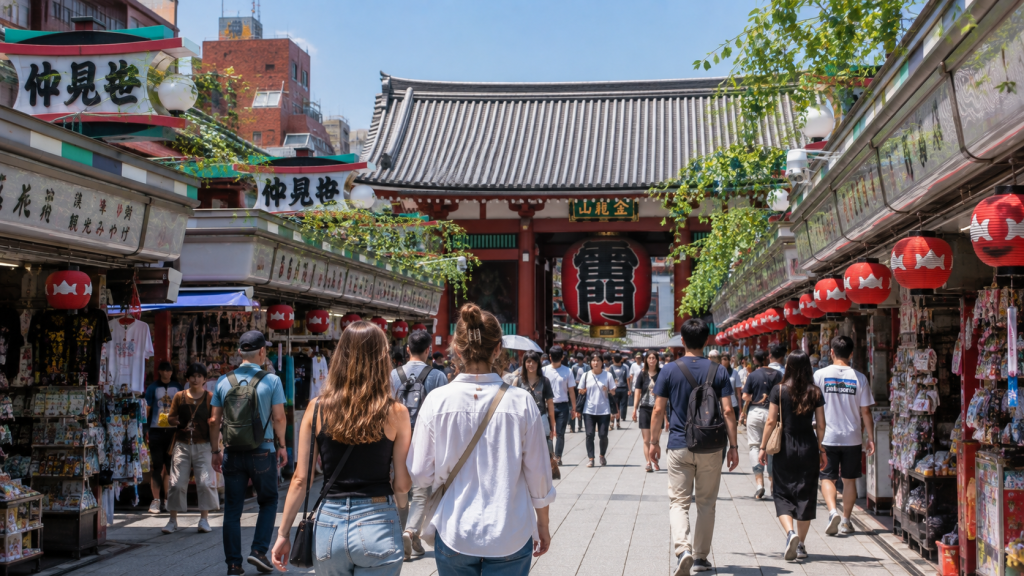
Start your first full day in Asakusa, one of the best areas for experiencing the more traditional side of Tokyo.
Begin at Kaminarimon Gate and walk along Nakamise toward Senso-ji, Tokyo’s oldest Buddhist temple. The area can become crowded later in the day, so arriving in the morning gives you more time to explore at a comfortable pace.
Do not leave immediately after visiting the temple.
Walk through some of the surrounding streets, where you will find traditional shops, small restaurants and quieter corners away from the main sightseeing route.
Later, continue to Ueno.
Ueno Park is home to several museums and cultural attractions, while nearby Ameyoko offers a completely different atmosphere with busy shopping streets, food stalls and casual restaurants.
Spending the day between Asakusa and Ueno gives you a good introduction to Tokyo’s mix of history, culture and everyday city life.
For more ideas about exploring the city, see our Tokyo for First-Time Visitors guide.
5. Day 3 — Meiji Shrine, Harajuku and Shibuya
Day 3 shows you a very different side of Tokyo.
Start at Meiji Shrine, where a long forested approach creates a surprisingly peaceful atmosphere close to some of the busiest neighborhoods in the city.
Take your time walking through the grounds before continuing toward Harajuku.
The atmosphere changes quickly as you move from the quiet shrine area into streets filled with fashion, cafés, shops and pop culture.
From Harajuku, continue toward Shibuya.
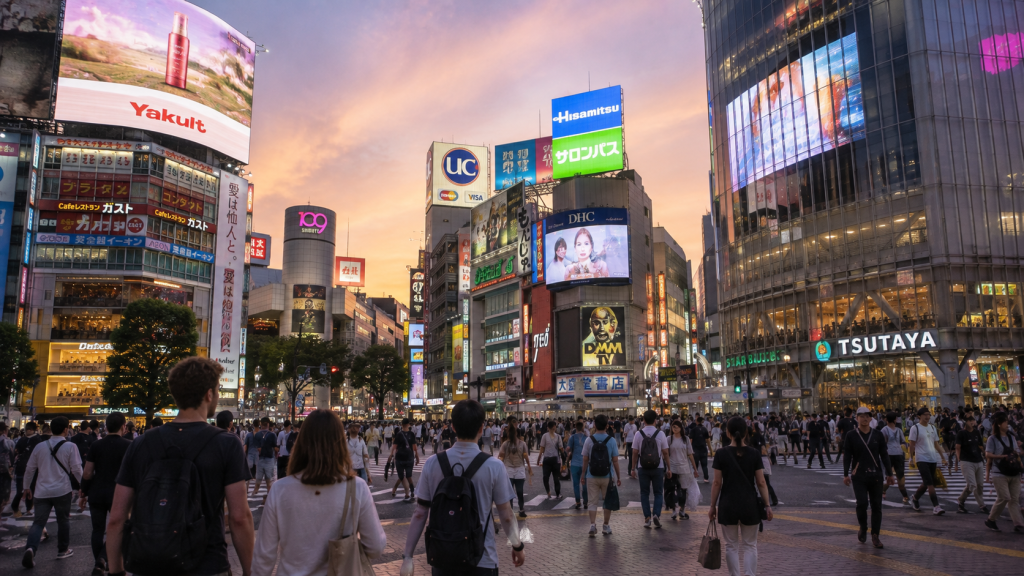
See the famous Shibuya Crossing, but do not treat it as your only reason to visit the neighborhood. Explore the surrounding streets, stop for food or coffee and stay into the evening if you want to experience the area after dark.
Keeping Meiji Shrine, Harajuku and Shibuya together also reduces unnecessary travel across the city.
You do not need to schedule every hour. Leave enough time to walk, explore side streets and stop when something catches your attention.
6. Day 4 — Take a Day Trip from Tokyo
After three days in Tokyo, Day 4 is a good opportunity to experience somewhere outside the city.
You have several excellent options, and there is no need to choose the same destination as every other traveler.
Kamakura is a good choice for temples, history and coastal scenery.
Hakone works well if you want hot springs and mountain landscapes.
Choose Nikko for impressive shrines and forest surroundings, or Kawaguchiko if seeing Mount Fuji is one of your main priorities.
If you prefer something closer to Tokyo, Yokohama, Kawagoe and Enoshima are also easy options.
Choose one destination rather than trying to combine several places into the same day.
Your best choice will depend on your interests, the weather and how much time you want to spend traveling.
Our Best Day Trips from Tokyo guide compares seven easy options and can help you decide where to go.
7. Day 5 — Travel from Tokyo to Kyoto & Explore Higashiyama
On Day 5, leave Tokyo and travel to Kyoto by Shinkansen.
The journey introduces another side of Japan as you move from the country’s largest modern city toward one of its most famous historic destinations.
You do not need to rush into sightseeing as soon as you arrive.
Leave your luggage at your hotel and spend the afternoon exploring Higashiyama, one of the best areas for a first introduction to Kyoto.
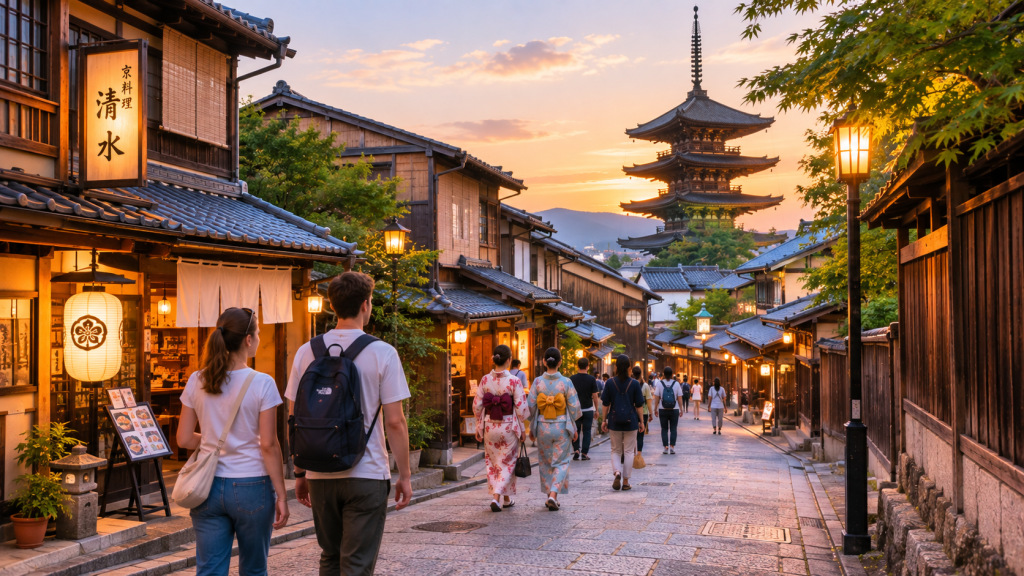
Walk through the historic streets around Sannenzaka and Ninenzaka, explore the surrounding temple area and continue toward Gion if you still have time and energy.
The narrow streets, traditional buildings and temple scenery create a very different atmosphere from the Tokyo neighborhoods you explored earlier in the trip.
Keep your first Kyoto afternoon flexible. Depending on your arrival time, it is better to enjoy a smaller area properly than to rush between several major temples.
Our Kyoto for First-Time Visitors guide covers the city’s main areas, attractions and practical travel tips in more detail.
If this is your first time using the Shinkansen, our Getting Around Japan guide explains trains, IC cards and long-distance transportation.
8. Day 6 — Fushimi Inari & More of Kyoto
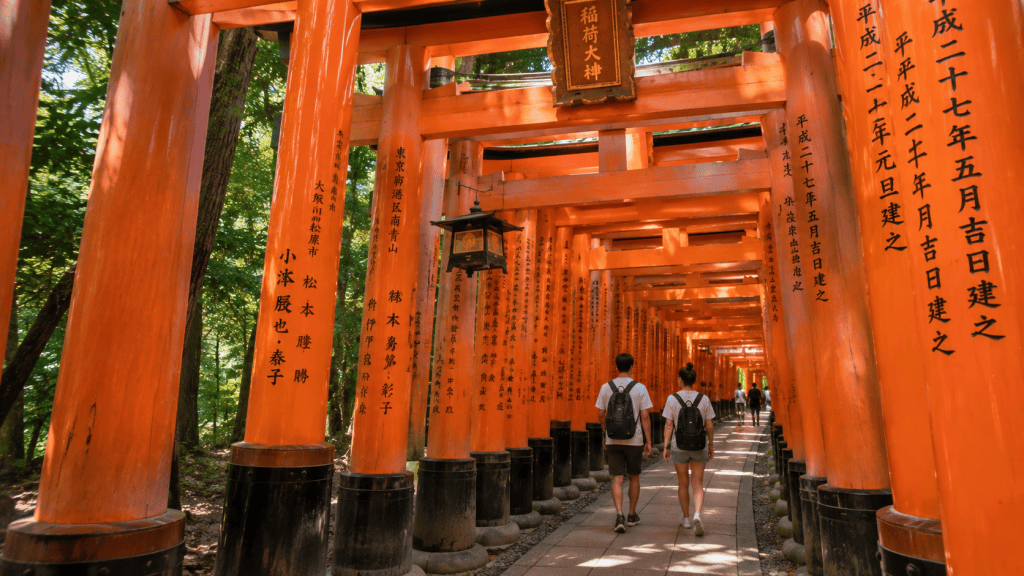
Start Day 6 at Fushimi Inari Taisha, one of Kyoto’s most recognizable shrines.
The famous path of vermilion torii gates continues up the forested slopes of Mount Inari, and you can decide how far you want to walk depending on your time and energy.
You do not need to complete the entire mountain route to enjoy the experience.
After Fushimi Inari, use the rest of the day to explore another part of Kyoto rather than trying to cross the city repeatedly.
You might spend more time in eastern Kyoto, explore the Nishiki Market area, visit a temple you particularly want to see or simply slow down and walk through some of the city’s quieter streets.
Kyoto rewards a slower pace.
Many first-time visitors make the mistake of treating the city as a checklist of famous temples. Choosing fewer places gives you more time to appreciate the streets, gardens and neighborhoods between the major sights.
Finish the day with dinner in central Kyoto or around Gion, depending on where you are staying.
9. Day 7 — Take a Day Trip to Nara
On Day 7, keep your hotel in Kyoto and take a day trip to Nara.
Nara offers another important side of Japanese history and is close enough to visit without adding another hotel change to your itinerary.
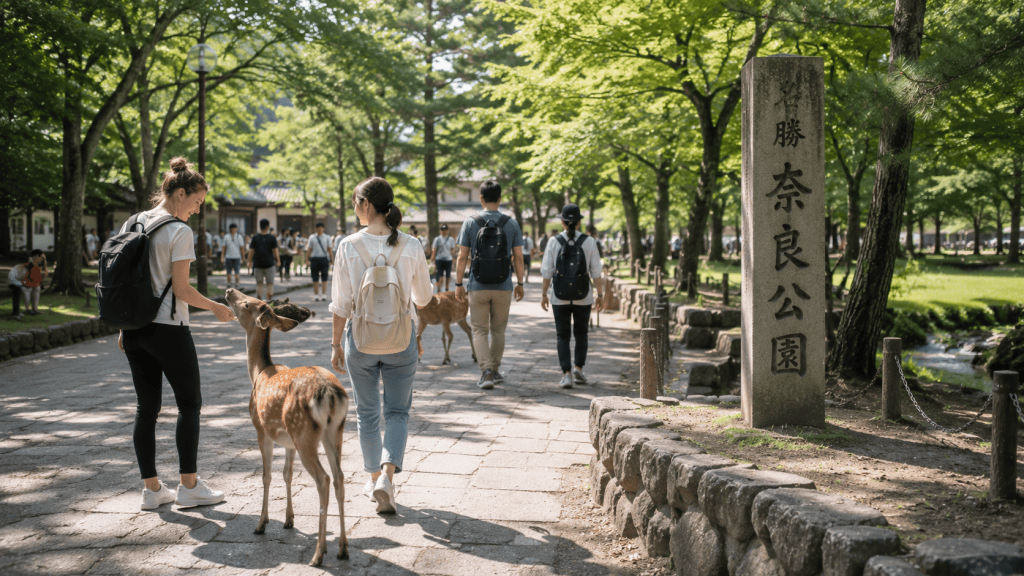
Start around Nara Park, where you will encounter the city’s famous free-roaming deer as you walk between several major historic sites.
Continue to Todai-ji, home to the Great Buddha, before exploring more of the park and heading toward Kasuga Taisha.
Later in the day, spend some time around Naramachi, where traditional streets, shops and cafés provide a quieter contrast to the major temple area.
You do not need to see every attraction in Nara.
Nara Park, Todai-ji, Kasuga Taisha and Naramachi already make a full and varied day for most first-time visitors.
Return to Kyoto in the evening and spend your final night there before continuing to Osaka the following day.
For the complete route, transportation advice and sightseeing order, follow our Nara Day Trip guide.
10. Day 8 — Travel to Osaka & Explore Dotonbori
On Day 8, leave Kyoto and travel to Osaka.
The journey is short compared with the Tokyo-to-Kyoto leg, so you can still have plenty of time to explore Osaka after leaving your luggage at your hotel.
Spend your first afternoon getting familiar with the city rather than trying to visit every major attraction.
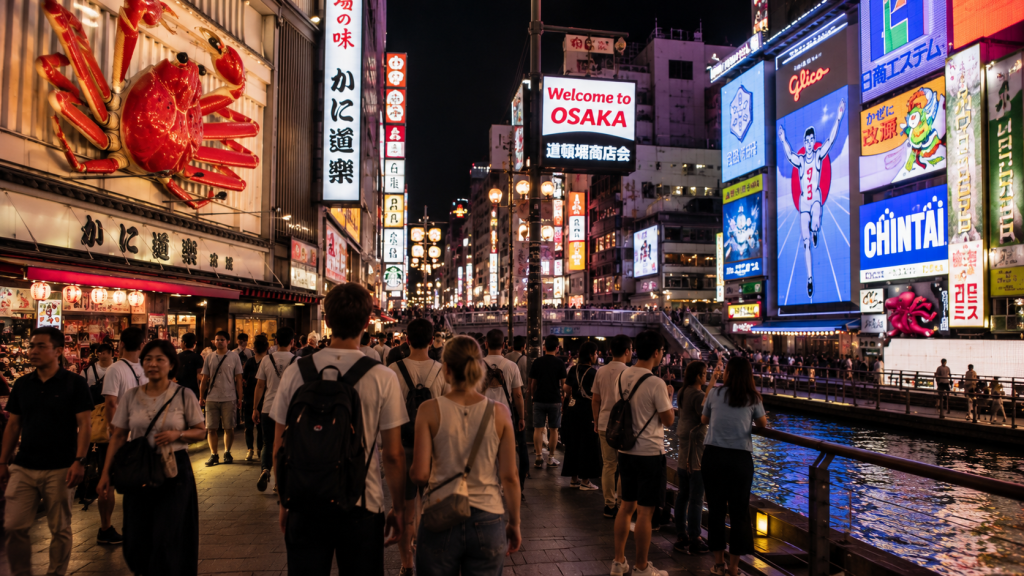
Head toward Namba and Dotonbori, one of Osaka’s most energetic entertainment and food areas.
Walk along the canal, explore the surrounding shopping streets and take your time choosing somewhere to eat.
Osaka is famous for casual local foods such as takoyaki, okonomiyaki and kushikatsu, so this is a good evening to start trying some of the dishes the city is known for.
Do not worry about finding the single most famous restaurant.
Part of the experience is walking through the neighborhood, seeing what looks interesting and enjoying Osaka’s more relaxed atmosphere after several days of temples and historic streets in Kyoto.
For more ideas about where to go and how to organize your time, see our Osaka for First-Time Visitors guide.
Not sure what to eat during your trip? Our Japanese Food Guide introduces dishes worth trying across Japan.
11. Day 9 — Osaka Castle, Local Neighborhoods & Food
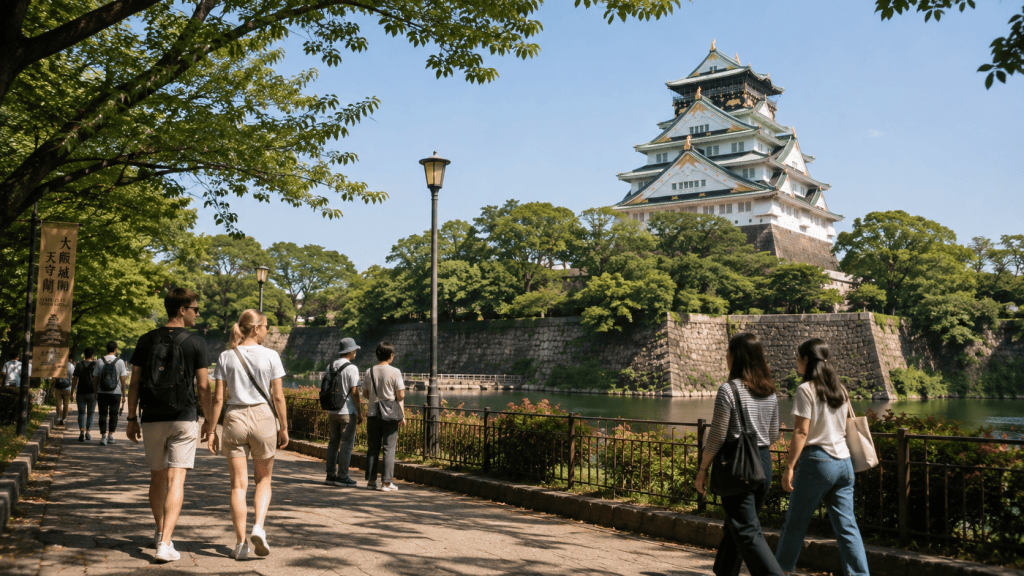
Start Day 9 at Osaka Castle, one of the city’s most recognizable historic landmarks.
Take some time to walk through Osaka Castle Park rather than visiting only the main tower and immediately leaving.
Afterward, choose another part of Osaka depending on your interests.
You could explore Shinsekai for a more nostalgic atmosphere, spend time shopping around Shinsaibashi and Namba, or head toward Umeda for a more modern side of the city.
There is no need to fit all of these areas into the same afternoon.
Choose one or two neighborhoods and leave enough time to explore on foot.
Food should also be part of the day rather than something you squeeze between attractions.
Try a dish you have not eaten yet, visit a casual local restaurant or simply stop somewhere that catches your attention while walking.
By this point in your trip, you may find that some of your best experiences come from having less planned rather than more.
12. Day 10 — Final Sightseeing & Departure
Your final day will depend largely on your flight schedule.
If you are departing from the Osaka area, keep the day flexible and choose one final neighborhood or activity that fits comfortably before you need to leave for the airport.
You might return to a favorite food area, do some last-minute shopping or simply enjoy a slower morning before checking out.
Do not plan an important attraction immediately before an international flight.
Leave plenty of time for collecting your luggage, traveling to the airport, checking in and dealing with any unexpected transportation delays.
If your international flight departs from Tokyo instead, adjust the itinerary before your trip rather than trying to make a stressful last-minute journey across Japan.
One option is to travel back to Tokyo on Day 9 and spend your final night there. This gives you a much easier departure day and reduces the risk of a long-distance transportation problem affecting your flight.
The best final-day plan is usually the simplest one.
Ten days of travel can be busy, so leave some space to enjoy your last few hours in Japan without rushing.
13. How Much Does a 10-Day Trip to Japan Cost?
The cost of a 10-day trip to Japan can vary significantly depending on your accommodation, transportation, food and travel style.
Accommodation will usually be one of your biggest expenses. Business hotels and simple city hotels can help keep costs manageable, while higher-end hotels and ryokan can increase your budget quickly.
Transportation is another important expense because this itinerary includes travel between Tokyo, Kyoto and Osaka as well as local trains and day trips.
Food, however, does not need to be expensive every day.
Japan has plenty of casual restaurants, noodle shops, set meals and convenience stores that make it possible to eat well without choosing expensive restaurants for every meal.
Remember to budget for attractions, shopping and small everyday expenses as well.
Rather than setting one fixed amount for every traveler, estimate your trip based on the type of accommodation and experiences you actually want.
Our Japan Travel Budget guide breaks down accommodation, transportation, food and other common travel costs in more detail.
14. Where Should You Stay During This Itinerary?
Keeping your hotel changes to a minimum is one of the easiest ways to make this itinerary more comfortable.
In Tokyo, choose a neighborhood with convenient train connections rather than simply choosing the hotel closest to one famous attraction.
Shinjuku, Shibuya, Ueno and the Tokyo Station area can all work well depending on your plans and budget.
In Kyoto, staying somewhere with convenient access to Kyoto Station or central transportation can make both sightseeing and your Nara day trip easier.
In Osaka, Namba is convenient for food and nightlife, while Umeda works well for transportation and access to other parts of the city.
You do not need to stay in the most famous neighborhood in every city.
A comfortable hotel near useful transportation can often save more time than staying beside a single sightseeing attraction.
Our Where to Stay in Japan guide explains hotels, business hotels, ryokan and other accommodation options for first-time visitors.
15. How to Get Around During Your 10 Days in Japan
You can complete this entire itinerary using public transportation.
In Tokyo and Osaka, trains and subways will cover most of your journeys, while Kyoto also relies heavily on buses and local railways depending on where you are going.
For the long-distance journey from Tokyo to Kyoto, the Shinkansen is the most practical option for most travelers following this itinerary.
An IC card can make local transportation easier because you can use it for many train, subway and bus journeys without purchasing a separate ticket every time.
Do not assume that you need a Japan Rail Pass simply because you are traveling between several cities.
Compare the cost of the journeys you actually plan to make before deciding whether any rail pass makes sense for your itinerary.
For day trips, check your route the night before so you know which station to use, whether reservations are necessary and roughly how long the journey will take.
Our Getting Around Japan guide explains trains, IC cards, the Shinkansen and other transportation basics for first-time visitors.
It is also worth downloading useful navigation tools before your trip. Our Japan Travel Apps guide covers apps for train routes, maps and other everyday travel needs.
16. Tips for Making This 10-Day Japan Itinerary Work
A good itinerary should give you direction without controlling every hour of your trip.
Start early when it matters. Popular places such as Fushimi Inari, Nara and some Tokyo day-trip destinations can be easier to enjoy when you begin your day early.
Do not change hotels unnecessarily. Use Tokyo, Kyoto and Osaka as your main bases and take day trips without moving your luggage whenever possible.
Leave room for unexpected discoveries. A restaurant, neighborhood or small shop you did not plan to visit may become one of your favorite memories.
Check transportation the night before. Train times, platforms and local connections can change, so use current information rather than relying entirely on an itinerary written before your trip.
Adjust the route to your interests. If temples are not your priority, spend less time visiting them. If food, shopping, museums or nature matter more to you, give those experiences more space.
Do not treat this itinerary as a checklist. Ten days is enough to experience several sides of Japan, but it is not enough to see everything — and that is completely fine.
The best itinerary is the one that leaves you wanting to return.
Conclusion: Ten Days Is Enough to Experience Several Sides of Japan
Ten days in Japan gives first-time visitors enough time to experience several very different sides of the country without changing destinations every day.
You can begin among Tokyo’s modern neighborhoods and traditional districts, take a day trip beyond the city, explore the temples and historic streets of Kyoto, spend a day in Nara and finish with the food and energy of Osaka.
This itinerary is only a starting point.
You can change the Tokyo day trip, spend more time in Kyoto, skip an attraction that does not interest you or adjust your final days depending on where your flight departs.
What matters most is keeping the trip realistic.
Japan rewards travelers who leave enough time to walk, eat, explore and occasionally change their plans.
You do not need to see everything in ten days.
Experience a few places properly, enjoy the journey between them and leave something for your next trip to Japan.
Still preparing for your first visit? Our First Time in Japan guide covers essential things to know before you go.
 Beyond Japan Guide
Leave a comment